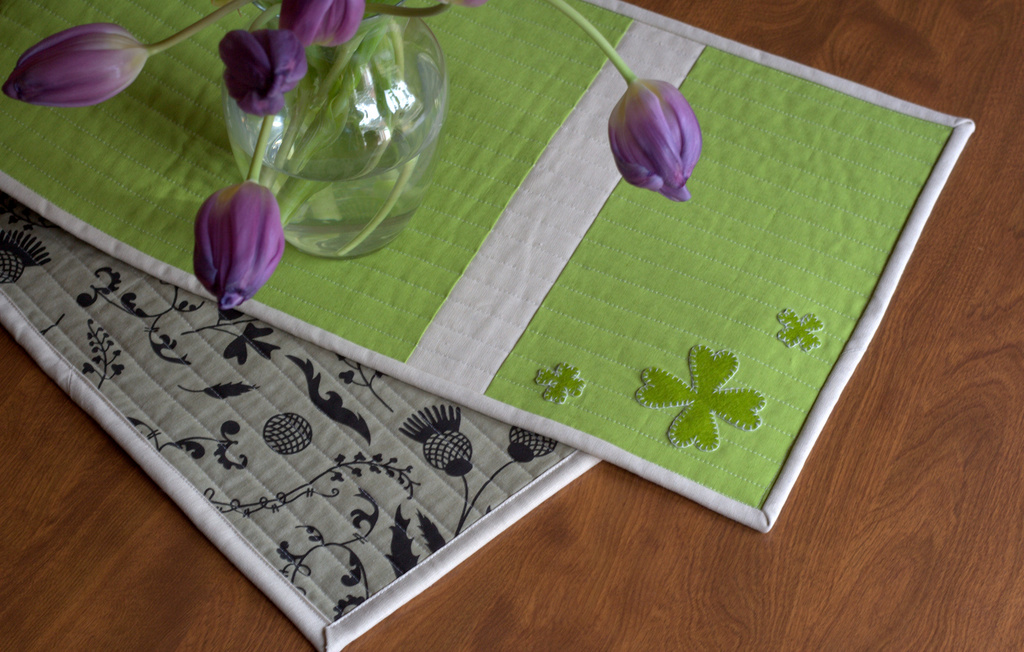
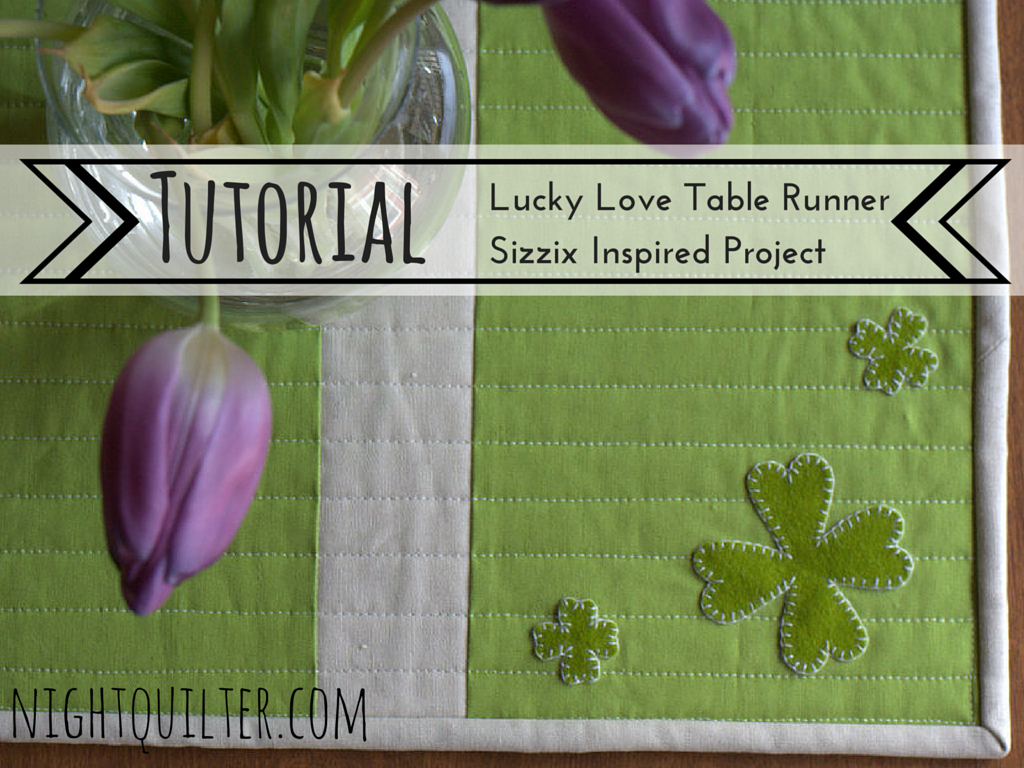
Today I’m excited to be sharing another tutorial on the Sizzix blog, this time for a really sharp-looking table runner (if I do say so myself)! I’m typically not one to make seasonal decor, since the seasons come and go so quickly, but this one is reversible so I can use it all year long. Ever since I first cut wool felt with the Sizzix, I’ve been wanting to do a wool felt applique project, and once I realized I could make four-leaf clovers using my Primitive hearts die, it was game on. I backed the table runner in one of my all time favorite Alison Glass neutrals, Botany in Taupe from Ex Libris, which I certainly won’t mind looking at for the non-St. Patrick’s Day part of the year!
Since I love to make the most of the tools I have, this project is also exciting since it’s the third unique project I’ve made using the Primitive hearts #3 die from Sizzix. You may remember my Growing Tree Wall hanging and Valentine’s Day Garland tutorials, the first two projects I made using this die. You know it’s a winner when there seems to be an endless stream of projects that can be made out of a certain tool.
I try to make my tutorials helpful to the entire sewing and quilting world, even if you don’t yet have a Sizzix or other die cutting machine, and this one is no different.
In this tutorial, I share:
a neat trick for making four leaf clovers out a heart die (you could use it with a heart hole-punch, too, if you have that);
tips on accurate straight-line quilting without having to physically mark your quilt; and,
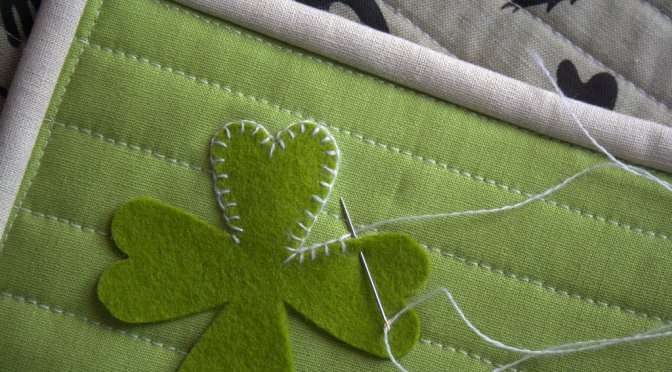
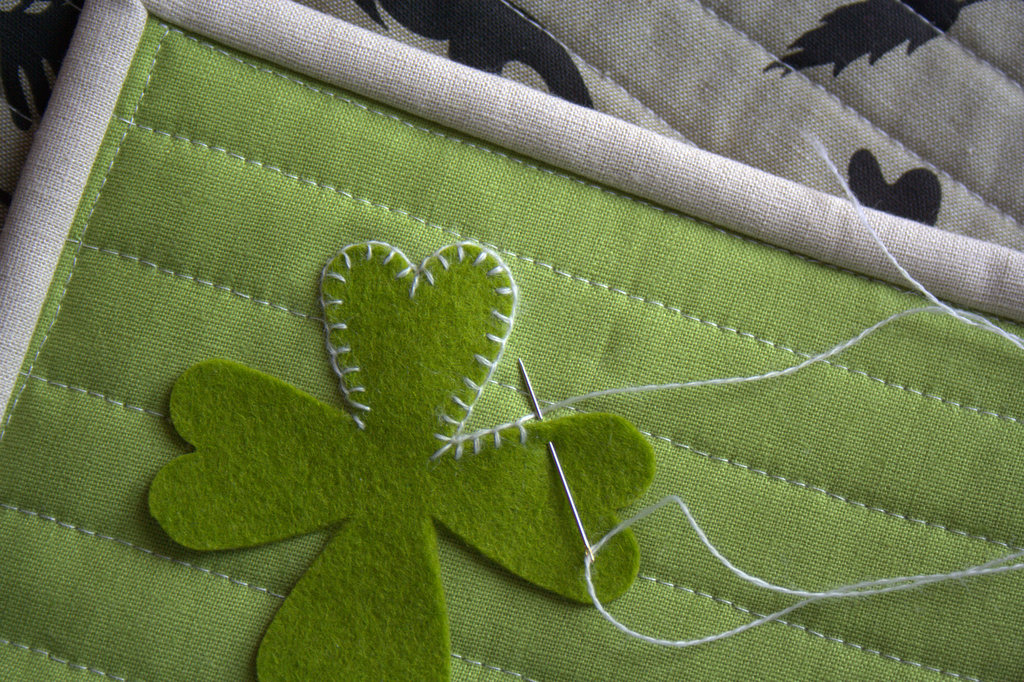
how to blanket stitch.
Head on over to the Sizzix blog to read the full tutorial, and I hope you enjoy!
Do you make seasonal projects? How and where do you store them when they are off season? I may need to take some notes if this keeps up!
I have been on the hunt for signs of spring, but the frozen ground is not yet giving us much ease. It was a fairly sunny day early this week and looked quite warm, so the kids and I headed outdoors to do a serious search for real signs of spring. Instead, what do we get? Snow! Within 20 minutes the sun dipped behind a cloud, the temperature dropped, and it began snowing! So much for spring! This week’s color inspiration palettes are from photos I took during that snowy search. It’s as close as we can get to spring just yet. Color palettes are made using Play Crafts’ Palette Builder 2.1 and my photographs, and of course the matching solids and Aurifil threads are an added bonus!
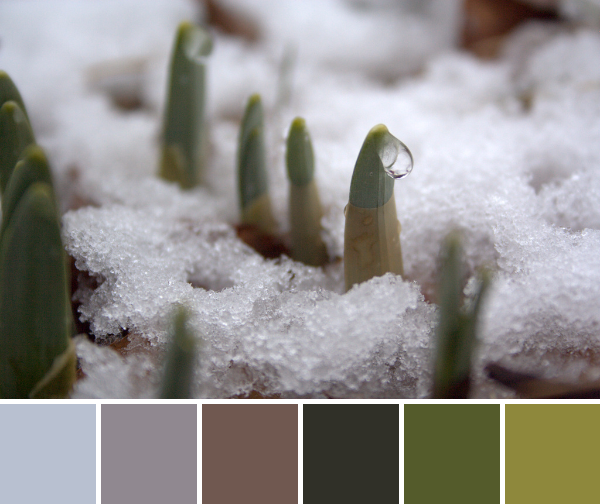
Corresponding solids from left to right: Bella Lead, Kona Coffee, Kona Moss, Bella Etchings Slate, Kona Pewter, Kona White
Corresponding Aurifil thread from left to right: 1246 – Grey 1130 – V Dk Bark 2905 – Army Green 2900 – Lt Khaki Green 2606 – Mist 2800 – Mint Ice
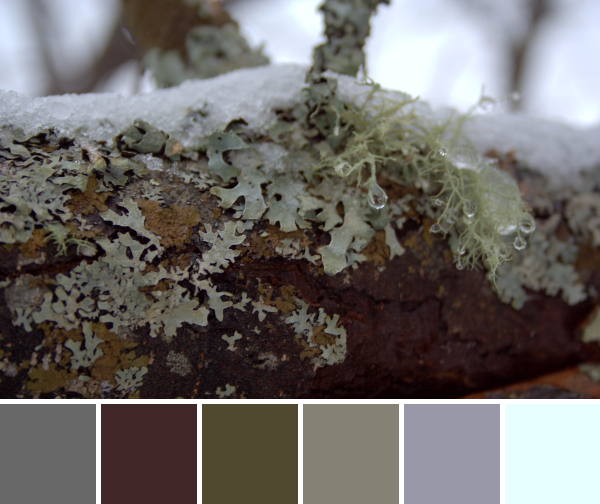
There may not be much bright color out in nature these days, but there’s always texture. I love the texture of this lichen-laden tree branch! The mix of bark, lichen, moss, and snow creates a great variety of visual texture. The earth tones ring out strongly in this one, too.
Corresponding solids from left to right: Bella Platinum, Kona Pewter, Bella Chocolate, Kona Espresso, Kona Avocado, Bella Avocado
Corresponding Aurifil thread from left to right: 2612 – Arctic Sky
5004 – Grey Smoke 1140 – Bark 1285 – Med Bark 4173 – Dk Olive 2910 – Med Olive
This is as close as we’re getting to spring colors so far here in Maine. These little daffodil sprouts are trying their hardest to push up through the frozen ground, standing strong despite snow and ice, and waiting patiently. I know that it won’t be long before these little sprouts reach with earnest and the flowers begin to appear. Once spring hits, I know it will begin a cascade of flowers that will snowball quickly (how about that for punny irony—snowballing spring flower blooms!). I can’t wait!
Finn on Monday
Update: Maine spring weather is as fickle as ever. Yesterday it was nearly 60 degrees and we all played outside without coats!
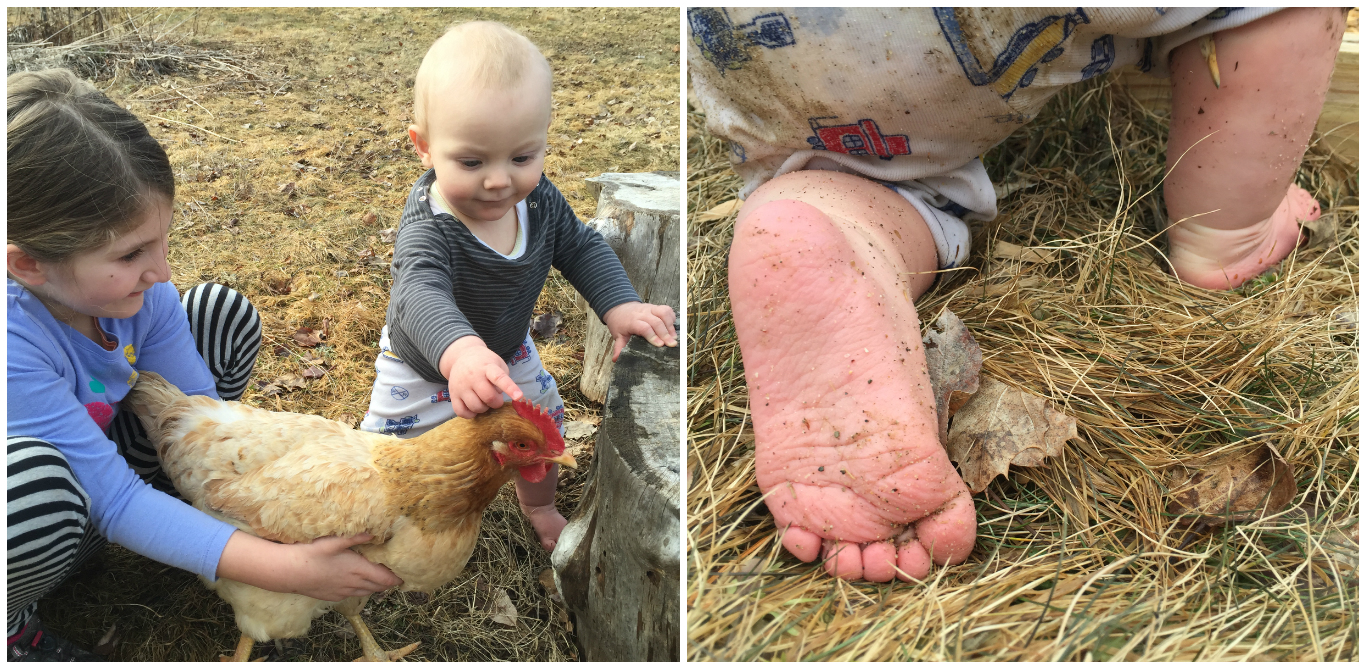
(L) Maddie, Finn, and Abadee Abadoo, one of our chickens, yesterday (Wednesday). (R) Our first taste of bare feet weather!
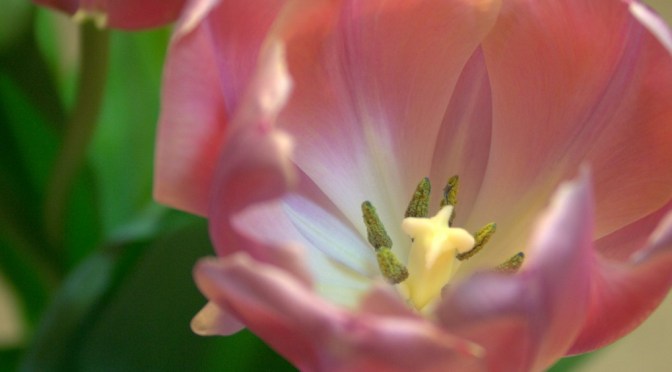
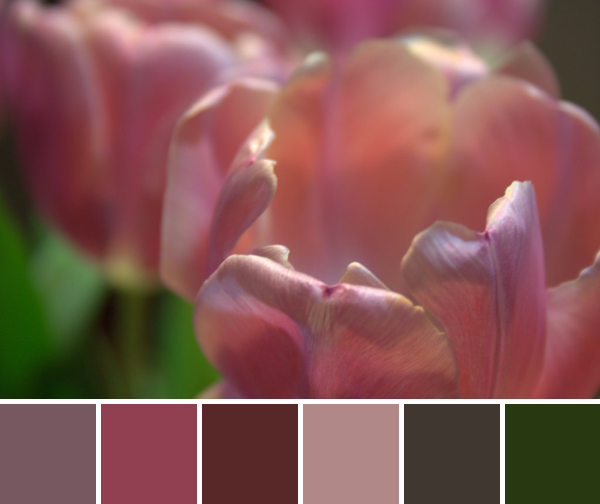
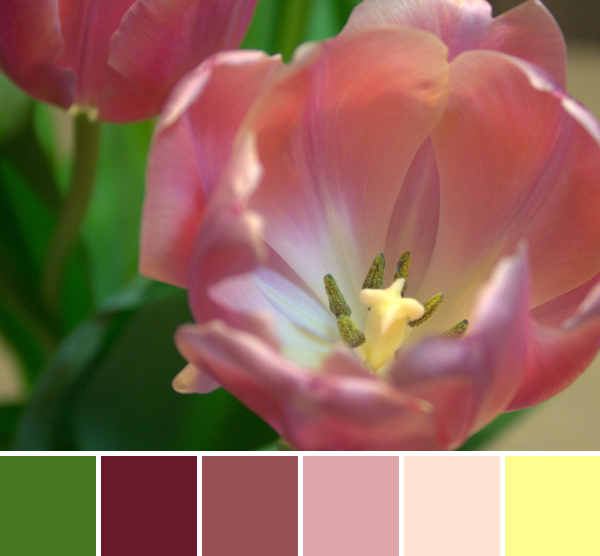
This time of year is when I really start to yearn for green sprouts, new life, and colorful flowers. February, and even March, in Maine is usually pretty dismal. I appreciate the season, though, because this dark, dreary, still chilly and sometimes snowy time gets me really ready to appreciate and jump into spring, even those “warm” 45 degree days. I will soon be pulling out my grow lights and starting pots and getting some veggies started indoors–onions, definitely, perhaps some brussel sprouts or broccoli, or some rosemary. Possibly some cut flowers. I also usually succumb to the urge to buy flowers, and this year is no different. It is amazing what a vase of fresh flowers can do to enliven a home! Today’s color palettes are from photographs of some tulips I bought to help make February a little less grey. Color palettes are made with Play Craft’s Palette Builder 2.1 and my photographs.
Corresponding solids from left to right: Bella Charcoal, Bella Brick Red, Kona Cocoa, Bella Dove, Bella Betty’s Brown, Kona Palm
Corresponding Aurifil thread from left to right: 2468 – Dk Wine
1103 – Burgundy 2345 – Raisin 2375 – Antique Blush 1285 – Med Bark 5023 – Med Green
This palette is darker than I was hoping to find, but it still represents the little peek at the colors to come.
Corresponding solids from left to right: Kona Grass Green, Kona Crimson, Bella Blush, Bella Bubblegum, Kona Pale Flesh, Kona Sunflower
Corresponding Aurifil thread from left to right: 5108 – Grass Green
2345 – Raisin 2245 – Red Orange 2420 – Fleshy Pink 2205 – Flesh 2125 – Wheat
Here are the light, springy colors I was hoping to see! I know that in a few short months, our gardens will be bursting with color, with new flowers and plants sprouting and flowering every day. Until then, I might just get a few teasers from the grocery store! Enjoy.
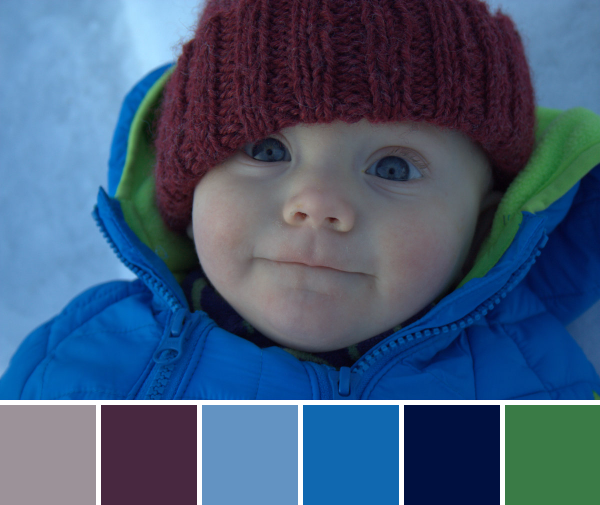
We have walked to school more times this winter than we have gotten snow, which is just one clue that our Maine winter weather is definitely out of whack. Despite the lack of fresh powder, last weekend we decided to have a family fun day out in what little snow there is. I pulled Max and Finn around the yard in a sled, we all played on the snowy swing set, we sledded down hills, and Finn had his first roll-around in the white stuff. Even without our typical couple feet of snow, we had fun and enjoyed some winter beauty all together. The photos in today’s color palettes were taken during our fun afternoon outside. Color palettes were made using Play Crafts’ Palette Builder 2.1 and my photos. Matching solids are a combination of Robert Kaufman’s Kona cottons and Moda’s Bella solids. Matching solids and Aurifil threads is one of the awesome perks of using Play Crafts’ tool!
Corresponding solids from left to right: Kona Pewter, Kona Hibiscus, Bella 30’s Blue, Bella Amelia Blue, Kona Regal, Kona Leprechaun
Corresponding Aurifil thread from left to right: 2605 – Grey
2465 – V Dk Brown
4140 – Wedgewood
2730 – Delft Blue
2745 – Midnight
2890 – Dk Grass Green
There is not much color to be found outside these days, except that of the brightly colored snowsuits of my children. I couldn’t resist turning this one into a color palette, and the resulting color combination is bright and bold.
Corresponding solids from left to right:
Bella Soft Finish Black, Kona Coal, Bella Blue, Bella Periwinkle, Kona Ash, Bella Sienna
Corresponding Aurifil thread from left to right: 4241 – V Dk Grey
1158 – Med Grey 5008 – Sugar Paper 4140 – Wedgewood 2600 – Dove 2372 – Dk Antique Gold
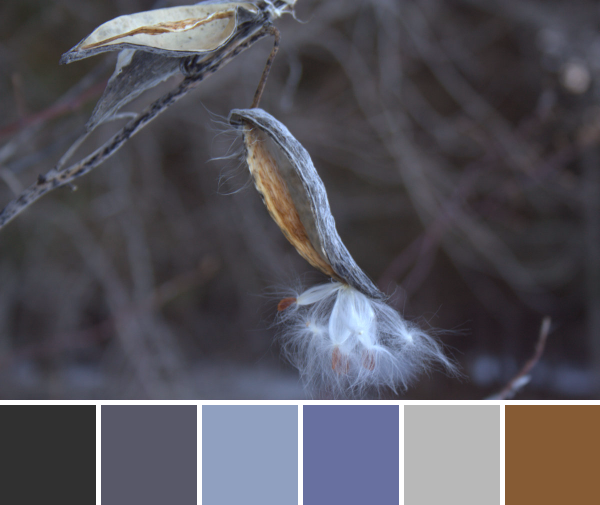
During my sled rounds, I was searching for any bits of color other than the ubiquitous browns, greys, subtle blues, and whites in the winter environment around me. This milkweed pod caught my eye with its hint of orange, and with the blurry blues of the background, it makes a fun palette. While the color reads more like a brown here, I swear in real life if felt like a radiant pop of orange in an otherwise barrenly brown landscape. Feel free to take poetic license and orangey-up that Sienna! I definitely could see a successful quilt in these colors.
Where is your favorite place to find color inspiration during the bleak days of winter?
It’s been ages since my last color inspiration post, but I’m determined to get them going again. Maine has been thoroughly drab and colorless this winter, and not even with the pristine blanket of snow so common this far north. We finally experienced our first good snow a week or so ago, and I knew it was a great time to get out and take some photos. These color palettes were created using my photographs and Play Crafts’ Palette Builder 2.1.
Corresponding solids from left to right: Kona Silver, Kona Stone, Kona Medium Grey, Bella Glacier, Bella Cloud, Kona Cloud
Corresponding Aurifil thread from left to right: 2615 – Aluminum
2325 – Linen
2524 – Grey Violet
5008 – Sugar Paper
2612 – Arctic Sky
2560 – Iris
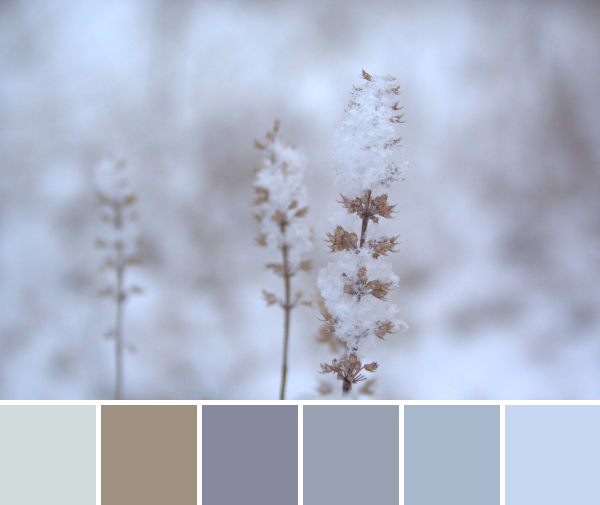
As much as my mind calls snowscapes white, when I look closely I discover that there actually are quite a few colors hidden in the soft scene. Blues, lavenders, and browns abound. This creeping thyme looks much different now than it did when it appeared in THIS color inspiration post a few months ago!
Corresponding solids from left to right: Kona Cloud, Kona Pewter, Bella Blush, Bella Tomato Soup, Bella Indigo, Bella Wisteria
Corresponding Aurifil thread from left to right: 2560 – Iris
2606 – Mist 2445 – Victorian Rose 2245 – Red Orange 2468 – Dk Wine 2524 – Grey Violet
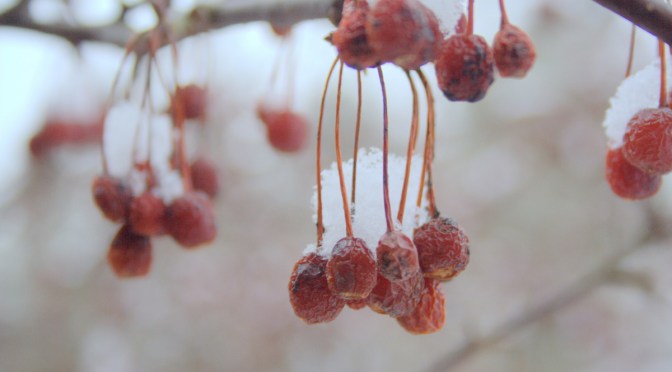
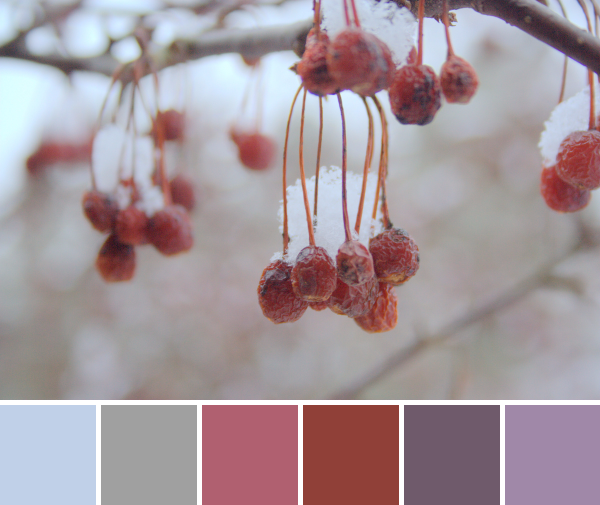
Leave it to Mother Nature to provide some pops of color even during the bleakest season. Red berries paired with fresh snow create a quintessential winter scene and a color palette I’d surely use in a quilt!
Where have you found your latest color inspiration?
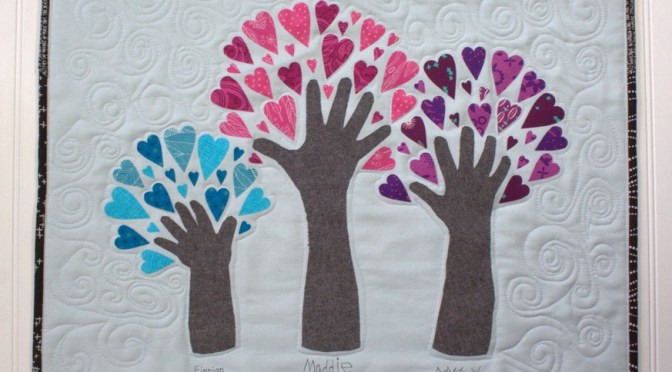
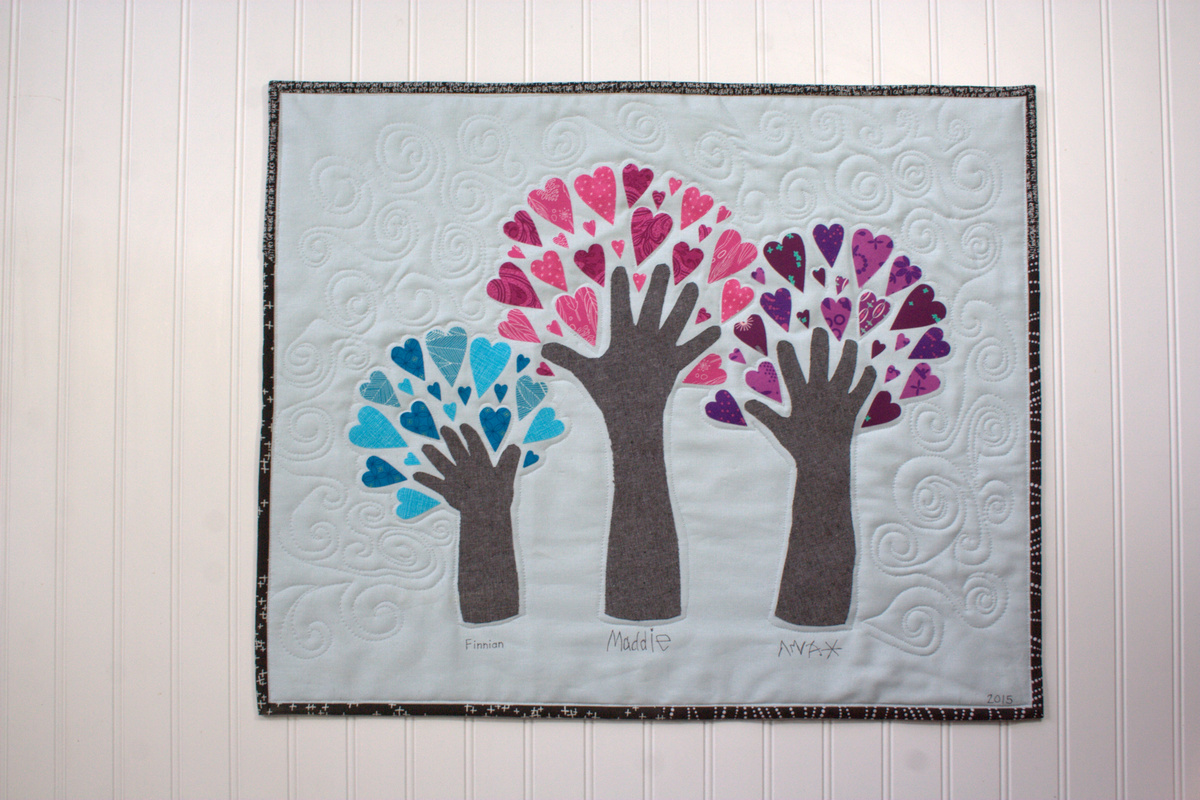
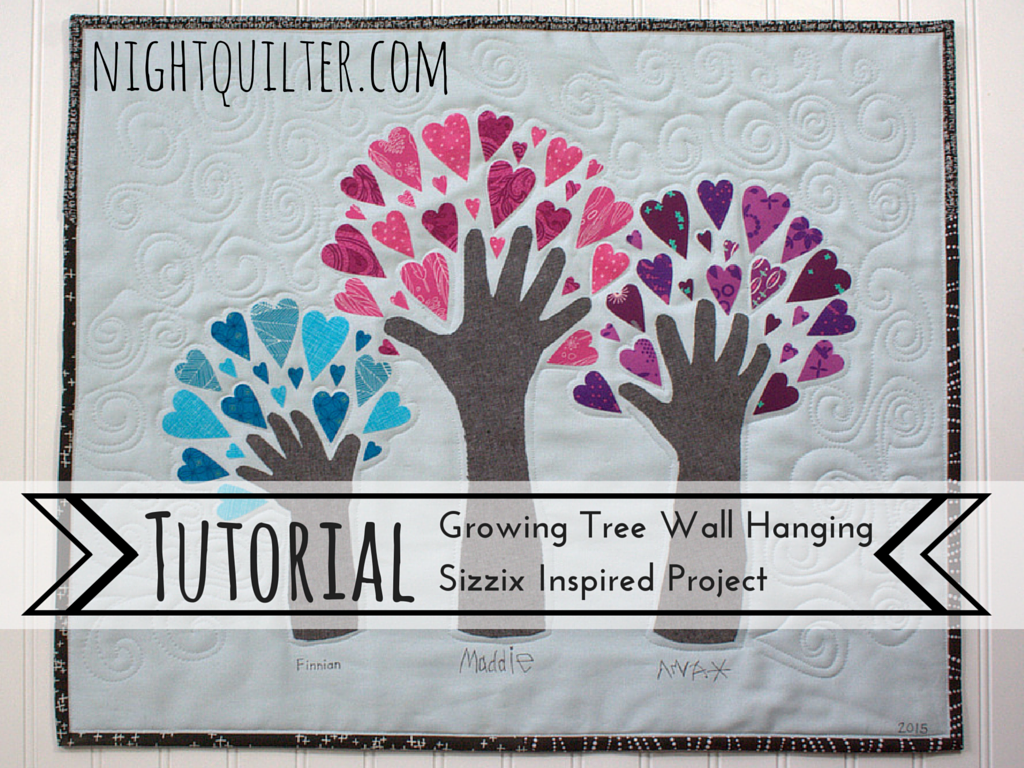
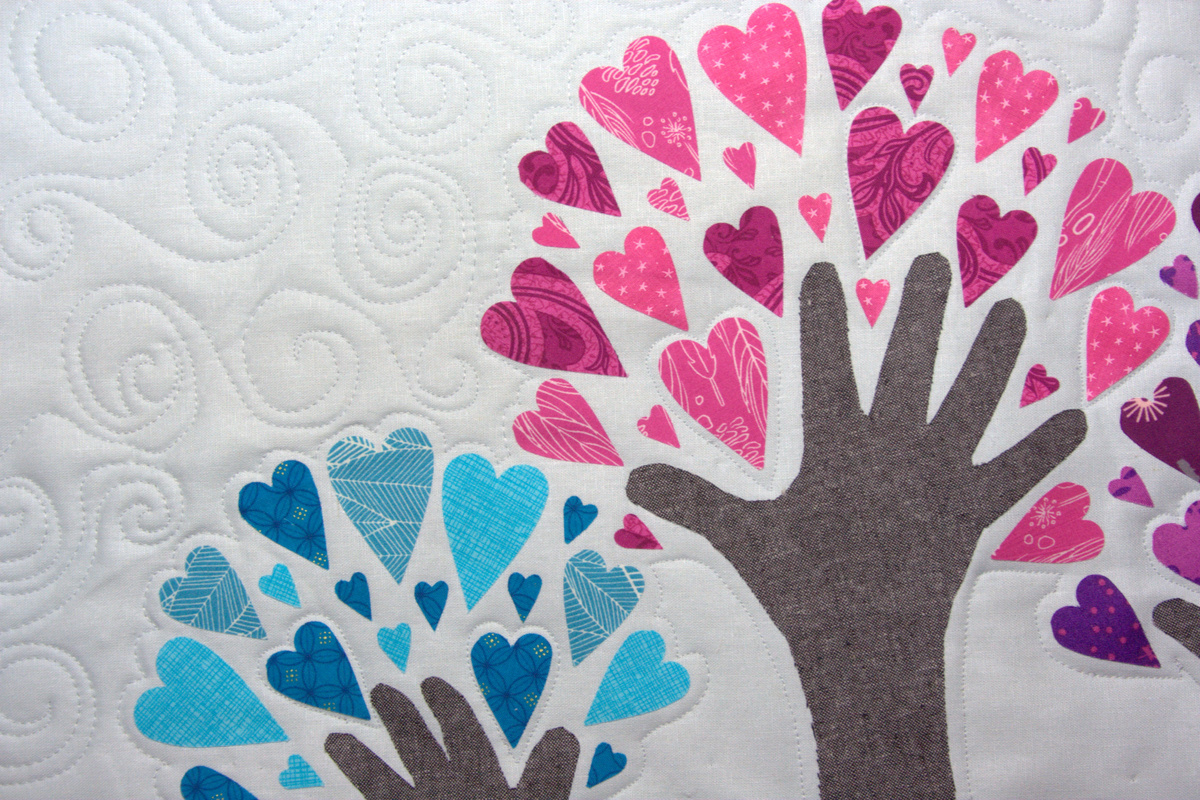
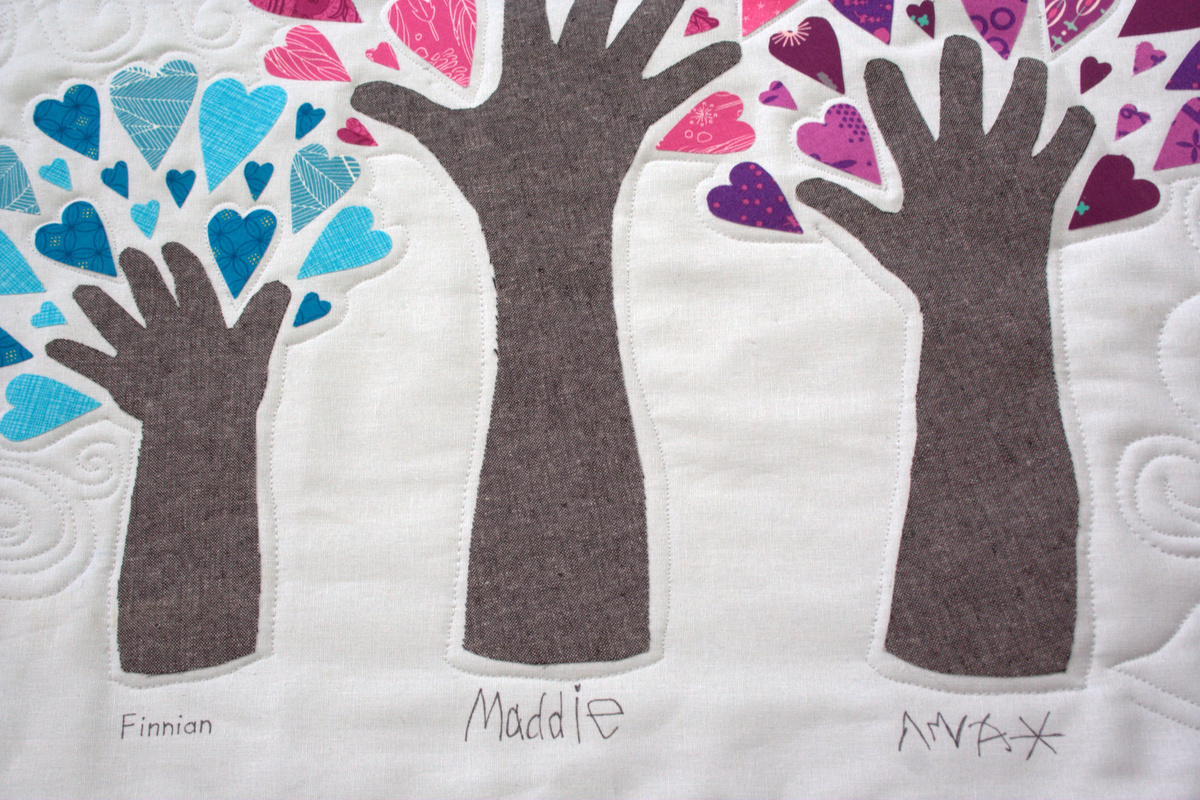
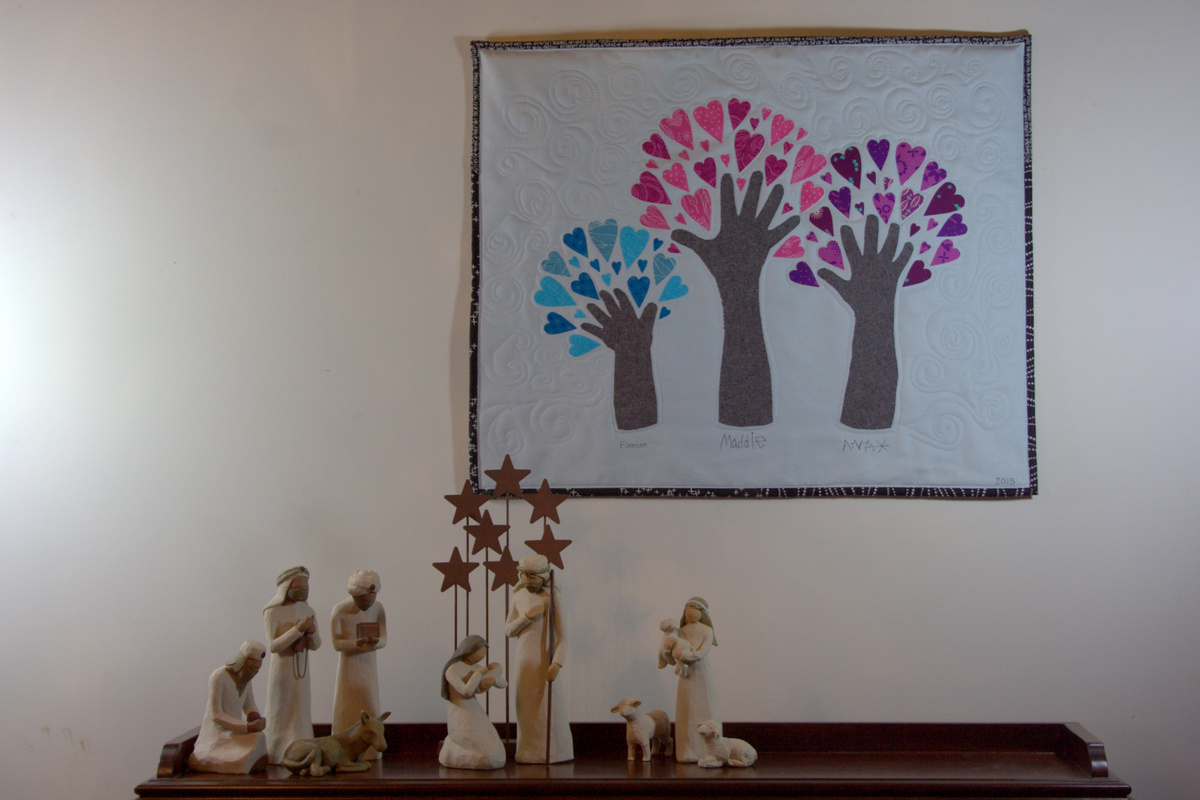
Today I’d like to share a tutorial for a great project that documents the growth of little ones while showing love in a beautiful way: the growing tree. In my case, it will be a growing grove of three trees, so feel free to adapt to fit your kiddos. I initially hoped to make four of these, one for each set of grandparents (we are blessed to have three sets!) and one for us to keep. Now that I’ve finally finished the first one, I’m accepting the fact that I may just stop at one, since I would like to cherish my little babies’ hands, too, and Christmas is less than three (3!?) days away. Since it involves hearts, this project would also be a fabulous Valentine’s Day gift for those doting grandparents.
From the moment I gave birth to my first child, my holiday gift giving style changed completely. Instead of trying to think of the “thing” each family member would like or need most and focusing all of my time on making handmade gifts of love for every family member possible, I acknowledge that presence is the best present if at all possible, and as a busy mom (of three lovely children, now), gift making time is much more rare. I am blessed to have a large family, and to have married into an even larger family, so potential gift recipients abound. But especially in recent years, my parents and in-laws–the grandparents–are usually the sole recipients of Christmas gifts, and such gifts nearly always involve their cherished grandchildren (our kids). This year, grandparents will get a whole lot of love, since time wasn’t on my side with this project. When I had the idea to make heart-filled trees out of my children’s hands, I did my typical google search to see if it had been done before. I found this post, about a creation inspired by another creation, and I knew that that inspiration would need to take one more step into the quilting world to become a quilted gift. Here’s how to make your own Growing Tree.
First, gather your materials. Note that material amounts will vary depending on the number of children you have and the size of the child. I’ve tried to include amounts for a single tree, but feel free to adjust as needed. I’ve also included affiliate links to products that I use and love. If you click through and purchase with these links, I will receive a small commission that will go toward funding all that goes into creating these tutorials and keeping my blog up and running.
Materials
1/2 yard background fabric – you may be able to use less if your child is small. A fat quarter should be sufficient for a baby’s growing tree. A half yard is playing it safe if your children are older. (I used Essex yarn dyed linen in light blue)
Children! and a pencil for tracing their forearms and hands!
*These items are not needed if you opt to frame your growing tree instead of quilting it, but you will also need a suitably sized picture frame, stiff acid-free cardboard if the frame doesn’t come with it, and a form of adhesive (glue or tape) to tightly wrap the fabric around the cardboard before insertion into the frame.
Let’s get started!
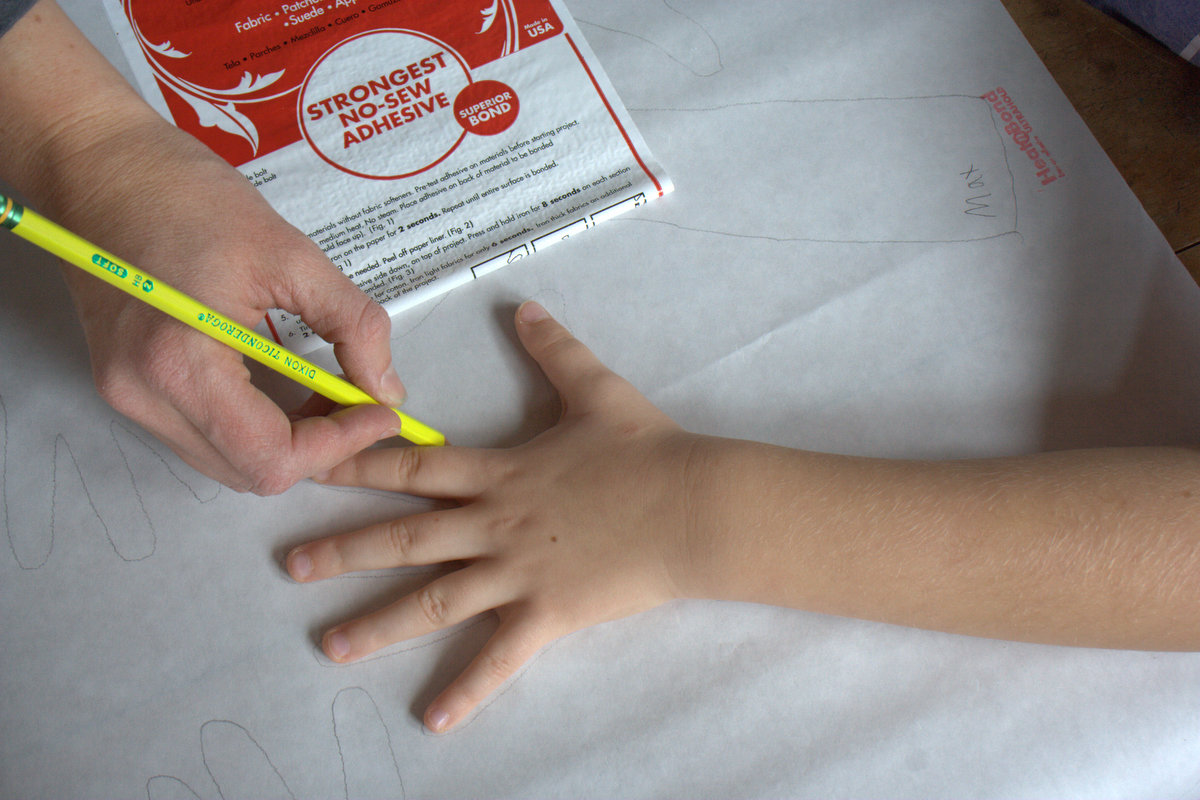
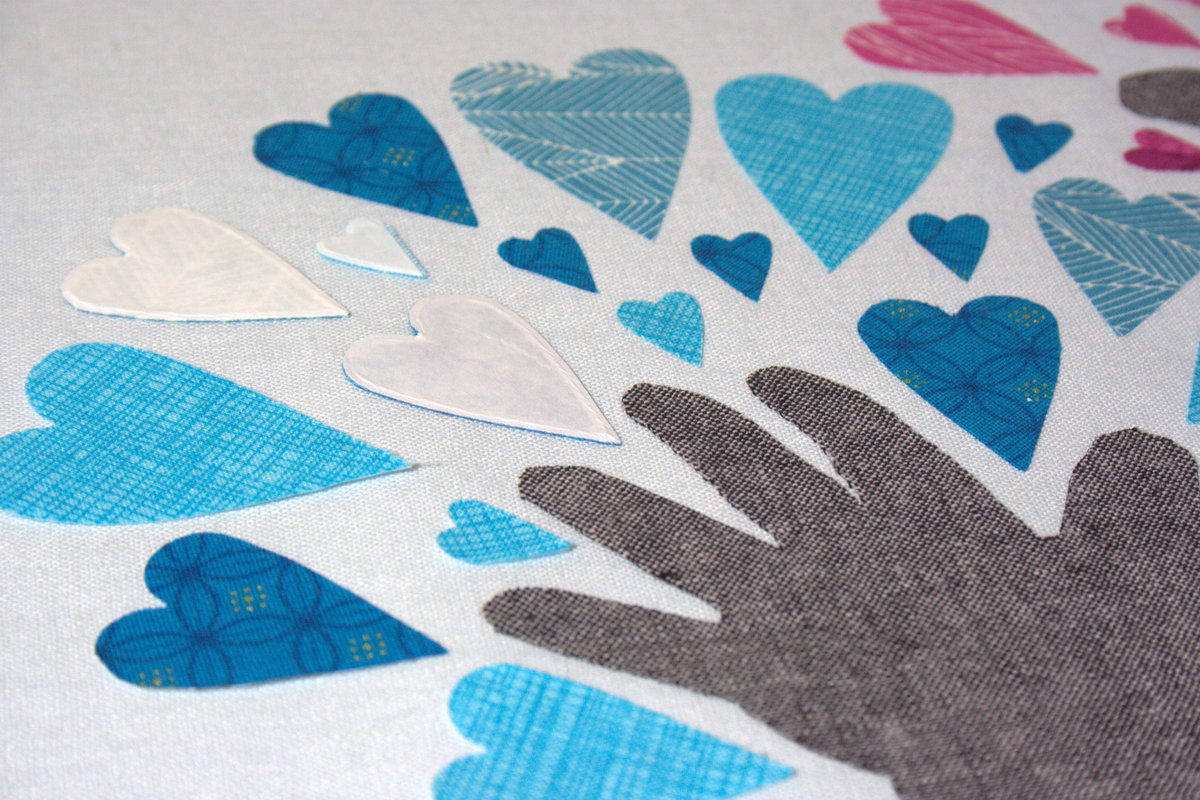
Gather your children! Have them spread fingers wide and put forearms down onto the Heat’n Bond. With their excited help, trace each child’s forearm and hand onto the non-textured side of the Heat’n Bond. You want to trace from just below the elbow, up around each finger, and then down the other side. If you are making more than one version of this Growing Tree, trace as many forearm-hand tree trunks as you will need. (Because I initially aimed to make four versions of my Growing Grove of Trees–oh my boundless ambition!– I traced each patient child’s arm four times, except Finn’s. With squirmy 6 month old Finn, I struggled and wiggled and waggled until I got a somewhat accurate tracing of his arm and hand, cut it out, and traced THAT three more times. He was not interested in sitting still!)
Carefully cut out each tree trunk, either enlisting the help of your children if they are older and proficient at cutting, or sending them off to play for the next few steps.
Fuse your tree trunks to the wrong side of the tree trunk fabric, following the manufacturer’s directions. Always be extra cautious if using a hot iron with small children around. Toddlers are inherently curious and can not yet physiologically control their curious explorations, despite fervent warnings from mommy–as I’m sure you know! I do my ironing upstairs without any kids underfoot to be safe.
Set the tree trunks aside to cool. Once cool, carefully cut around each forearm tree trunk and set aside.
Fuse Heat’n Bond to the wrong sides of all of the fabric scraps that will become hearts. Remember to have the paper side of the Heat’n Bond facing up, and put a pressing cloth down to protect your ironing surface. Let cool completely.
Once the fused heart-intended fabric has cooled completely, with paper-friendly scissors or rotary cutter (NOT your fabric scissors!), cut your fabric into 2 1/4″ x 3 1/4″ rectangles for ease of quick cutting.. Note that I am using the three smallest heart sizes for my trees, and am not worrying about directionality of the fabric. If you have smaller scraps or want the directionality of the fabric to be level, you can cut 3/4″ x 3/4″ for the smallest heart, 1 1/4″ x 1 3/4″ rectangles for the medium heart or 1 1/2″ x 2 1/4″ rectangles for the large. (I did not use the extra large heart). I mostly cut the medium and large hearts from 2 1/4″ x 3 1/4″ rectangles and then used the scraps from those to cut small hearts.
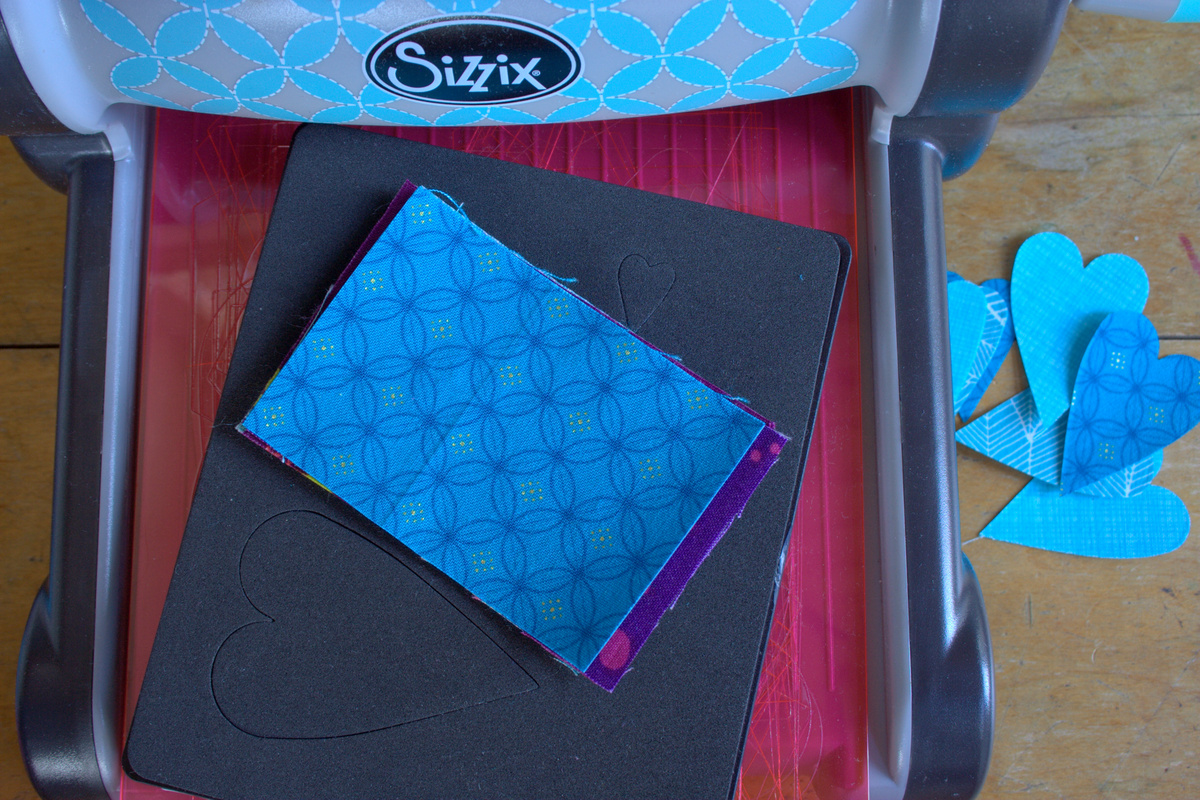
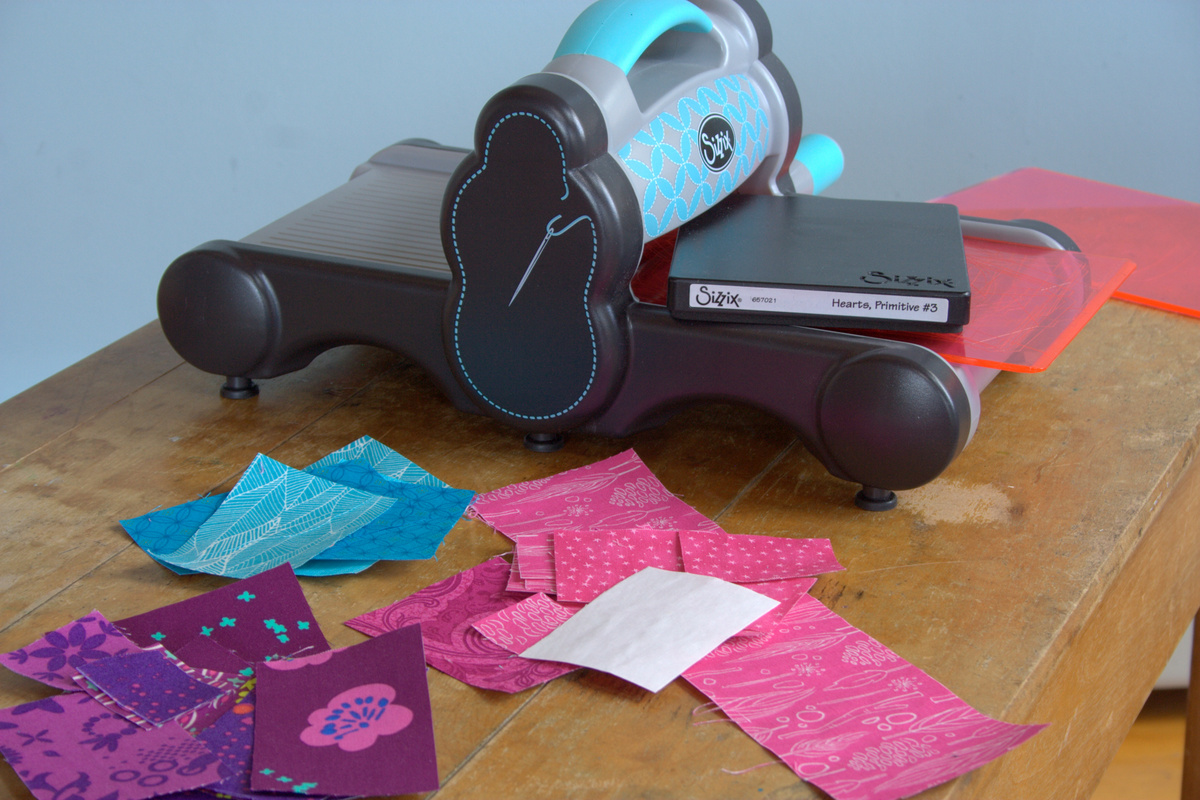
Next, pull out your Sizzix fabi die cutting machine and Primitive hearts #3 die. Call those children back! Layer the pre-fused fabric rectangles over the desired sized hearts on the Primitive Hearts die, four (4) at a time. The Sizzix can cut up to nine (9) layers of fabric at once, but since the fusible is pre-fused, each rectangle counts as two layers. Make your Sizzix sandwich: bottom cutting pad, die with the blades facing up, fabric centered over the heart blades, and top cutting pad.
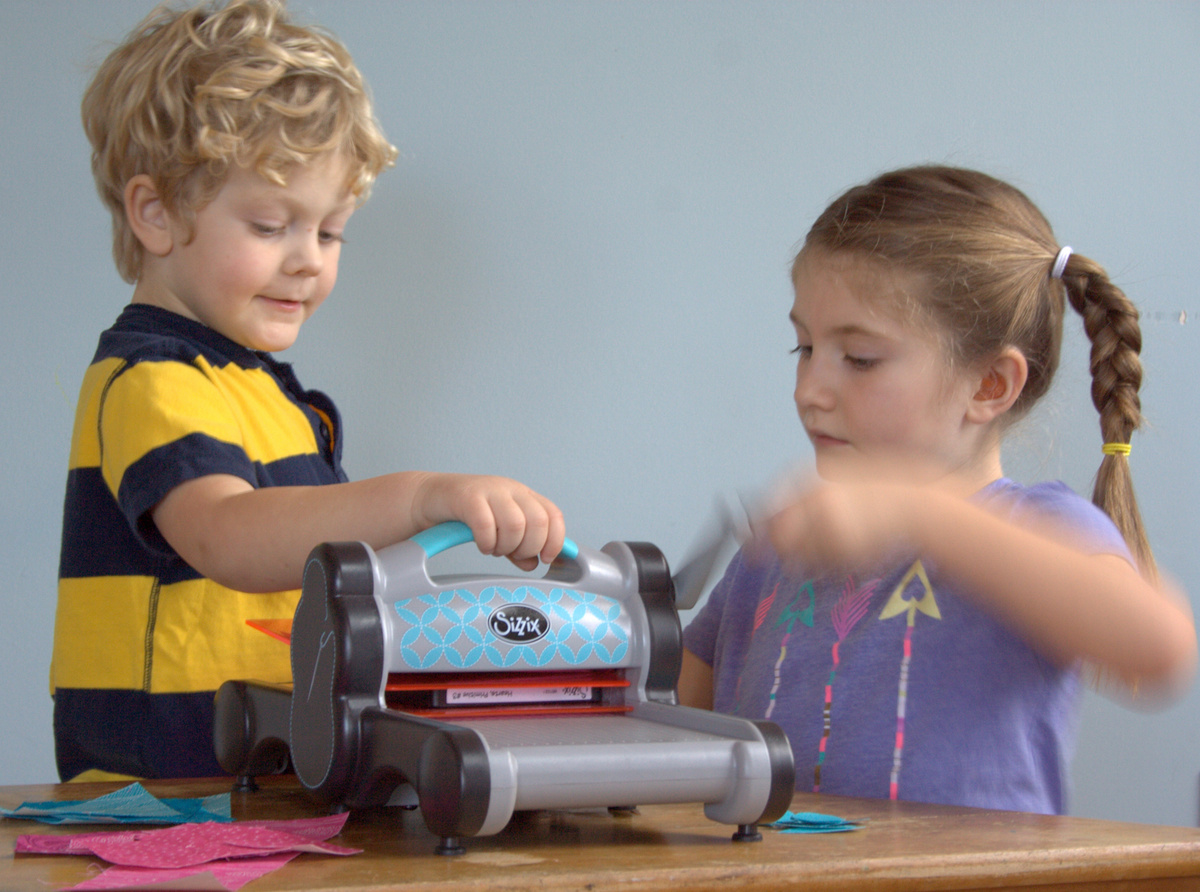
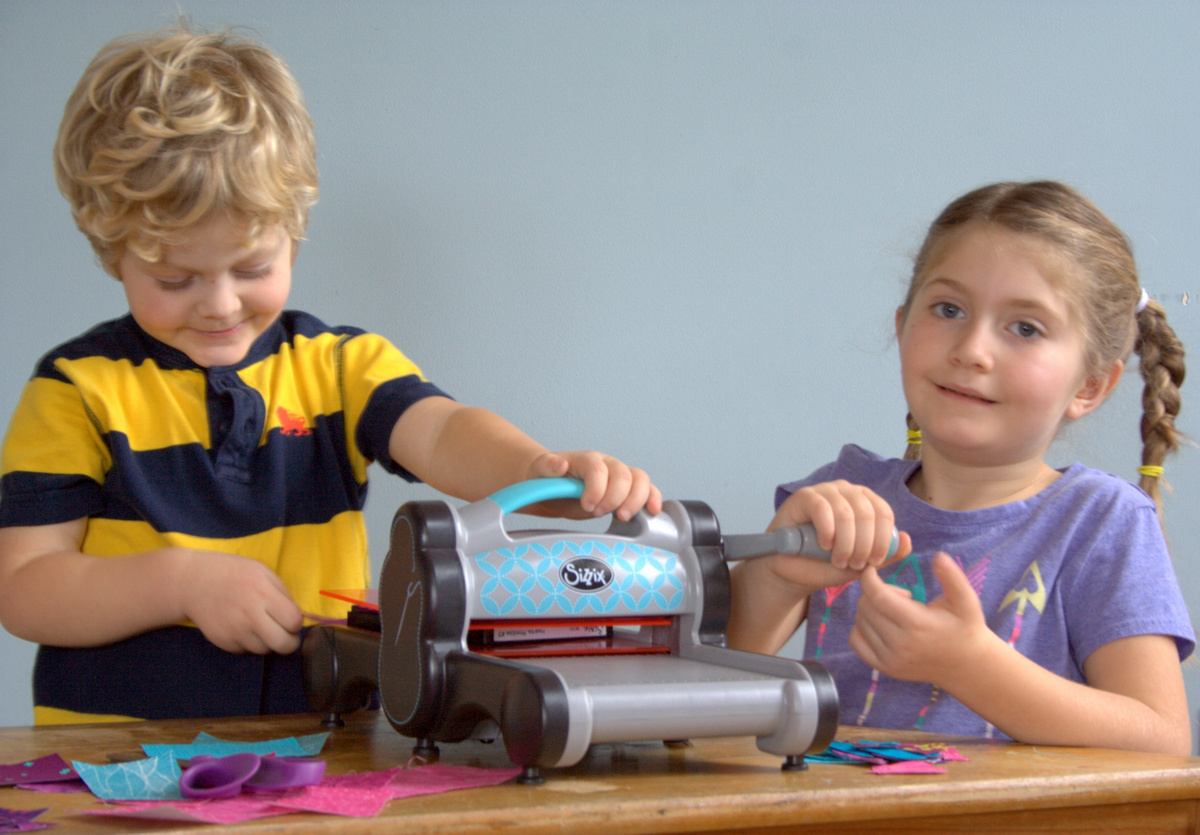
Let your kiddos carefully crank them through! If you don’t have a Sizzix, get the kids’ help and start cutting out hearts of different sizes, ranging from 1/2″ to 2″ in size. Depending on the ages of your children, you can either enlist their help or set them up with a different activity while you lay out the wall hanging once all of the hearts and trunks are cut.
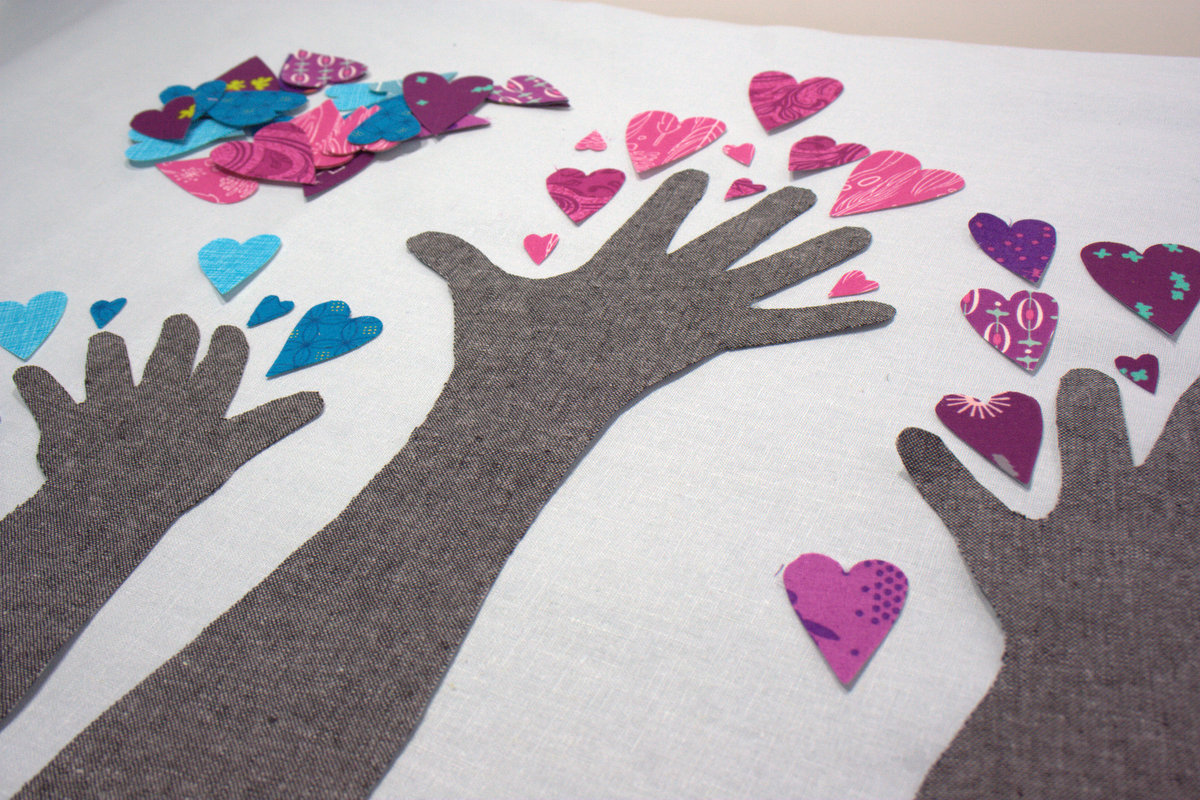
Lay out a large piece of your background fabric. I suggest arranging your tree or grove of trees BEFORE cutting the background fabric to size, since every child’s arm is different. Layout your tree trunk(s), arranging the hearts around the top like the leaves of a tree.
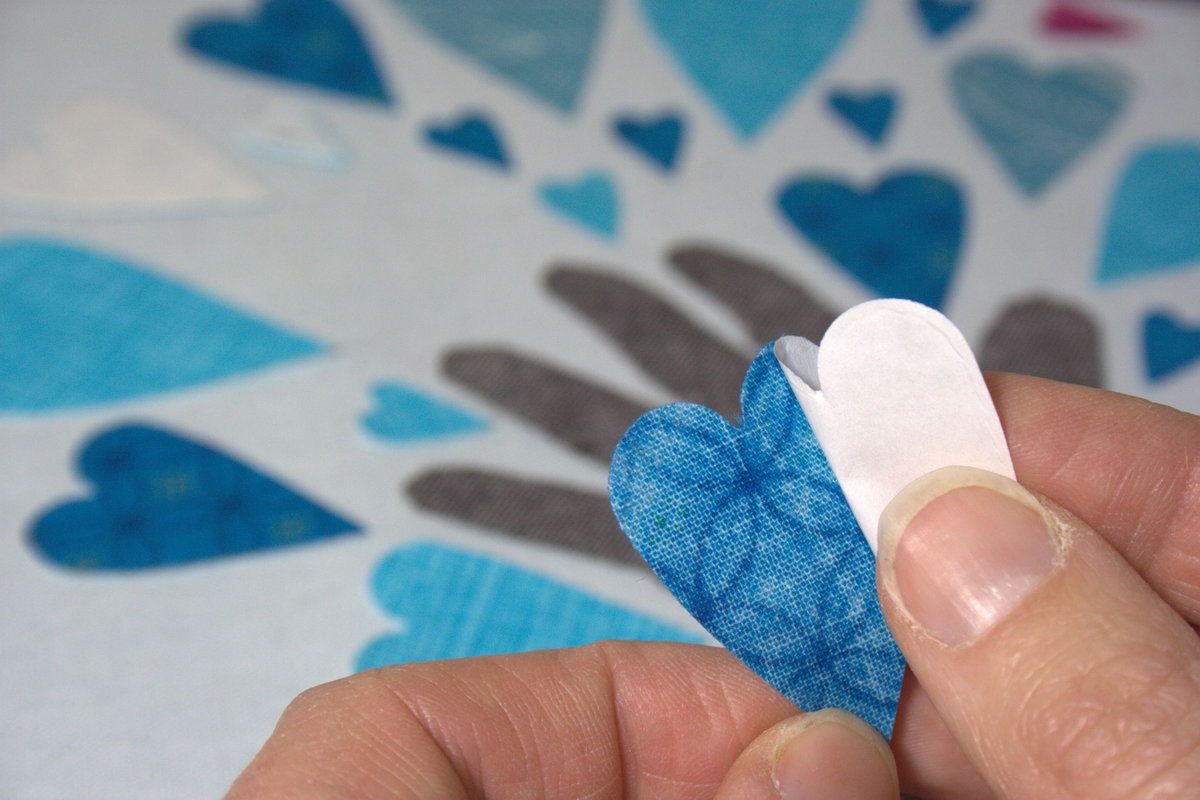
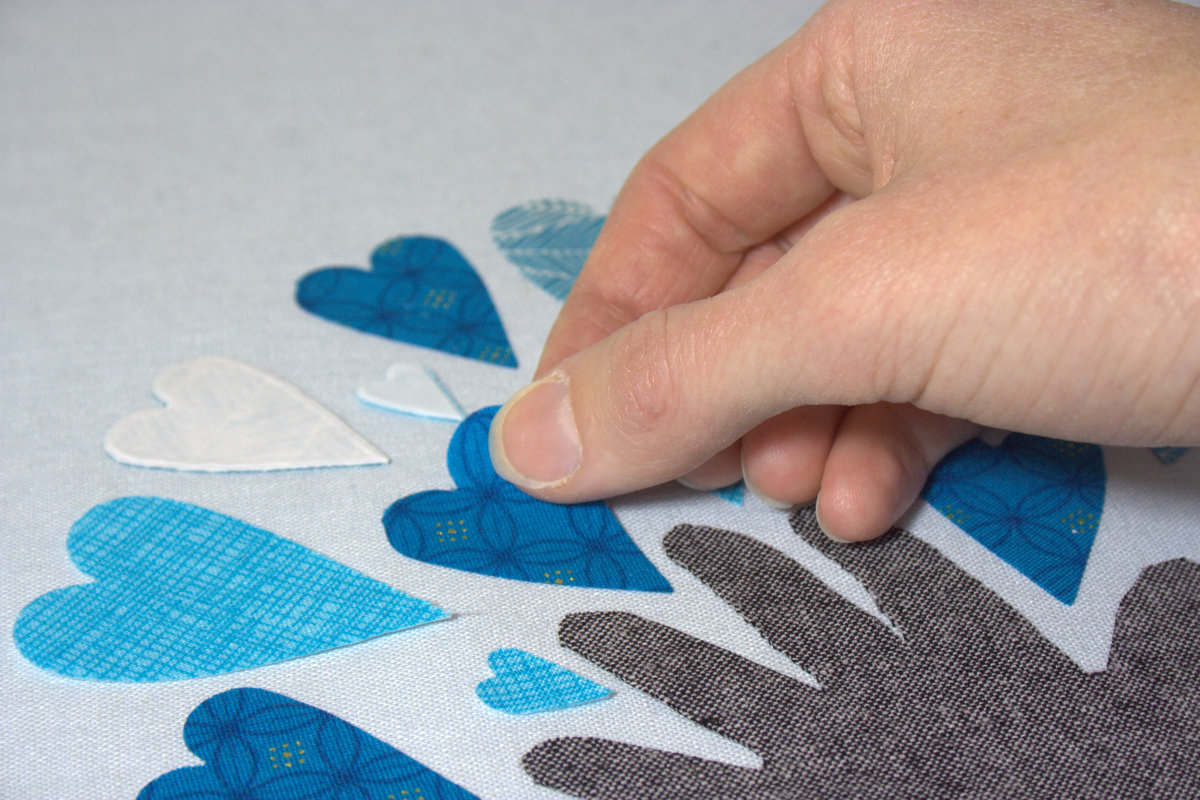
Once they are arranged the way you want them, carefully remove the adhesive paper from each component, placing it back in its proper place as you go.
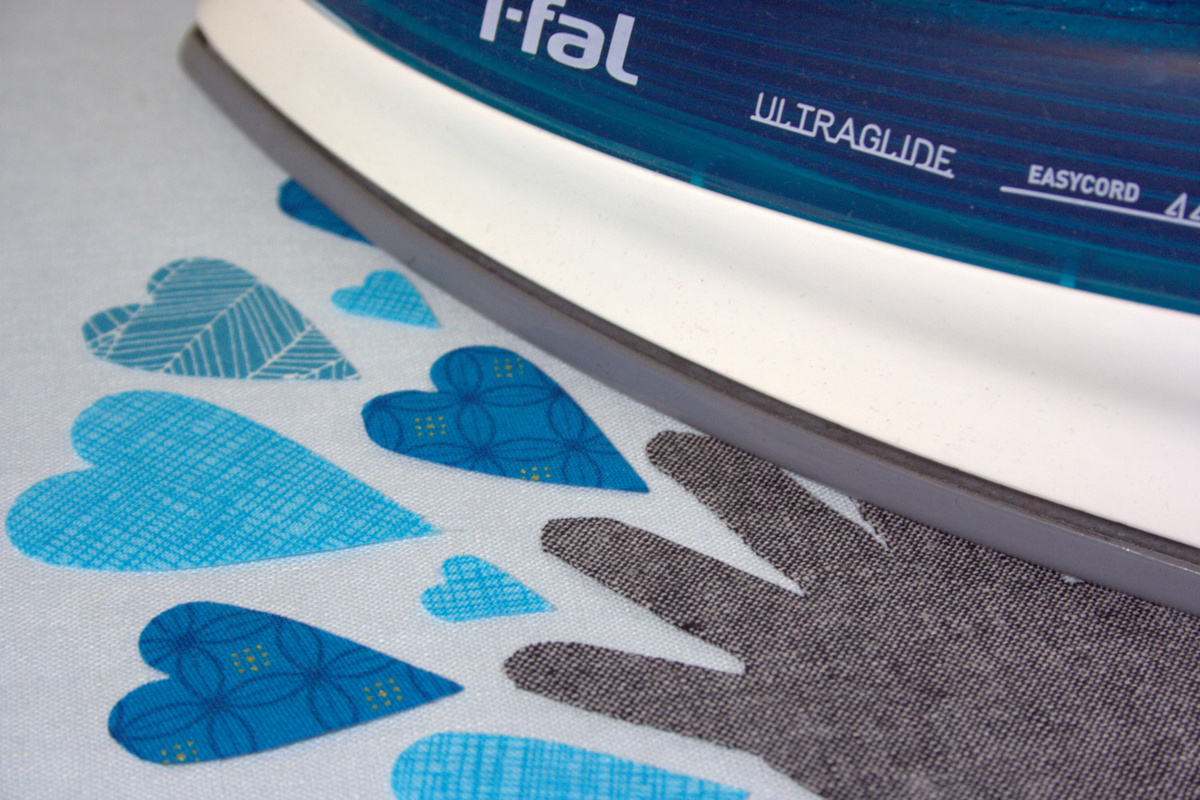
Once you have an iron-surface-sized batch with the paper backings removed, fuse them down. *Note: If possible, lay out your arrangement on your ironing surface so that once all of the papers are removed and pieces stuck, you can simply fuse them down. I used a large foam board beneath mine, and actually pressed onto the foam board since my ironing surface is tiny. Always follow the manufacturer’s instructions when using Heat’n Bond!
If you’re like me and are interrupted during this process, simply flip a row of hearts that haven’t been fused yet, so that you know where you are when you return.
Trim the background fabric approximately 3″ from each edge of your Growing Tree if you plan on quilting. Be sure to use the lines on your cutting mat to ensure your quilt is square as you cut.
Alternate ending
Alternatively, after fusing the hearts and tree trunks, you could wrap the fabric tightly around a thick acid free piece of cardboard and frame it in a picture frame. If you opt to frame yours, be sure to give yourself at least 2″ of overhang on all four sides, and plan your tree arrangement to fit into your desired frame.
Back to the quilting option…
Cut batting and backing fabric to extend about 1″ from each edge of your Growing Tree quilt top (For example, if your Growing Tree top measures 27″ x 22″ like mine does, cut your batting and backing 29″ x 24″)
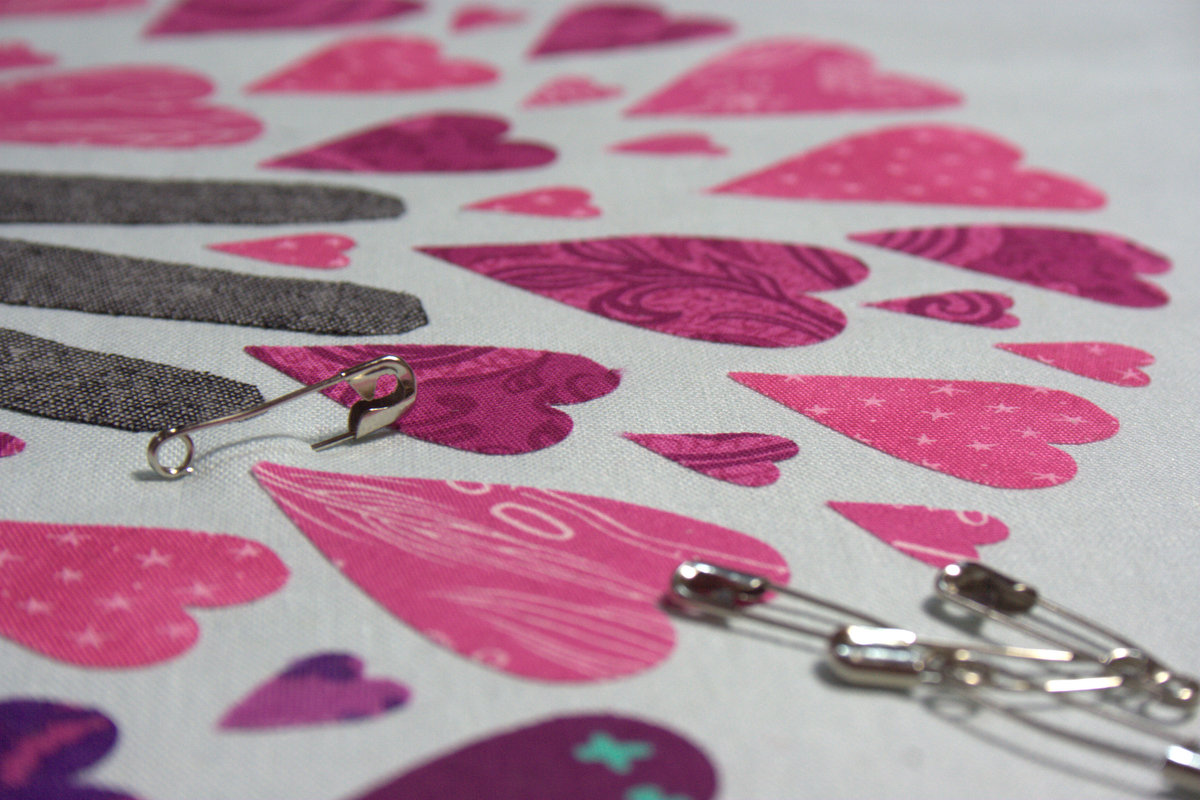
Baste your quilt layers using your desired method (I used pins).
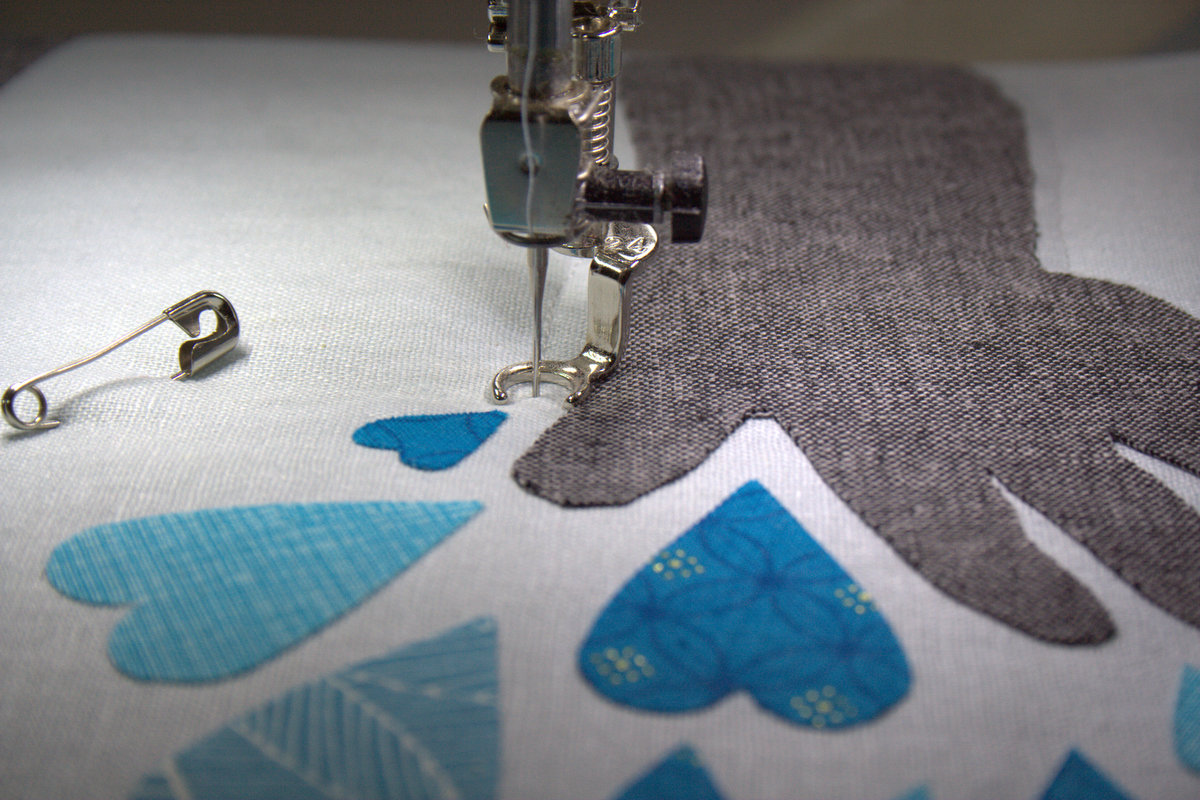
With a thread that coordinates with your background fabric, free motion quilt AROUND the edges of your tree trunk(s) and hearts. I also stitched around a few single hearts (you don’t need to sew around all of them) within the tree. Remember that the Heat’n Bond is NO SEW, so be sure not to sew on top of the fused pieces. Feel free to free motion quilt the background to help hold everything in place. I used a windy spiral design and was reminded at how much fun free motion quilting is! I need to do it more often!
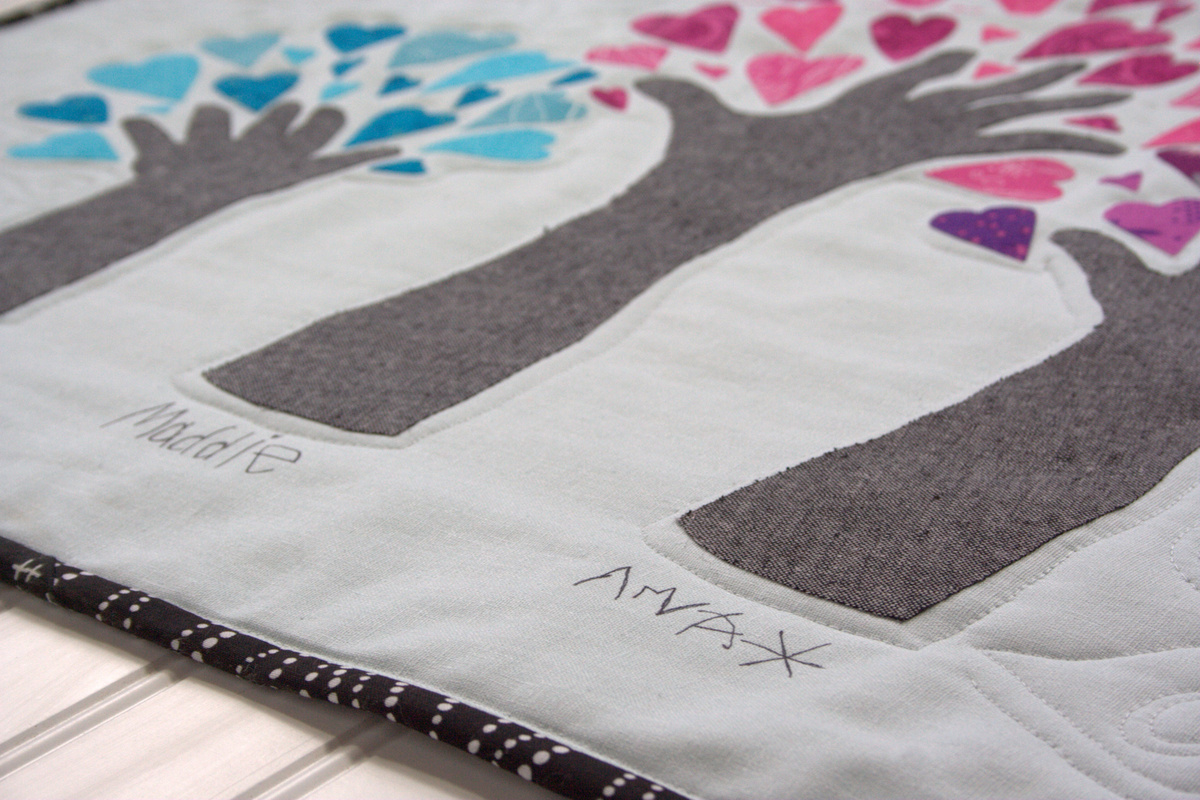
Add each child’s name beneath each tree, either with embroidery or permanent fabric marker. I used fabric marker so that Maddie and Max could include their signatures. Don’t forget the date! (Confession: I copied Max’s signature from a recent art project since I didn’t dare let him and a permanent fabric marker near this finished project. Perhaps a 3 year old with a less impish nature might be able to sign right on the project, but use your judgement.)
Trim the batting and backing flush with the quilt top, square up, and bind as desired. I included corner hang tabs on the back of my Growing Tree Grove using THIS method, and bound the quilt using THIS great tutorial by Cluck Cluck Sew.
Hang this Growing Grove on your wall so that you can immortalize those precious little hands, or wrap & gift to those doting grandparents if you’re superwoman, or if you are already planning ahead for Valentine’s Day!
Enjoy, and happy holidays!
Outtakes
Just for fun, here’s what the vast majority of the photographs of my kiddos using the Sizzix looked like:
Max does not. stop. moving! Enjoy the blurry laugh, and enjoy your holidays!
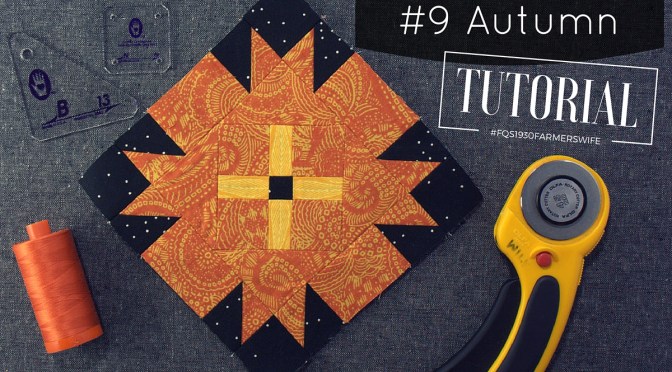
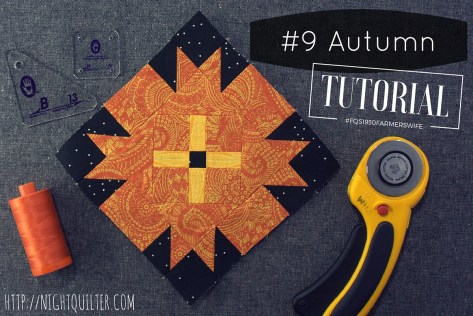
With a block like Autumn, it’s easy to get daunted before you even begin: 37 pieces in one 6″ block!? Ack! But wait! This is a perfect time to practice looking at each block’s construction creatively. If there’s one thing this sew along has taught me, it’s that there is nearly always a faster and easier way to approach block construction than purely cutting out all of the pieces and sewing them together. With a few shortcuts and piecing tricks, Autumn comes together quite smoothly. In this tutorial, I’ll show you how to make half square triangles (HST) 8 at a time (Yes, 8! We make all of the HST needed in this block at once), use strip piecing to save a bit of time, and fill in the gaps using Marti Michell templates (Set B and Set N are helpful with this block) or rotary cutting to help make putting Autumn together as easy as watching falling leaves.
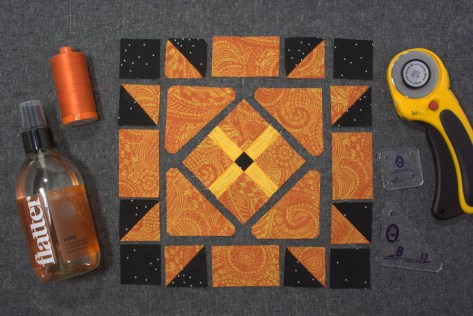
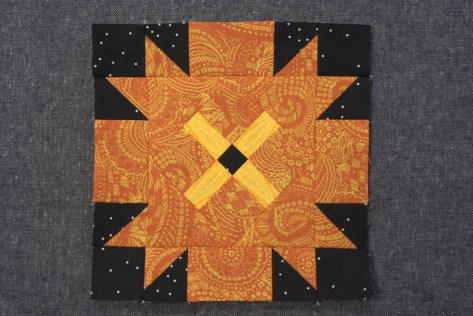
As you may have noticed, I used different locations for the orange and black fabrics in the center square than those used in the book. I’d like to say it was intentional, but lo… it was not. I did not even realize my error until this entire tutorial was finished, photographed, and scheduled to post, as I was proudly admiring my block. When I realized my error, at first horror swept over me. Then, after Angie’s reassurance and another look at my block, I decided that Autumn was a good place for a design change. After all, it’s my quilt! I encourage you to remember that during this sew along, and don’t be afraid to make your quilt your own, with a hefty dose of gentleness toward yourself if when you discover an error after fully completing a block. Call it an unexpected design element. AND take this as an extra reminder to double check your fabric placement and choices BEFORE sewing your block together!
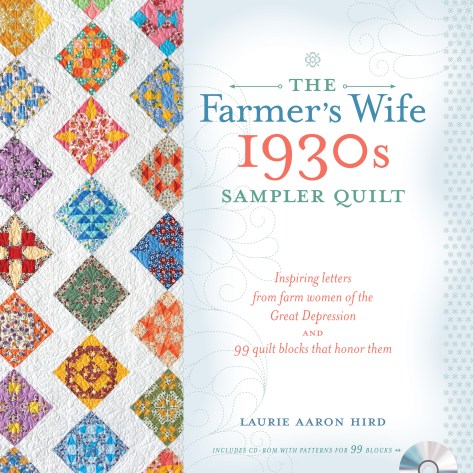
Note: Exact measurements for the pieces needed to construct this block will not be provided in this tutorial in order to protect copy write. It is a prerequisite of making this block that you have a copy of the book, The Farmer’s Wife 1930s Sampler Quilt: Inspiring Letters from Farm Women of the Great Depression and 99 Quilt Blocks That Honor Them. All measurements can be found in this book and its associated media. That said, even if you aren’t sewing along with us, I think you will find some really helpful tips in this tutorial that will help you look at all block construction more creatively!
Reflection on the Letter – A Precious Half-Hour
For those of you reading this who are not sewing along, one of my favorite aspects of this sew along is that each block in the book is inspired and accompanied by a letter written by an actual 1930 farmer’s wife. It has been inspiring to see how similar these farmer’s wives’ dreams, desires, troubles, and day-to-day struggles were to mine, and to hear their often uplifting takes on life. I can’t tell you how many times I’ve read the letter with tears in my eyes, nodding a resounding “yes!” as I relate my own life to the words on the page.
I know Angie said that blocks were allocated completely randomly, but this letter was meant for me. This woman is me! It was both surreal and somehow encouraging to read that even those hard working, ever-positive farmer’s wives embraced the NEED to make time for themselves. A few months ago, I created a hashtag (#sewtake20) in an attempt to encourage other busy moms (and myself!) to make time for themselves 20 minutes a day, no matter how crazy the day, how high the stack of dishes, and how all-engulfing the mountain of laundry. Wise L.O.L. from Iowa recognized the need to nourish body and soul back in 1939, despite her full plate. While she took a precious half hour and I’m striving for only 20 minutes, it still helps me to not feel so guilty doing the same here in 2015.
Tutorial
For this block, I specifically chose fabrics with small or nondirectional prints, so that I could quickly piece the components without worrying about fussy cutting or directionality. The #9C pieces are a small exception, since I gave a tiny bit of focus to fabric alignment. Note that I am arranging my final layout on-point, but for the purposes of being consistent with the diagram in the book, this tutorial pieces the block squared. If you plan to set your blocks on-point, be sure to account for that with any directional fabric placement.
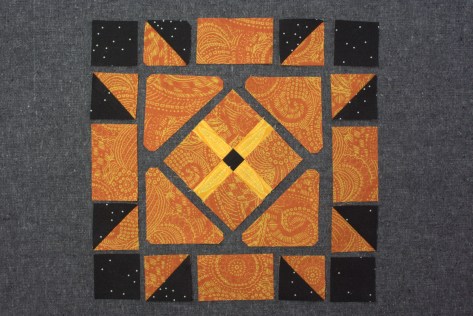
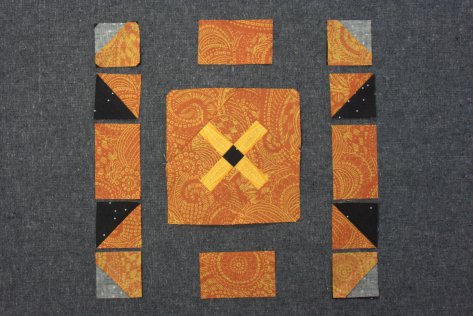
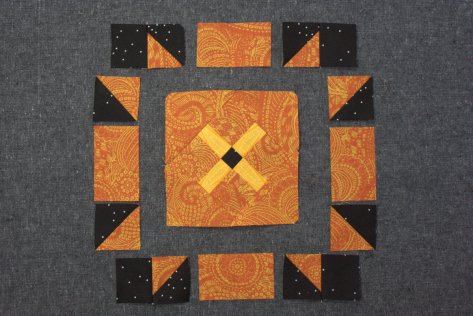
This block is composed of 8 HSTs, 8 rectangles, 9 squares, and 4 triangles. I first cranked out the bits I could make quickly and efficiently, namely the HSTs and the center square. Let’s break it down.
Making 8 HSTs at Once
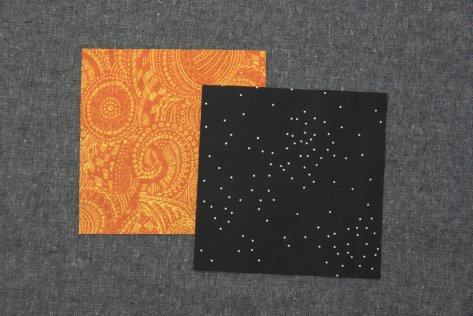
In the book, the print and coral fabrics were used to make the #9F HSTs. Choose your coordinating fabrics (I used black and orange).
Cut one (1) 5″ square from each. Note: If your HST-making skills are on point and you want to conserve fabric, you can use 4 3/4″ squares. I prefer to play it safe and trim a bit more to ensure my HSTs are perfect.
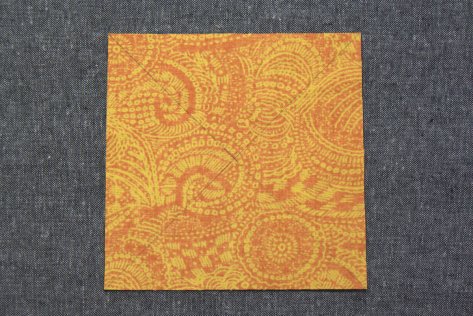
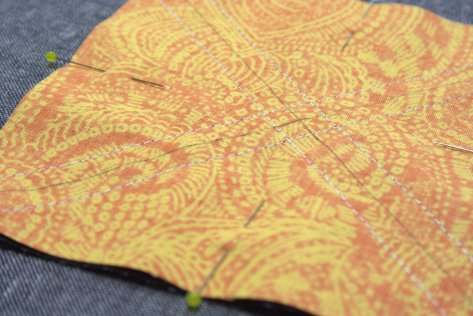
Right sides together, draw diagonal lines from corner to corner, making an X. You only need to mark the wrong side of one of the squares.
Pin your squares together to keep them from shifting, and sew 1/4″ from the right and left of both lines. This is a good time to confirm the accuracy of your 1/4″ seams.
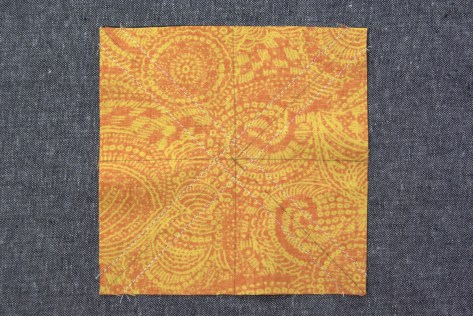
Carefully draw a line down the middle of the blocks in both directions. I used the 2 1/2″ line on my ruler to help make sure my line was square. You should now see a plus and an X.
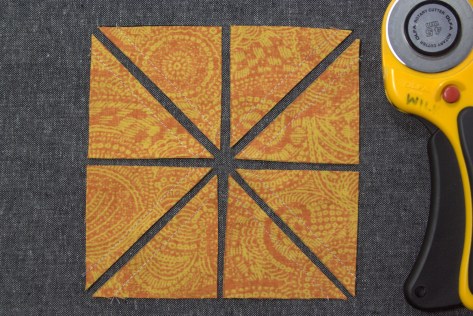
Cut along the marked lines. Press open.
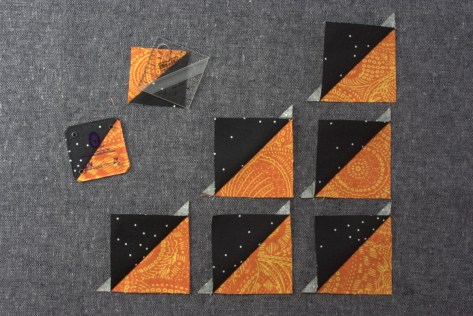
You now have 8 HSTs! I typically press all seams open, but with HSTs I press to the darker fabric since I use my Bloc Loc rulers to trim them to size. If you don’t have Bloc Loc rulers, feel free to press seams open, and align the 45 degree line on your ruler to help trim to the size indicated on the #9F template in the book.
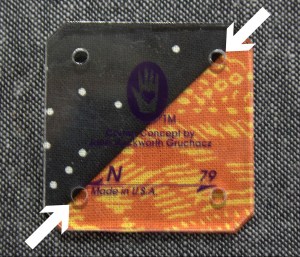
You can also use Marti Michell template N79 to trim to square, too. Be sure to center your diagonal seam in the centers of the two holes in the template to trim evenly.
Do a little dance and set those 8 HSTs aside.
Strip Piecing the Center Square
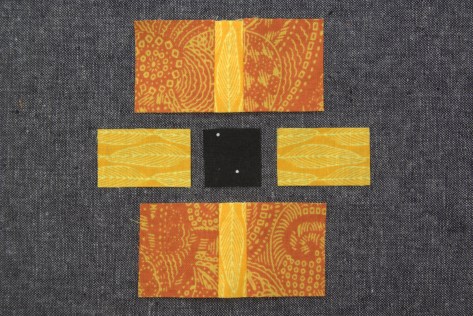
Because the center square is symmetrical, two of the outer edges can be strip pieced, saving you a bit of time and thread.
In the book, the coral (#9D) and yellow (#9G) fabrics with a tiny center square of print (#9E) were used. I should have used black, yellow-orange, and a tiny center square of orange, but as I noted above, I made an inadvertent design change and went with orange, yellow-orange, and a tiny center square of black. Wrap your brain around which of your fabrics belong where for your block, and here we go. **Really, take a moment and make doubly sure you have the right fabrics. Got it? Great! We will be strip piecing the two rectangles composed of #9G and #9D.
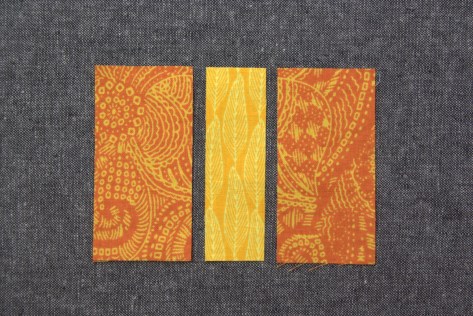
Cut two (2) 1 5/8″x 3 1/4″ rectangles of your #9D fabric and one (1) 1″ x 3 1/4″ rectangle of your #9G fabric. (Math aside: The 5/8ths” mark is the little line right after–aka a bit larger than–the 1/2″ mark on your ruler.)
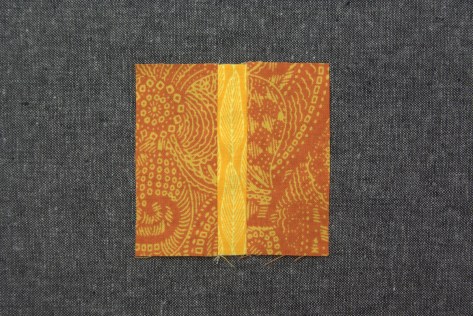
Right sides facing, sew the #9D rectangles to the center #9G along each long side.
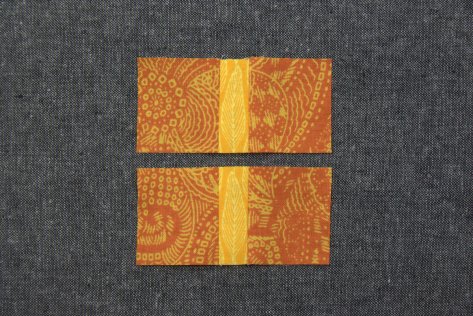
Cut in half as shown to create two (2) 1 5/8″ x 3 1/4″ rectangles. We will call these your #9DG units.
Using the rotary cutting measurements provided in the book’s cd, cut two (2) #9Gs and one (1) #9E.
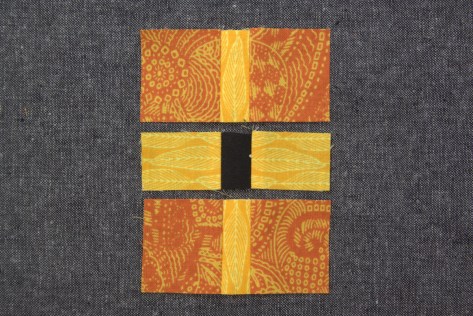
Assemble as shown. Note that I rotated the bottom row 180 degrees so that the direction of the yellow-orange fabric radiates outward from the center.
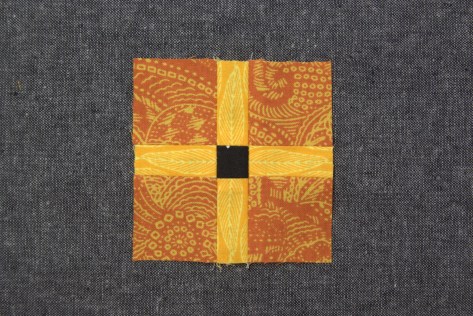
Sew your strip pieced #9GD units to the top and bottom of your center piece to create the center square.
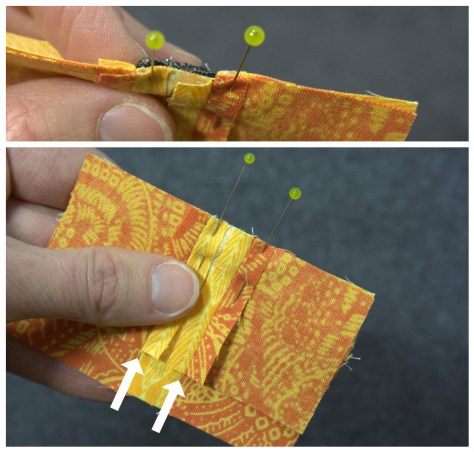
Sewing Tip: When matching seams, pin directly after the seam join to prevent slipping. Also, take a moment to match up the seam lines on the opposite raw edges, too. While it is not a sewn edge, it will help keep the sewn edge level.
Cutting the Remaining Pieces
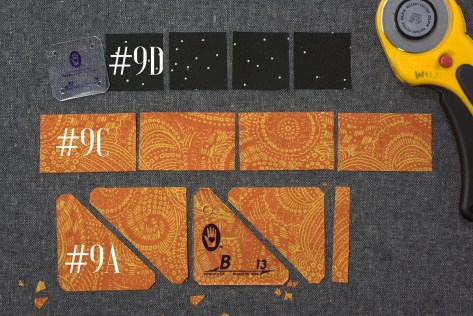
Now we need four (4) #9D squares, four (4) #9C rectangles, and four (4) #9A triangles. These remaining pieces can be cut in a very straightforward way, by using the rotary cutting instructions or paper templates included, or using Marti Michell templates. I’ve found that using the Marti Michell templates really help me line up different units accurately, so I opted to use those for the triangles and rotary cut the squares and rectangles. Here’s how:
Cut a 1 1/2″ x 6″ strip of your coral-equivalent fabric (I used black). Subcut the four #9D squares, per the measurements provided in the rotary cutting instructions or with Marti Michell template N79.
Cut a 1 1/2″ x 10″ strip of your print-equivalent fabric (I used orange). Subcut the four #9C rectangles, per the measurements provided in the rotary cutting instructions.
Cut a 2 1/2″ x 7″ strip of your print-equivalent fabric (I used orange). Using Marti Michell template B13, subcut four (4) #9A triangles. If you don’t have the Marti Michell templates, you can use the rotary cutting dimensions or paper templates provided on the book’s accompanying CD.
Assembling the Block
Here is a shout out to the essential tools used in creating this block: Flatter by Soak makes everything lay smoothly–even HSTs!–, Aurifil thread, Marti Michell templates, and my trusty Olfa rotary cutter. *Not shown but equally essential is the Bloc Loc ruler!*
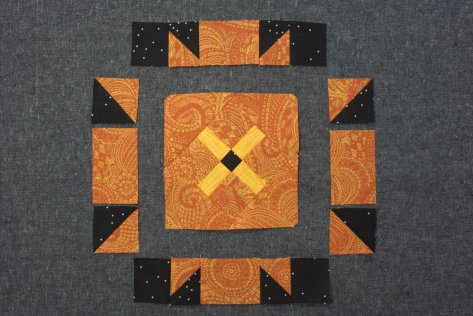
Now that you have all of the necessary components, lay them out to make sure you have all of the pieces aligned properly (pay particular attention to those sneaky HSTs). Tip: Take the time here to focus and be sure that all of the pieces are arranged properly, heavily referencing the picture in the book. The HSTs are particularly sneaky. Once your block is perfect, take a picture with your phone and reference it heavily throughout the piecing process. It takes less time to stop and lay out your pieces to check the arrangement than it does to seam rip once you’re finished!
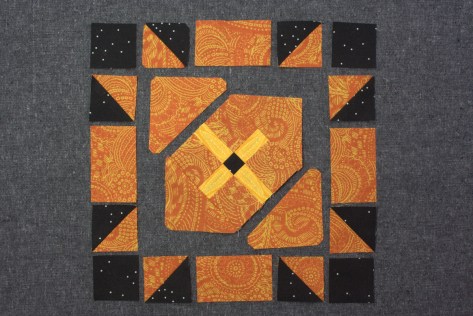
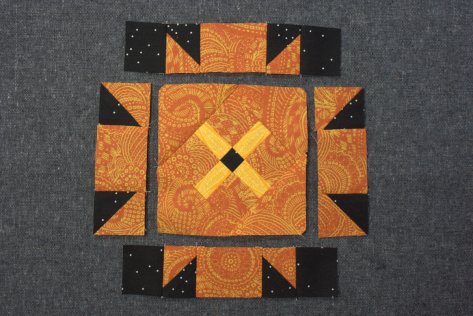
First, sew the #9A triangles to the center square as shown. Begin with two opposite sides. Press seams open.
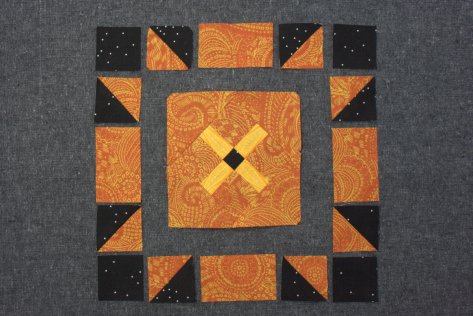
Sew on the remaining two triangles. Press seams open. Your center square should now measure 4 1/2″ including seam allowances.
Pair corner #9B squares with their neighboring HSTs and sew as shown.
I like to chain piece steps like this, and as I pick up my pairs of squares to sew, I align all of the to-be-sewn edges so that I don’t get mixed up between my cutting/arranging table and the sewing machine.
Sew HST-corner square units to center #9C rectangles to create the top and bottom rows.
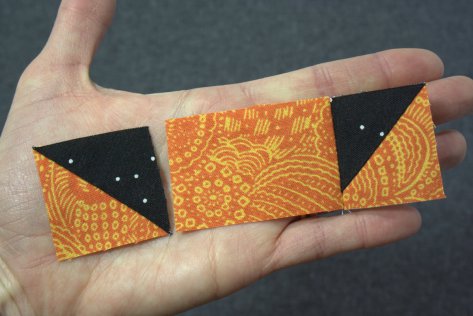
Next we will sew the middle row together. Sew the HSTs to the side #9C rectangles as shown.
Again, pay close attention to the alignment of those HSTs! They like to do somersaults on the trip to the sewing machine if you’re not super careful!
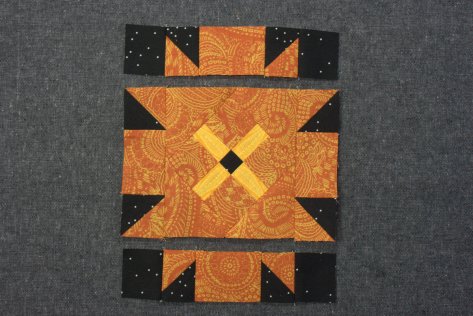
Sew side HST-rectangle units to center square.
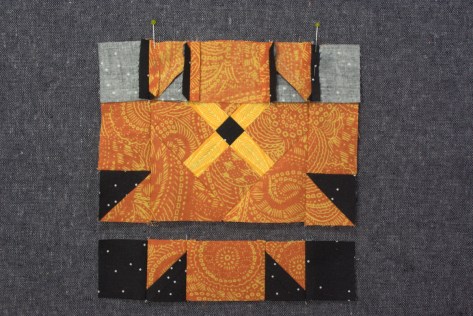
Sew top and bottom rows to the center row. Tip: This is another great place to match bottom seam lines as well as those right at the sewn raw edge. There are only two seams to match! I love this block! Press all seams open.
Gaze lovingly upon your Autumn block and think, “Gee, that wasn’t so bad! But it sure took me longer than a precious half-hour!” (and if you’re me, about 45 minutes later realize in horror that you botched the center square’s fabric placement, then decide that your Farmer’s Wife quilt deserved some individuality anyway, and let it go.)
Thank you so much for joining me today and I hope you found this tutorial helpful! This is the last tutorial before the Christmas break, which begins tomorrow and lasts through the first week in January. I know I am hoping to do some serious Farmer’s Wife catch-up amongst all of the festivities. Merry Christmas, happy holidays, and a very happy New Year to you all!
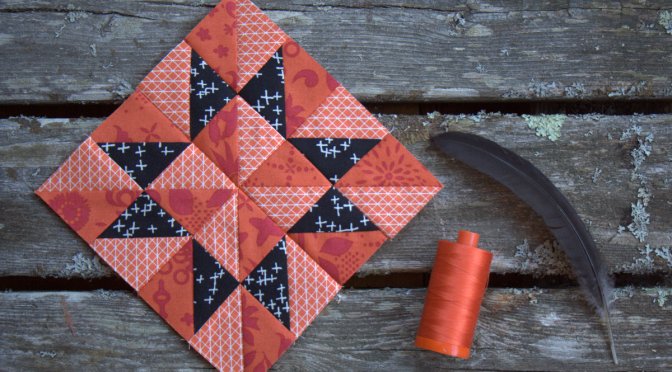
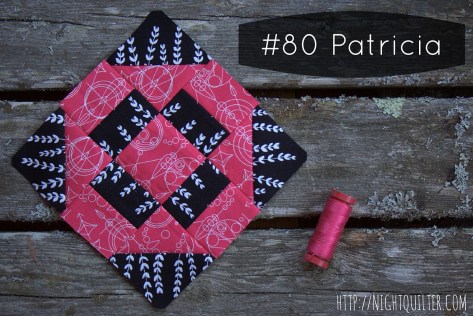
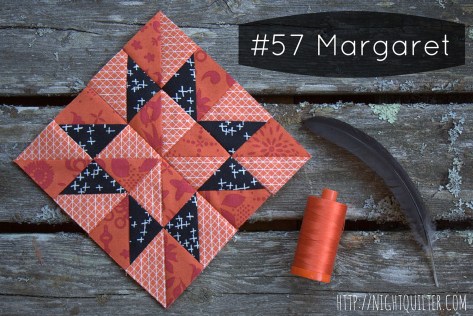
Despite all my best intentions, life has caused me to get a *bit* behind with the 1930 Farmer’s Wife Sew Along, hosted by Angie at Gnome Angel and sponsored by Fat Quarter Shop and Marti Michell. I’m not letting it get me down, though, and plan to keep on plodding. After all, not only have I allotted for skipping some blocks with my planned layout, I also know that every block made is one step closer to catching up. It’s all about patience, right?
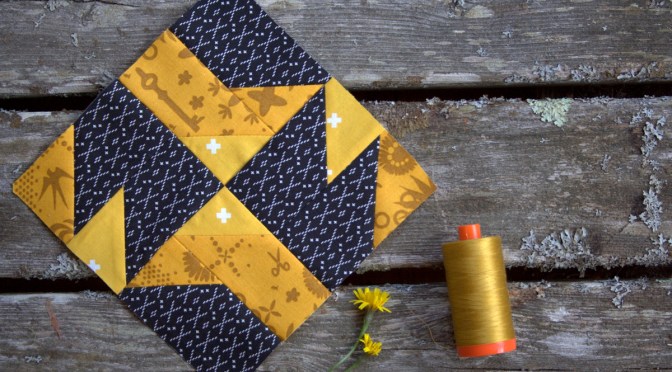
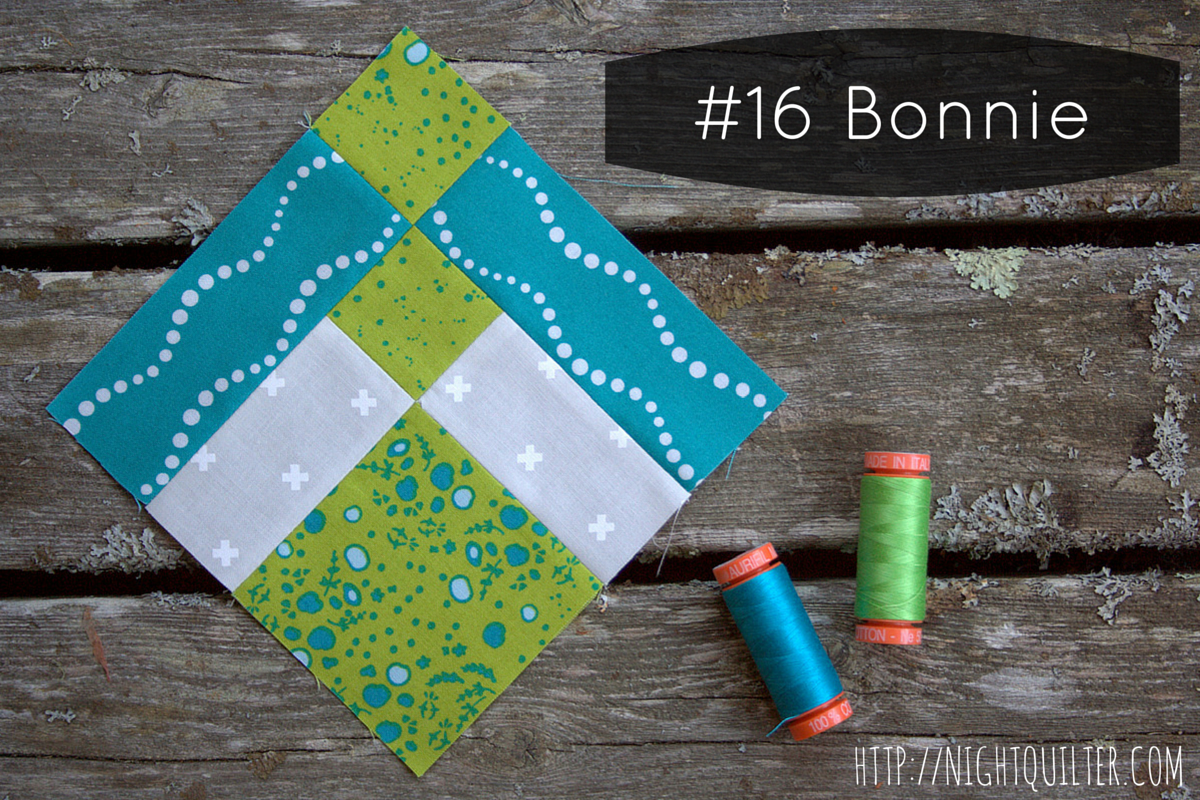
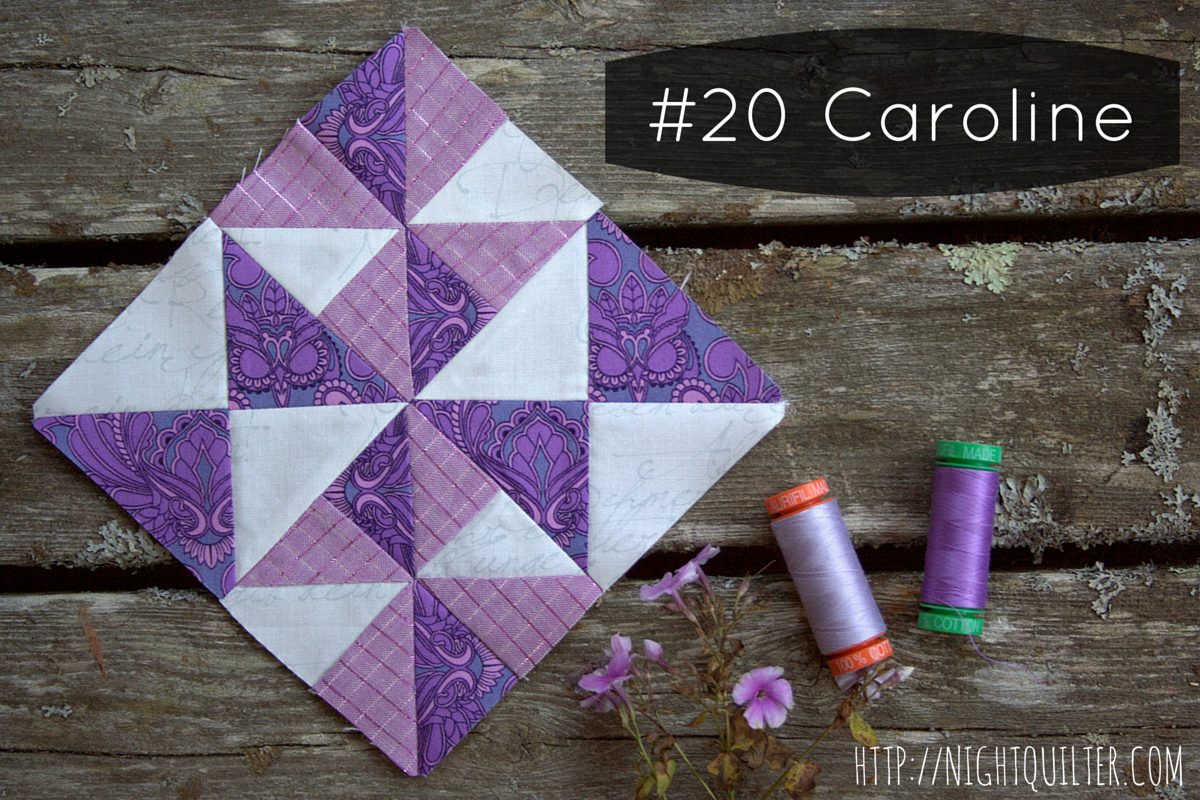
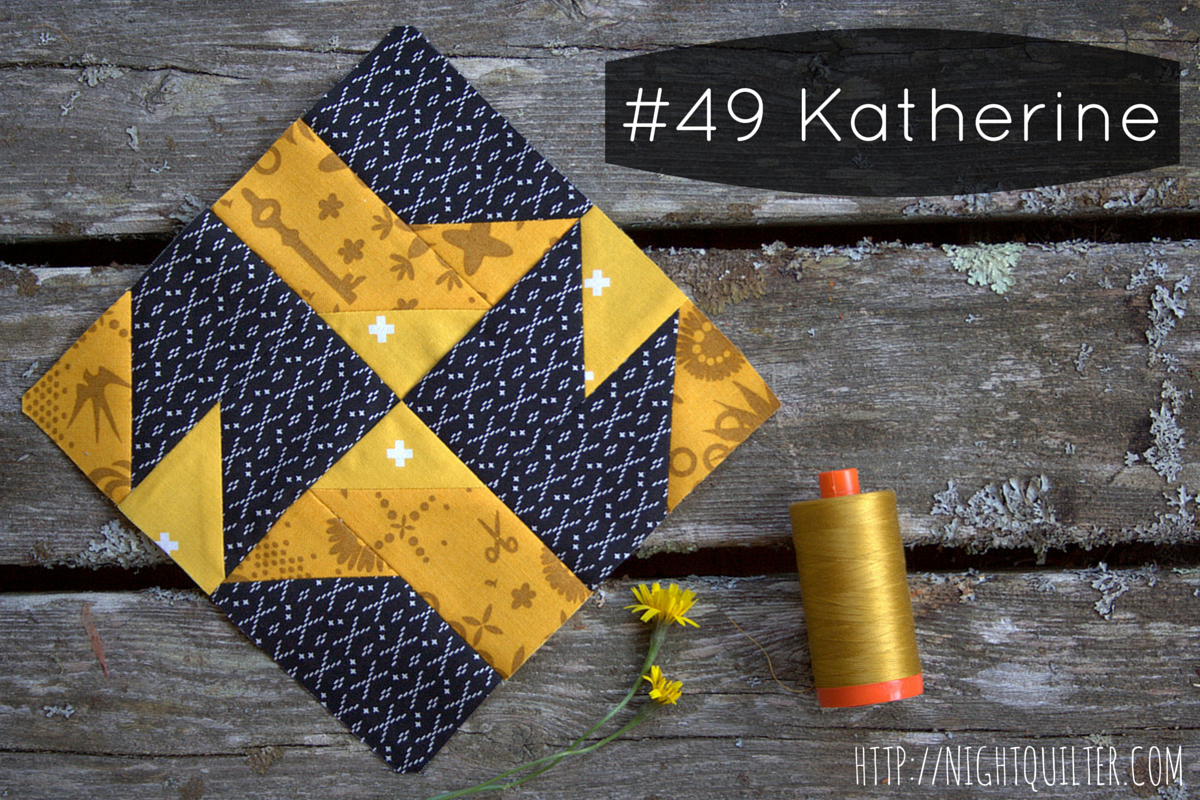
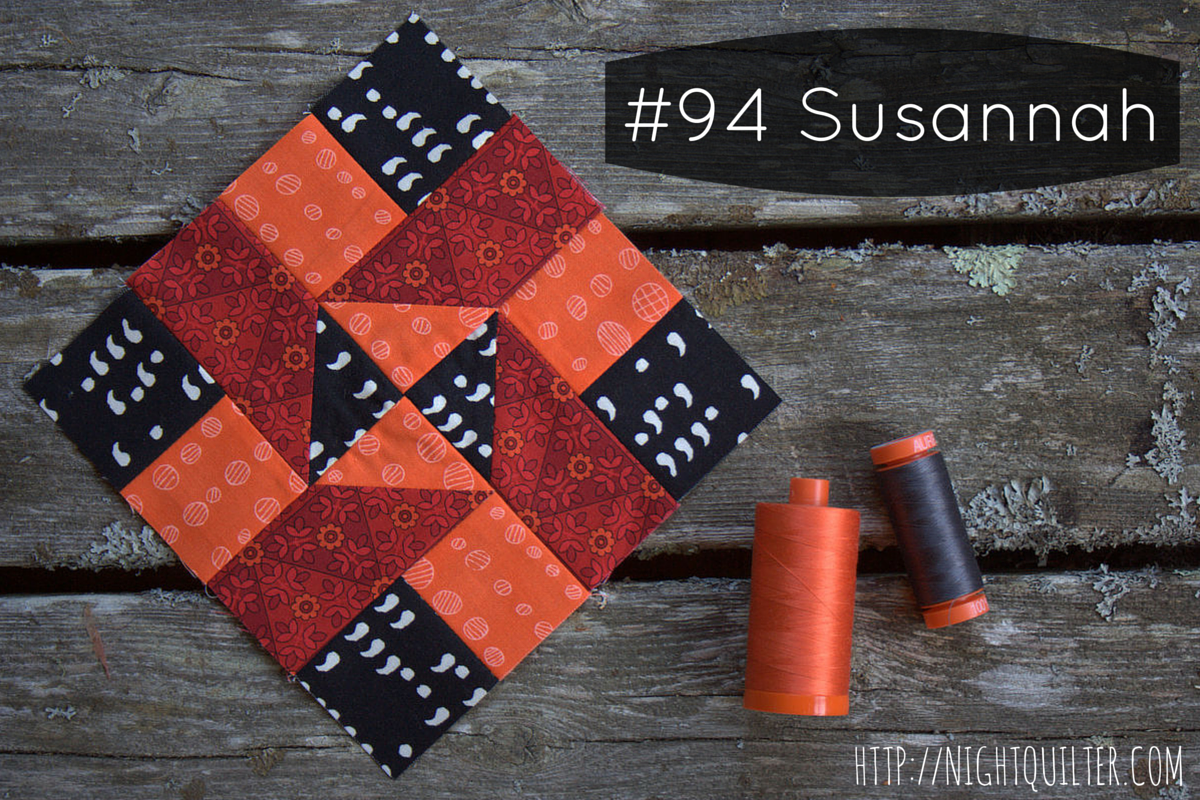
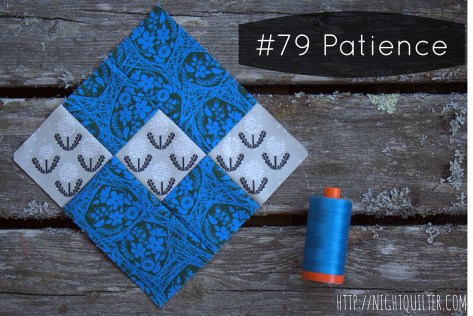
Here are my latest three block additions.
It’s all about patience… see what I did there? If only patience were always so easy to come by!
I am really liking my color choices, and as more blocks are added, I’m starting to see how they might go together. I’m still toying with arranging each warm-cool grouping in color order, and very well might do so. I think after the next bout of blocks added, I’ll try laying it all out together and see what you think, too.
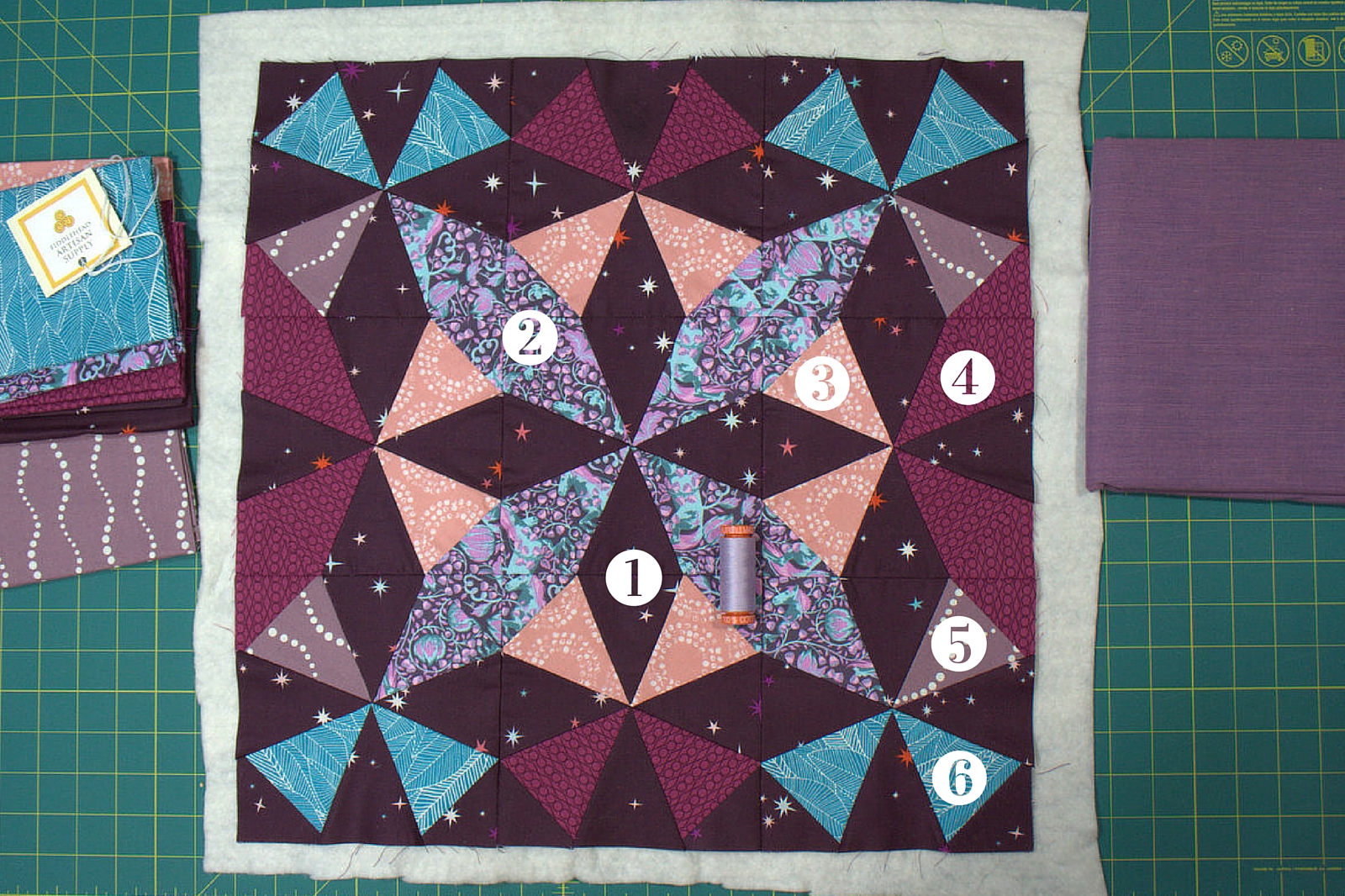
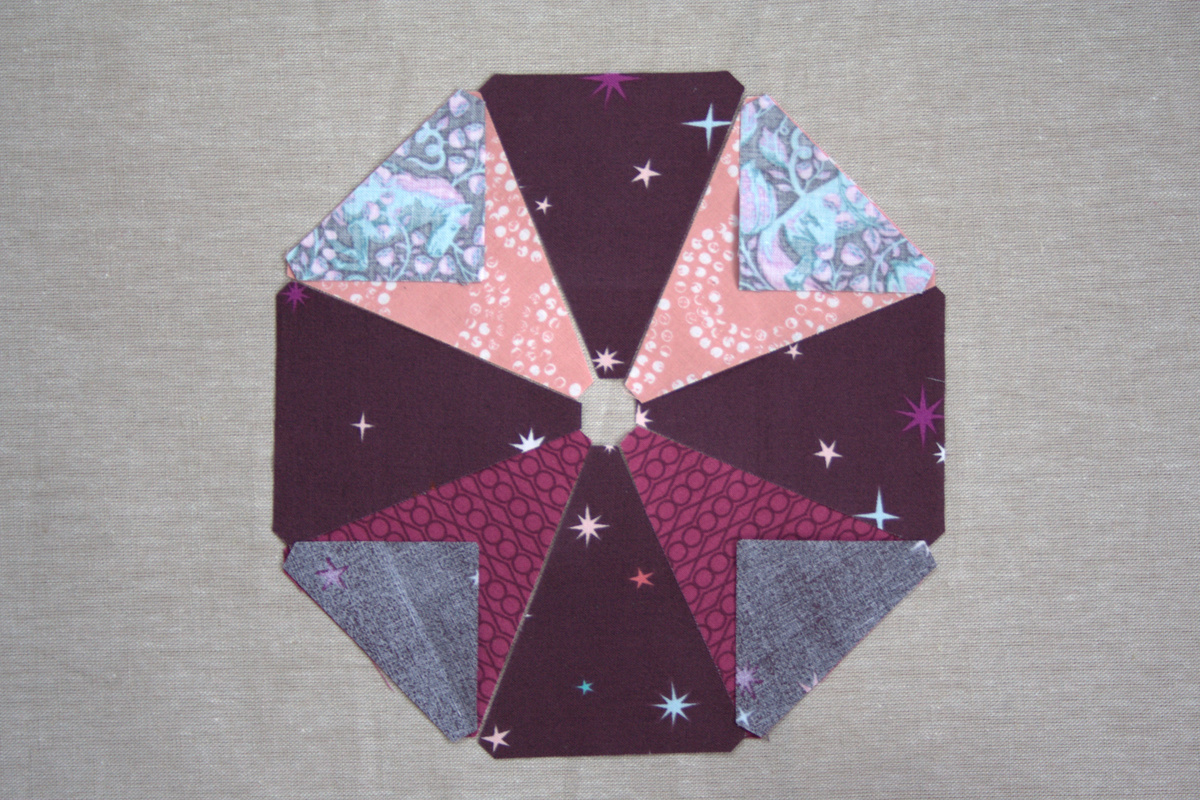
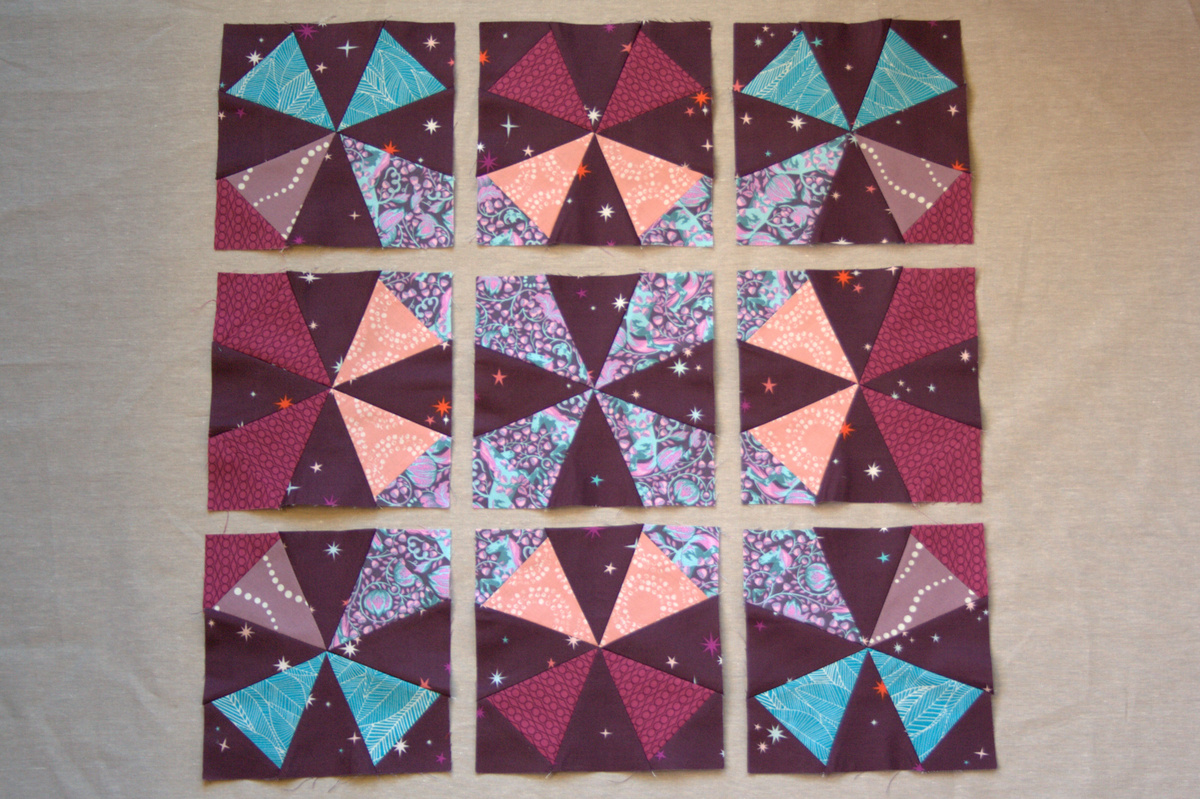
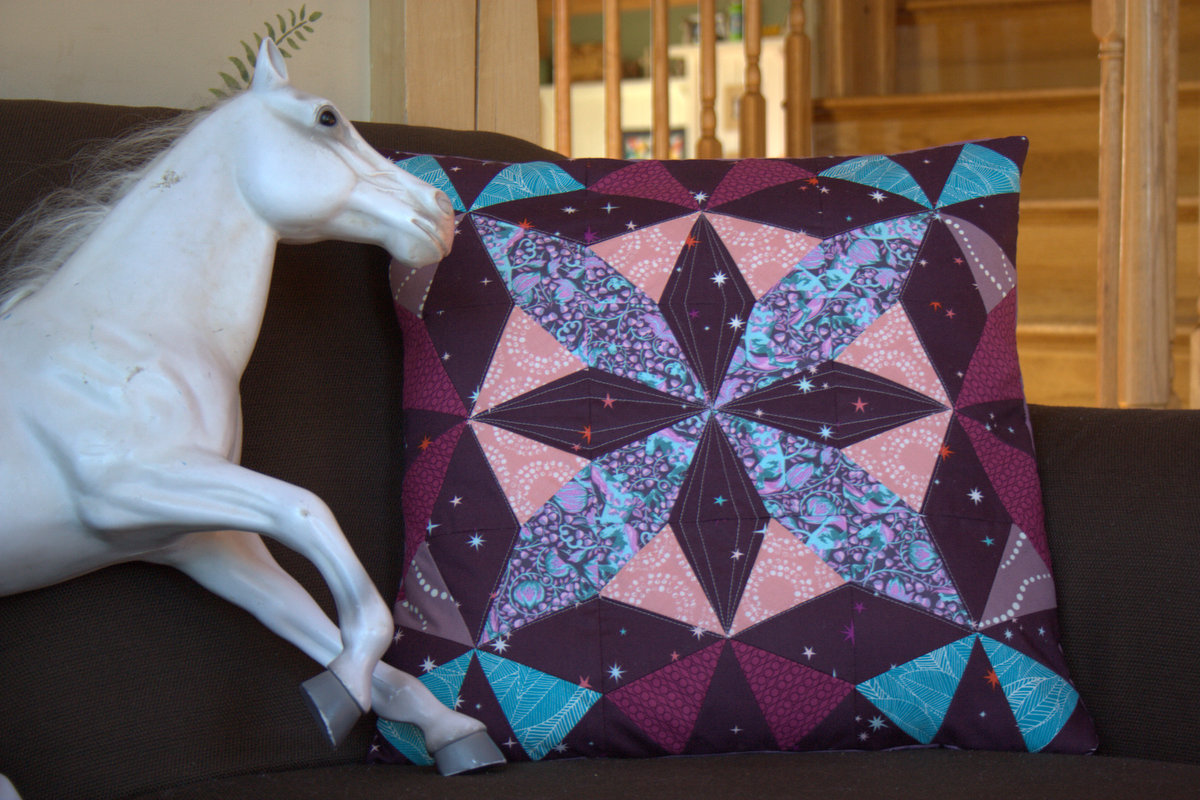
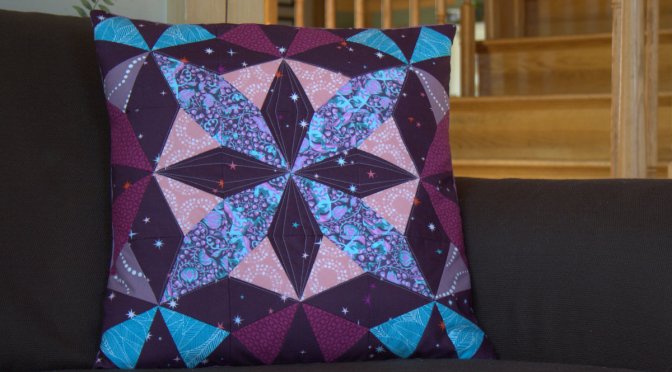
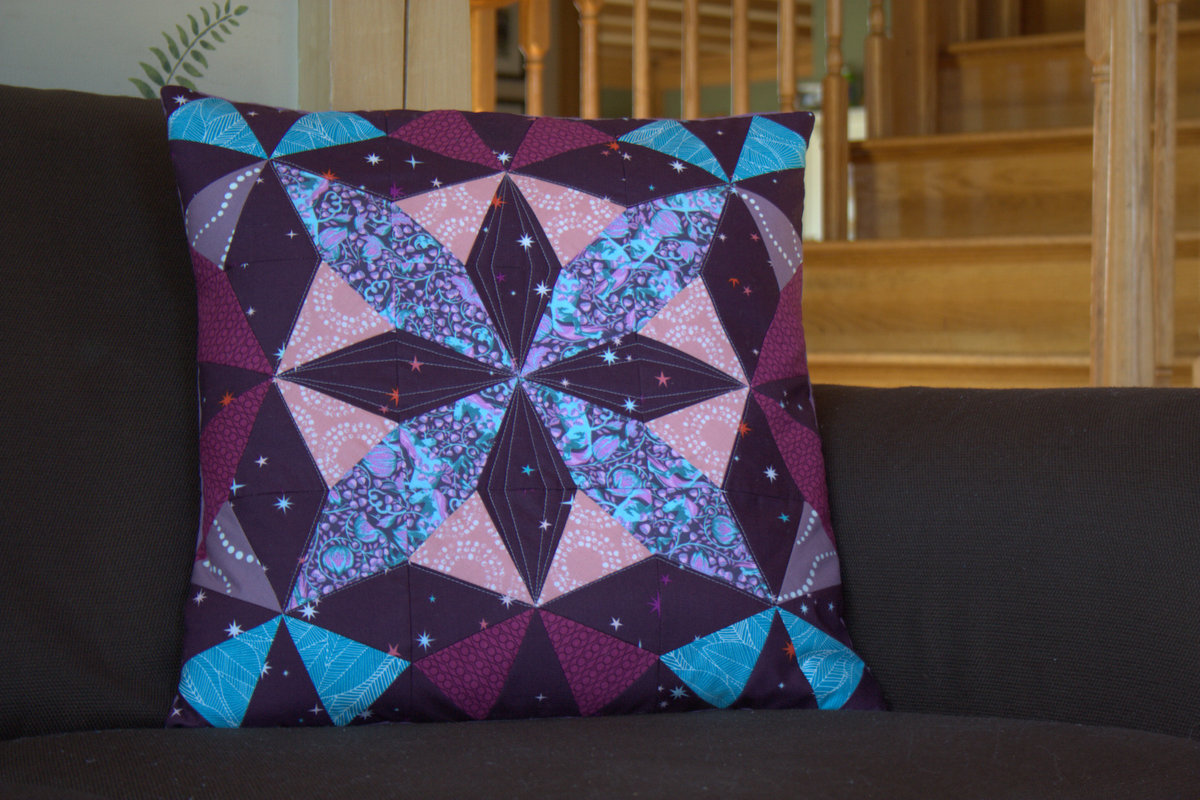
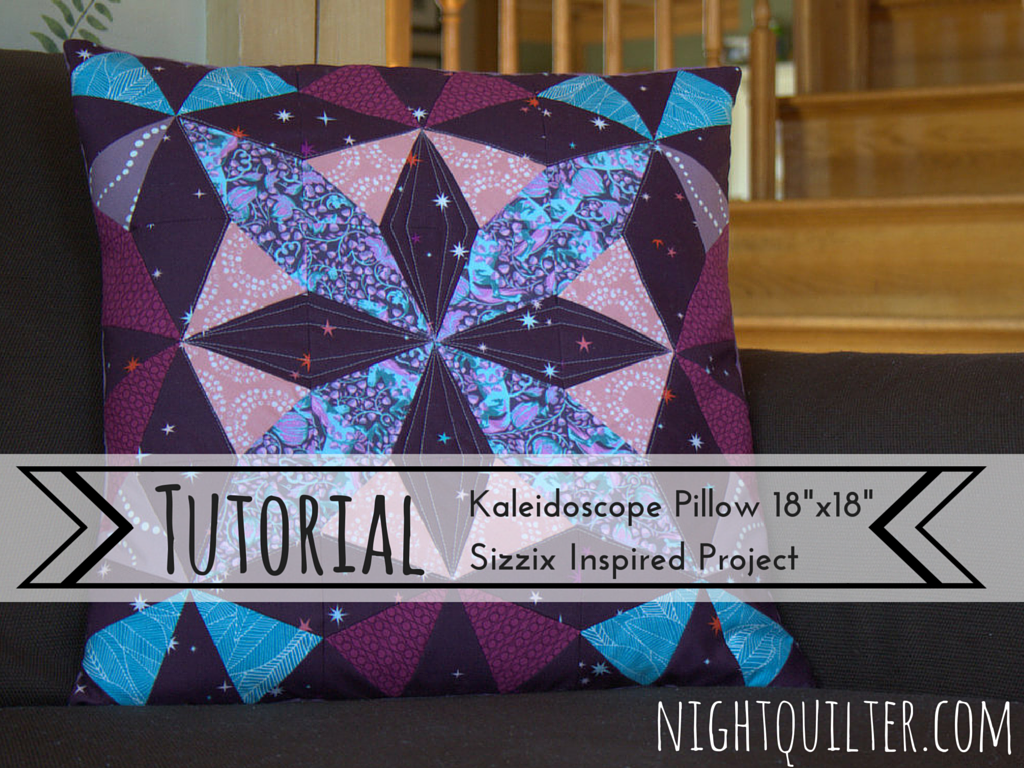
Today I’m going to share a quick tutorial on how to make your very own Kaleidoscope pillow using the Sizzix BigZ L Kaleidoscope die and six fat quarters (I used my Autumn Dusk blogger bundle from Fiddlehead Artisan Supply). For those of you who do not have a Sizzix die cutting machine, I will also include a printable foundation paper piecing option, so read on!
A month or so ago, I selected a blogger bundle for my local quilt shop Fiddlehead Artisan Supply, and called it Autumn Dusk. The colors made me think of the calm at dusk, and I thought it would be a perfect palette for a pillow. Our couch doesn’t have a single handmade pillow, and that needed to change. In thinking about pattern ideas, I came across my Kaleidoscope die from Sizzix and decided to play. Do you have ANY idea how many different patterns you can make with the Kaleidoscope pattern!? It boggles my mind. Peek at the results from a quick “kaleidoscope quilt” google search HERE to give you an idea of the potential.
Trust me when I say the most difficult part is deciding on fabrics and fabric placement.
This tutorial will include cutting instructions for the same arrangement of nine (9) blocks made from six (6) fat quarters of fabric as I used, as well as assembly and finishing instructions for an envelope-backed 18″ square pillow. If you want to make an identical pillow, you can buy the Autumn Dusk bundle from Fiddlehead HERE, or enter to win a bundle by commenting on yesterday’s post HERE. I have included some affiliate links in this post so that if you click through, I will get a small commission. I only share products I love and use.
Let’s get started!
Materials Needed:
6 fat quarters of fabric (I used the Autumn Dusk bundle) for the pillow front
1/2 yard fabric for the pillow back (I used Kaffe Fassett shot cotton in Granite)
batting (20″x20″ square, and two 19″x12 3/4″ pieces)
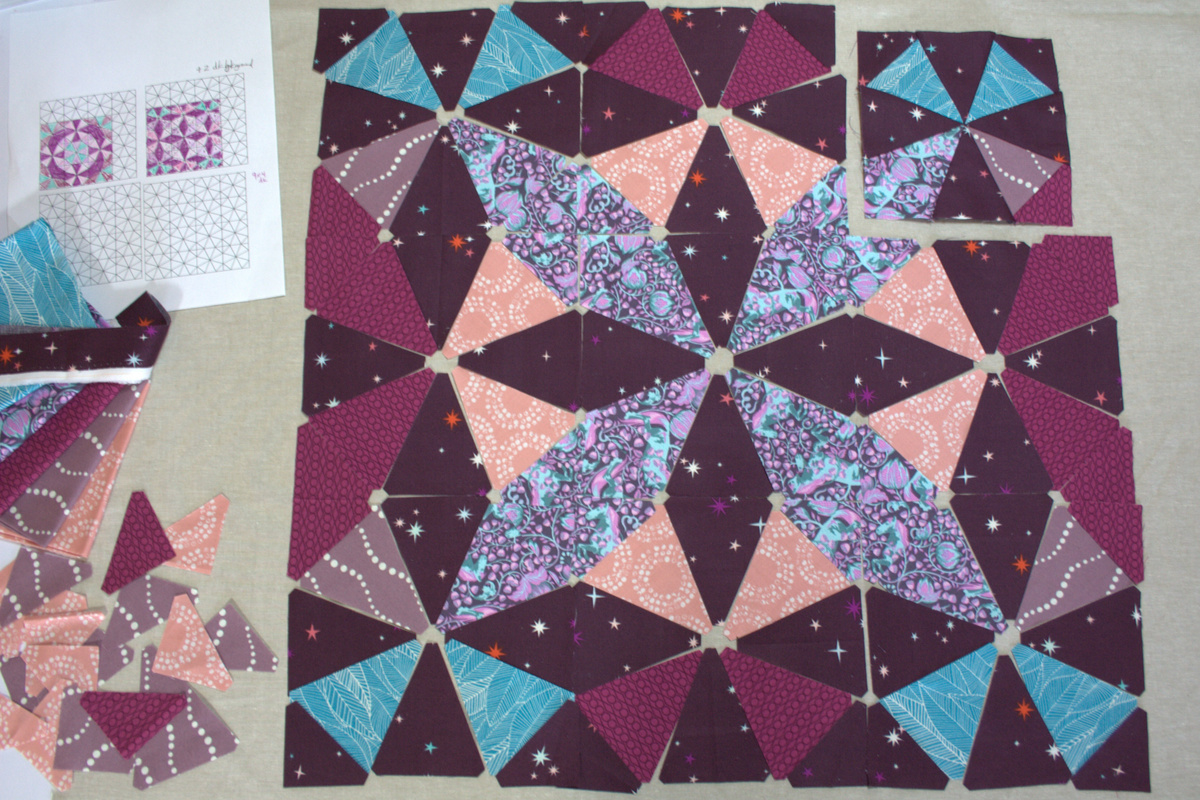
If you are creating your own kaleidoscope version, print out this printable provided by Debby at Quilter by Design and start playing with color combinations. Note that you can emphasize a windmill shape, a star shape, or a circular movement depending on where you position your colors and values of fabric. Once your design and fabric choices have been made, it’s time to cut!
For this pillow, cut the following (refer to the photo above for fabric numbers):
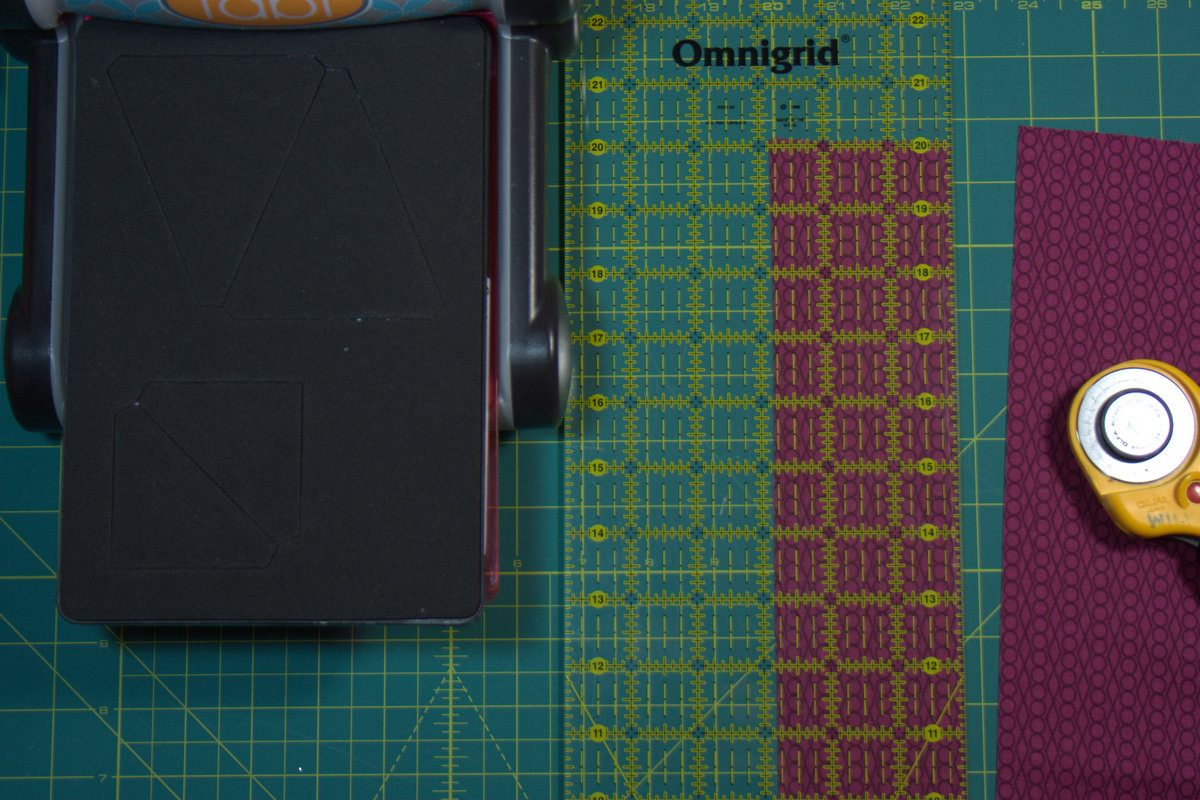
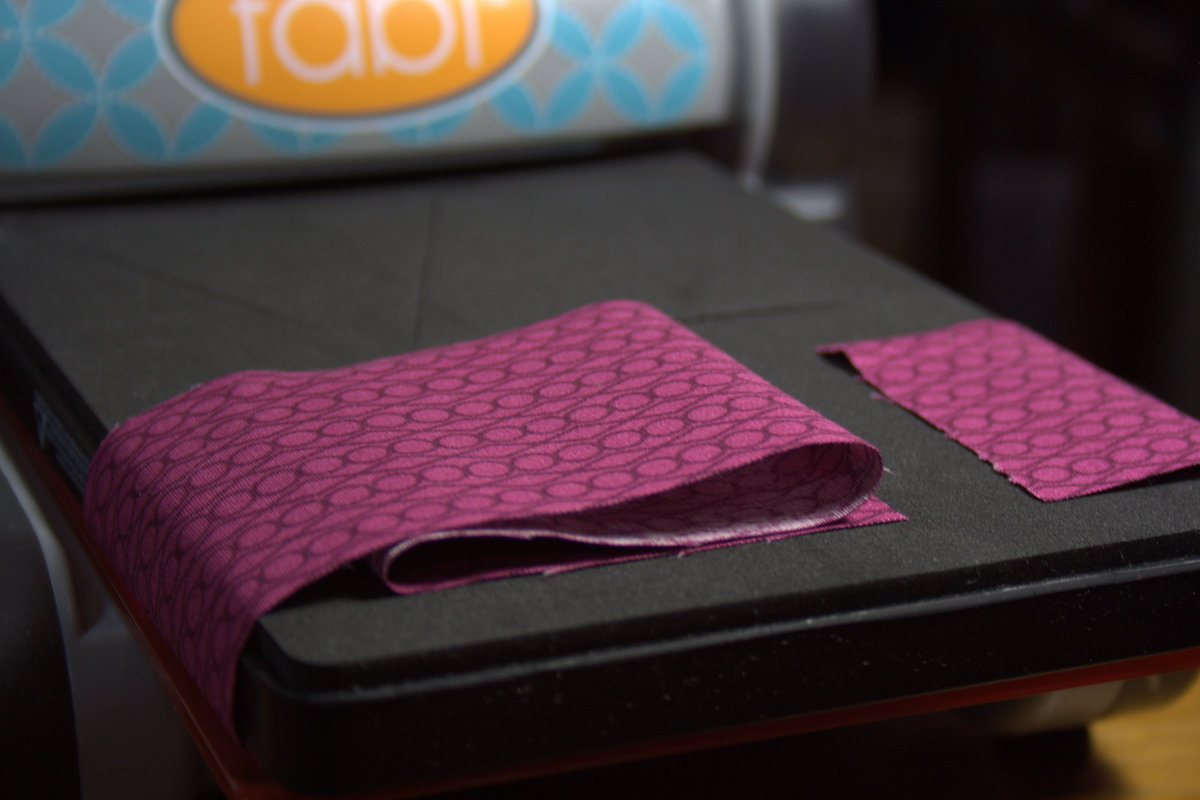
For quick and easy cutting with your Sizzix fabi, cut fabric strips 4″ wide for the wedges and 2 5/8″ wide for the corners.
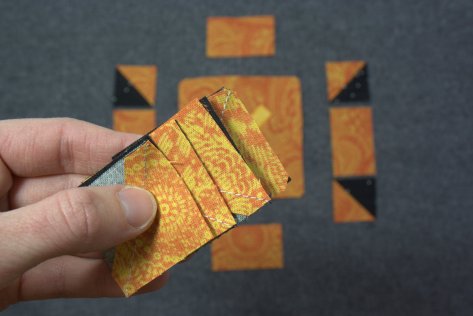
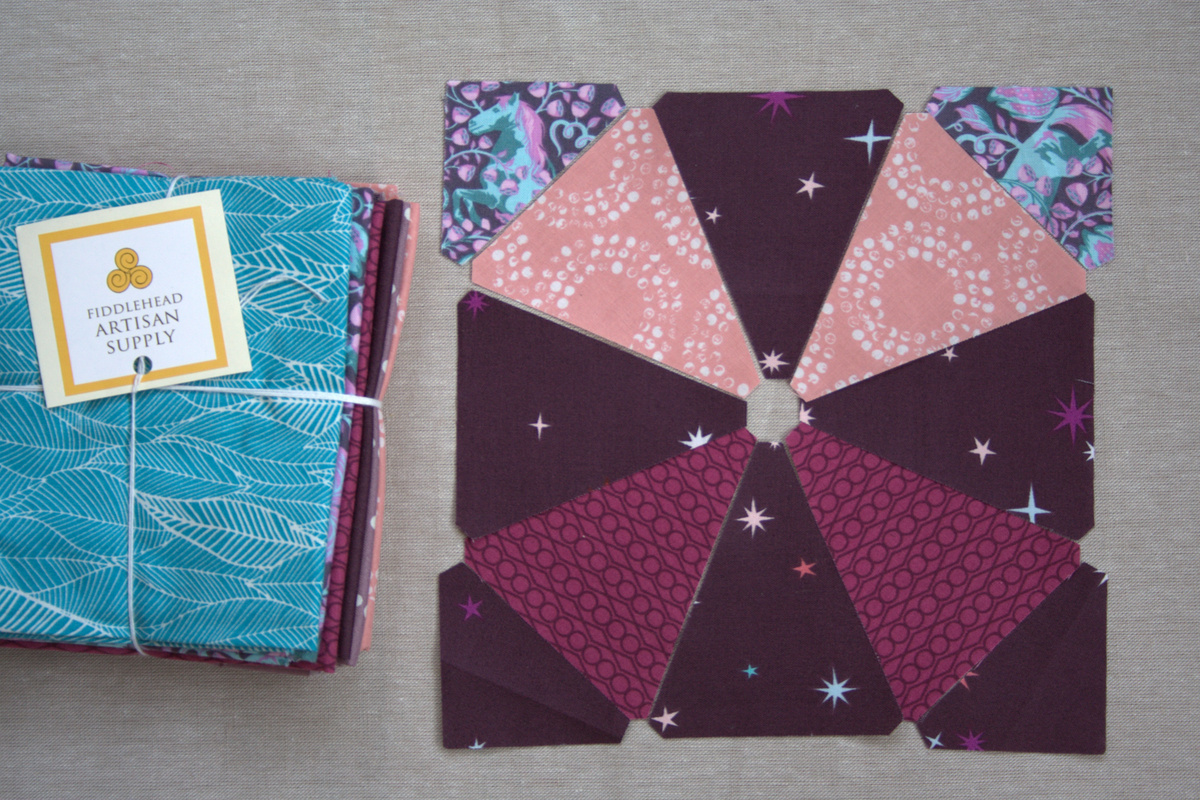
Then you can accordion-fold the fabric over the die and cut 16 of each at a time, since the die has 2 corner and 2 wedge blades and you can layer fabric 8 layers thick. That’s 32 pieces cut per pass, if you plan your fabric cutting wisely! (Note that the image above is to demonstrate the accordion-fold, not the uber efficient cutting!)
Once your pieces are all cut, lay them out in your desired pattern. Tip: Take a photo with your phone or camera once you’ve decided on a layout. Having this photo handy during piecing will make getting everything in the proper place the first time so much easier!
Now let’s sew the blocks together!
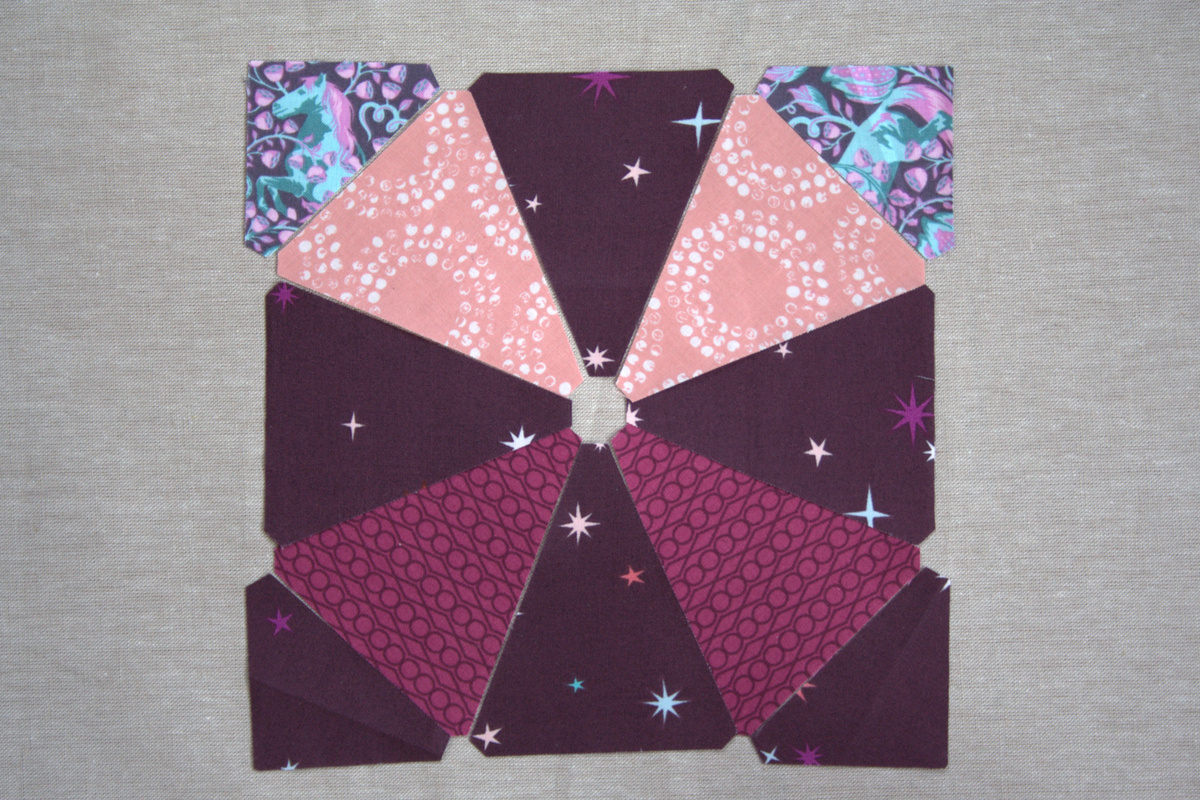
First, sew the corners onto the appropriate wedge blocks.
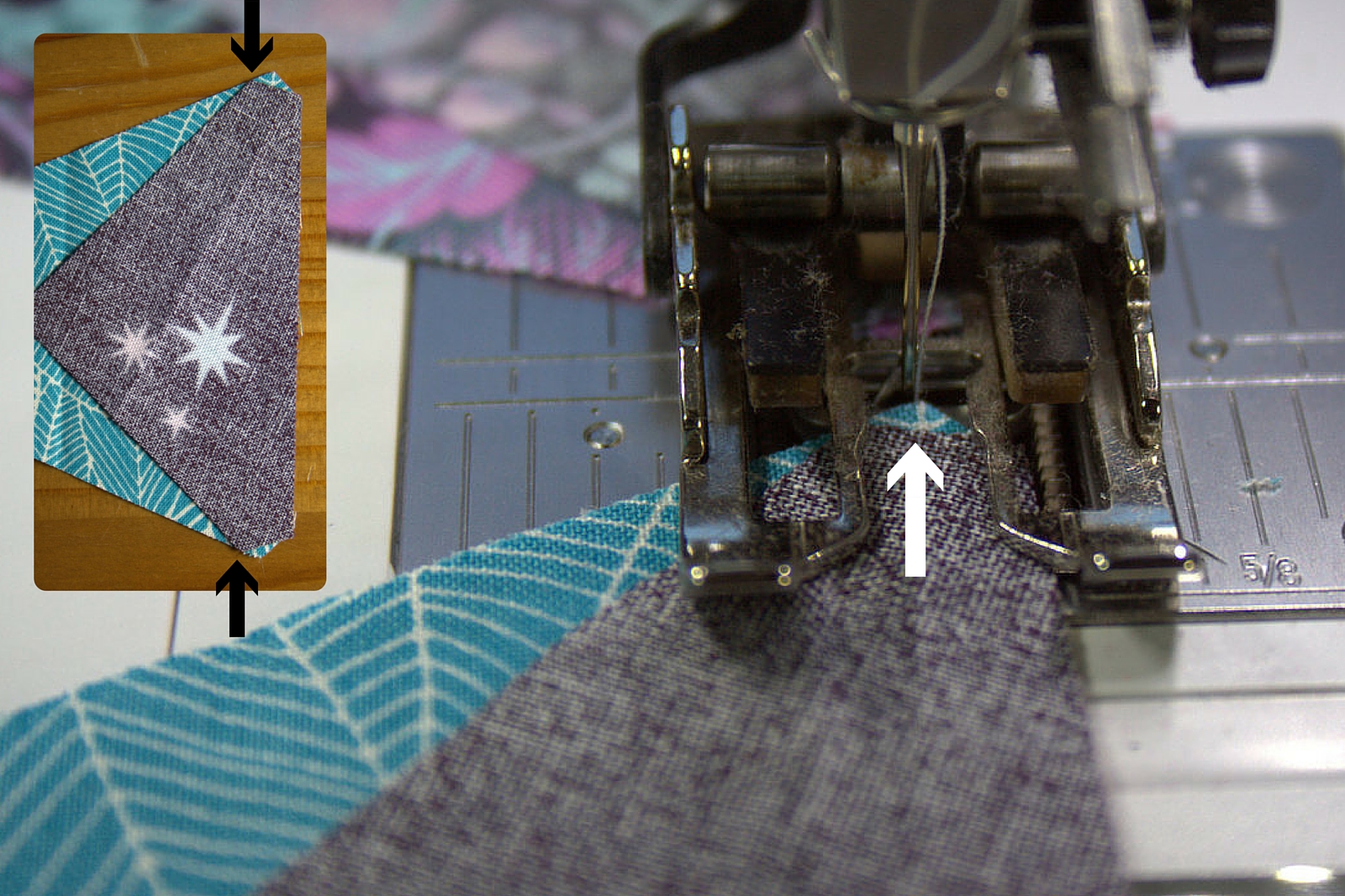
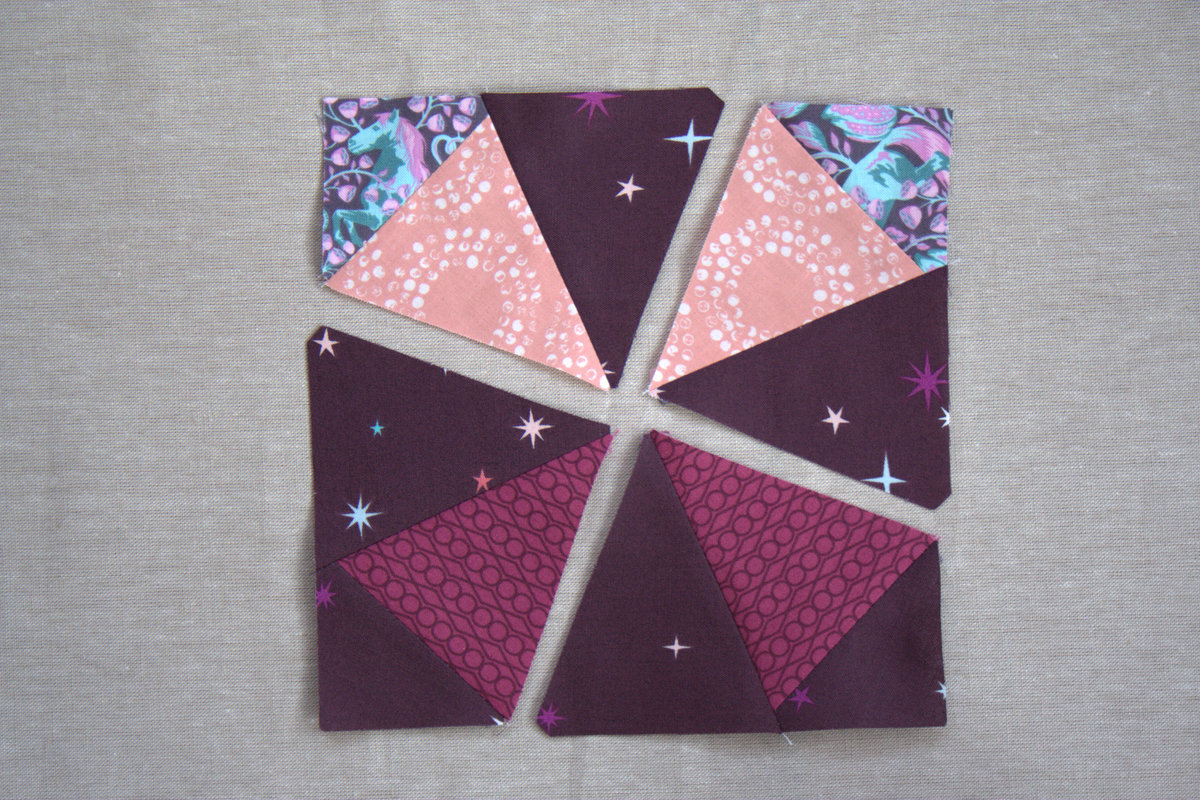
The notches cut by the Sizzix make accurate piecing easy. Center the corner piece right sides together with the bottom edge of the wedge piece as shown in the inset photo above. Then use the little corners sticking out from the bottom edges of the wedge as a sewing guide. Set seams and press open.
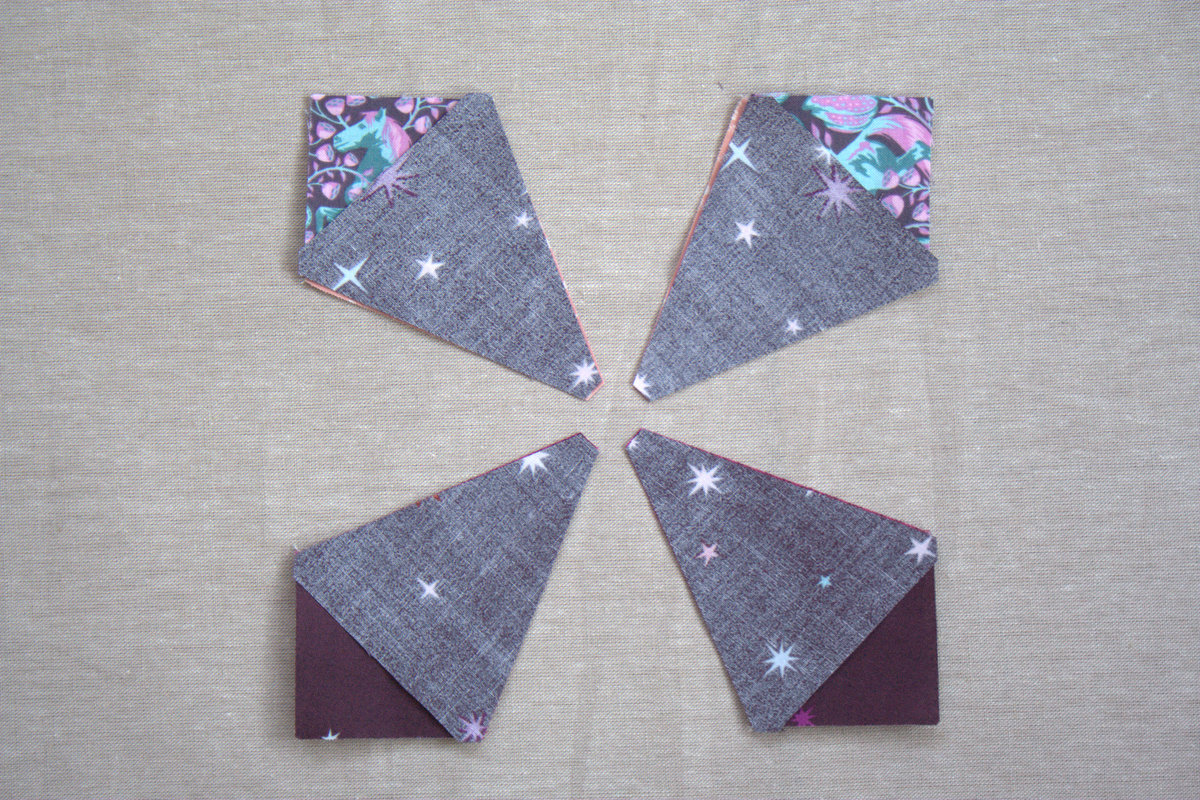
You will then have this.
Next, pair each cornered wedge with a background wedge. Be sure to sew along the same side edge for each pair, and begin sewing from the corner edge and not the center point. Set seams, press open. **Note that assembling this block is a perfect time to practice pressing and NOT ironing. Even a little wiggle might stretch sections enough to result in a ripple when the final block is assembled. Press: up, down, up. NOT ironing. Got it!**
Double check your arrangement with the photo you took before sewing pairs together.
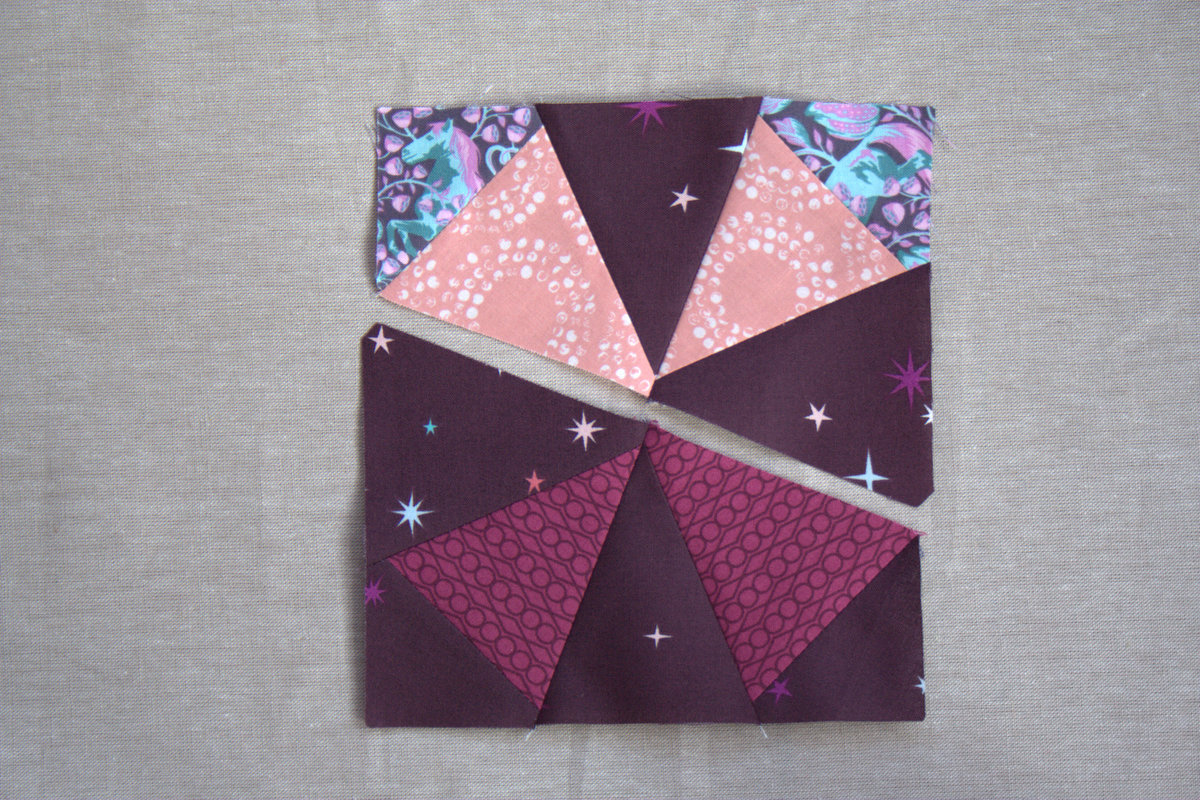
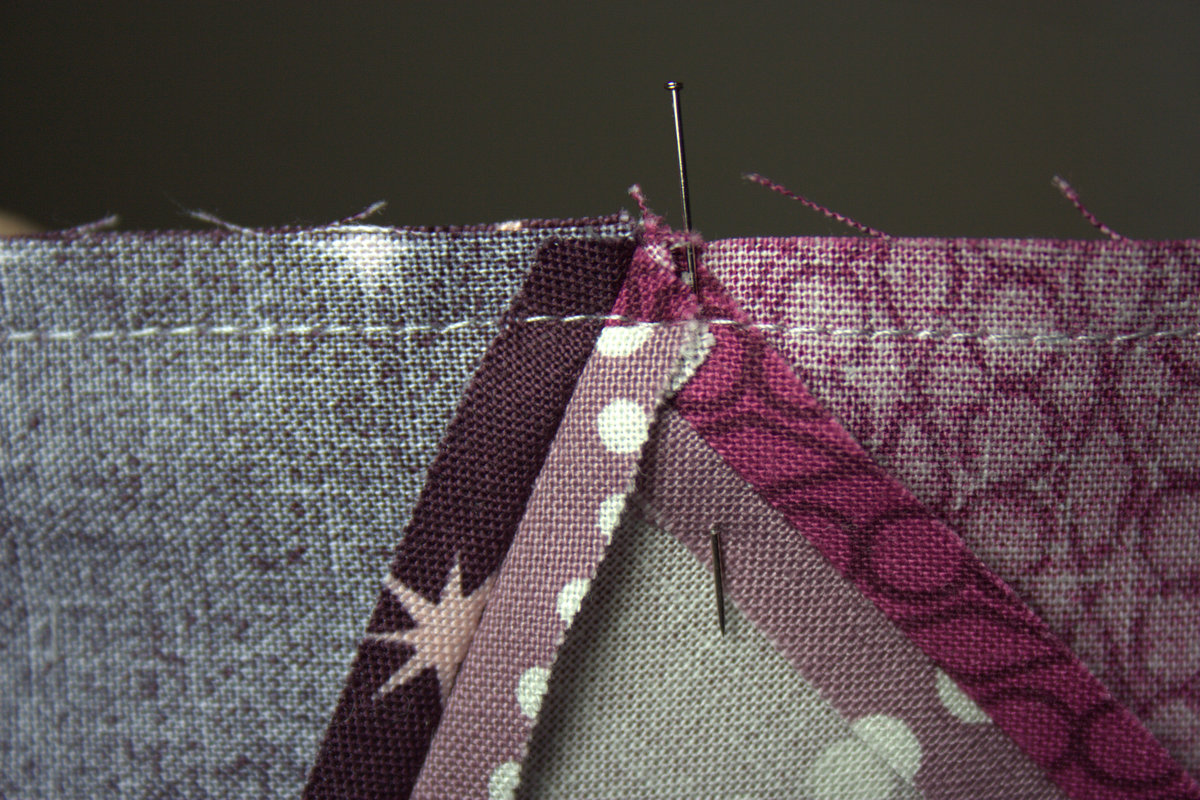
You will now have two halves. Aligning the notched corners and pinning just after the center seam match, sew the halves together. Set seams and press open.
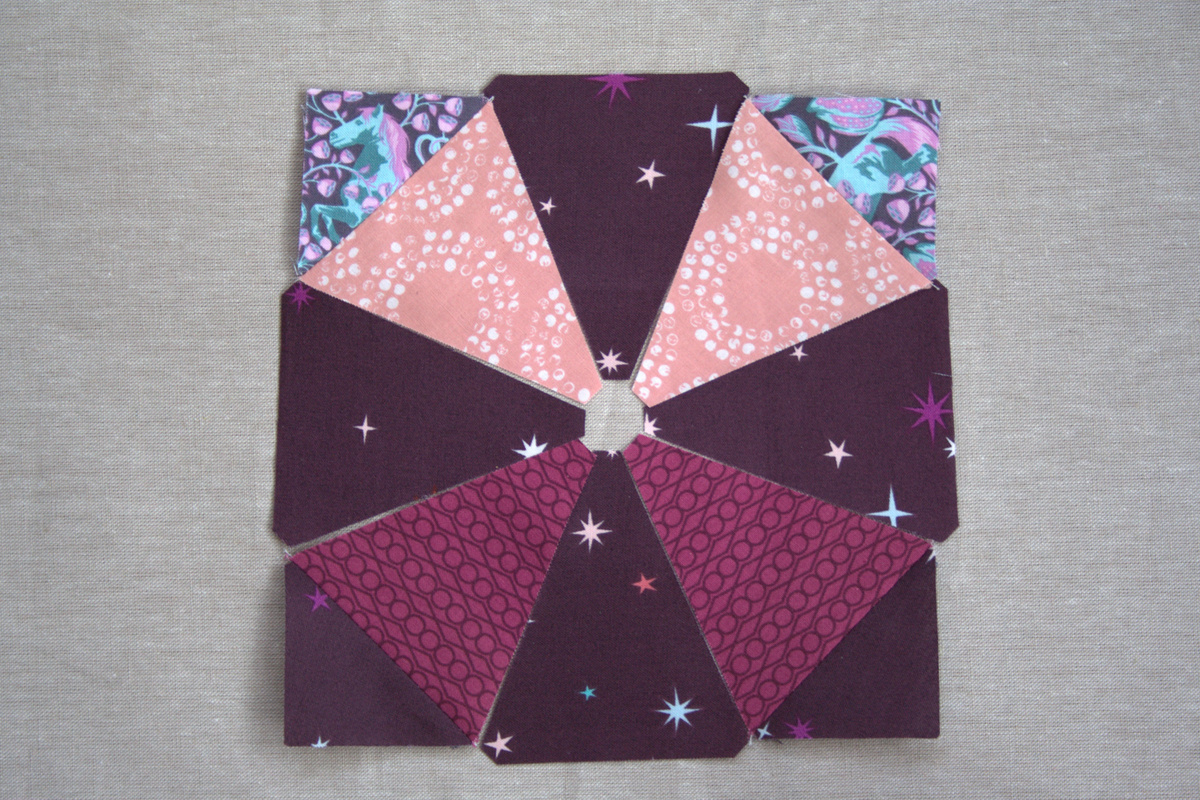
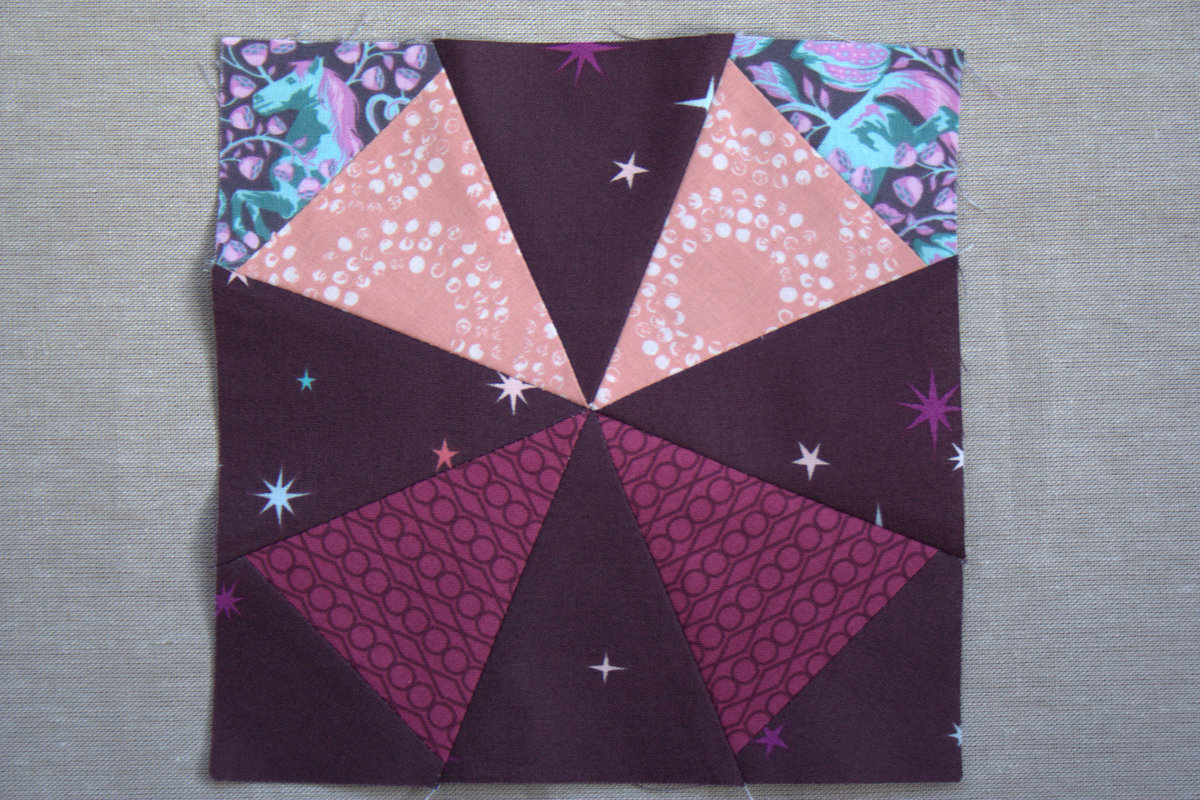
Ta-da! You have a kaleidoscope block. Make 9 total.
Feel free to chain piece these blocks, but have your layout photo handy. Lay out your pieces and confirm arrangement before sewing each step.
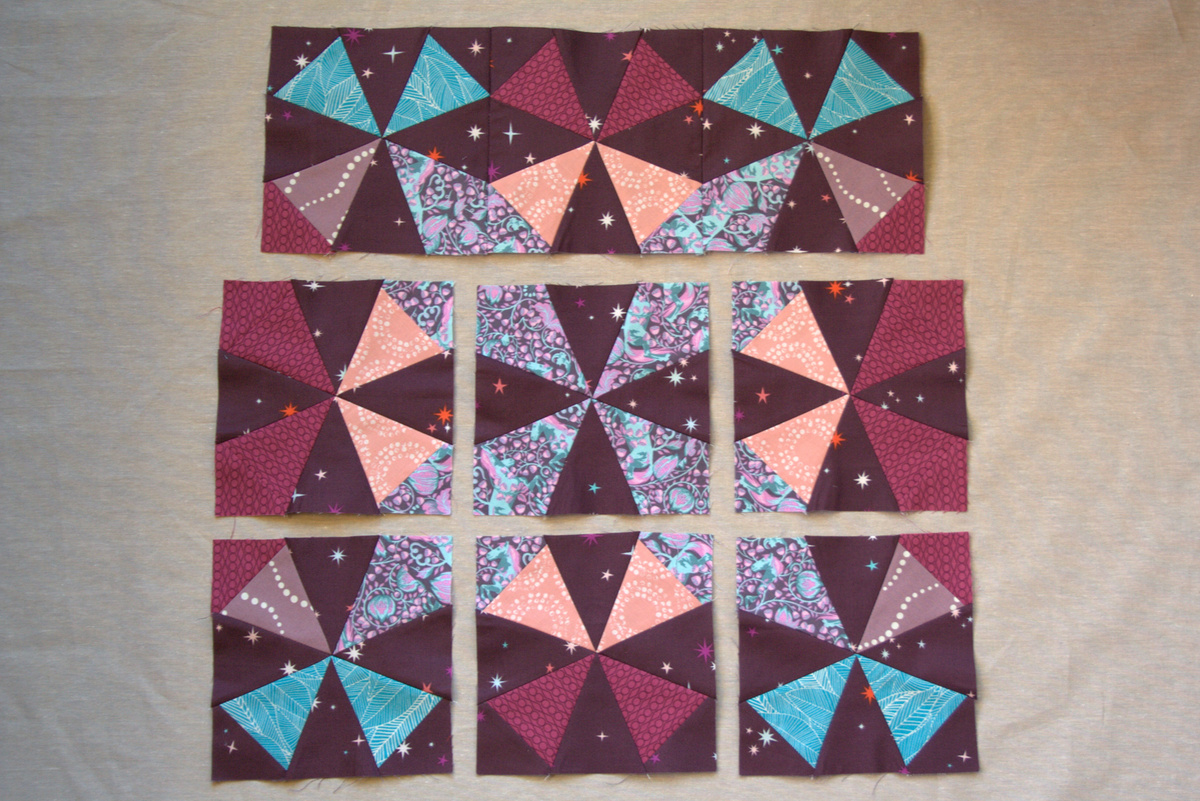
Arrange your blocks as desired. Double check that all fabrics are in the proper place.
Then sew the blocks in each row together. Finally, sew the three rows together to complete the pillow top.
I love how the notches cut by the Sizzix help with every step of the piecing process–from piecing to matching points in the final assembly. When joining your rows, you can use the seam line as a guide to make sure you don’t lose any points.
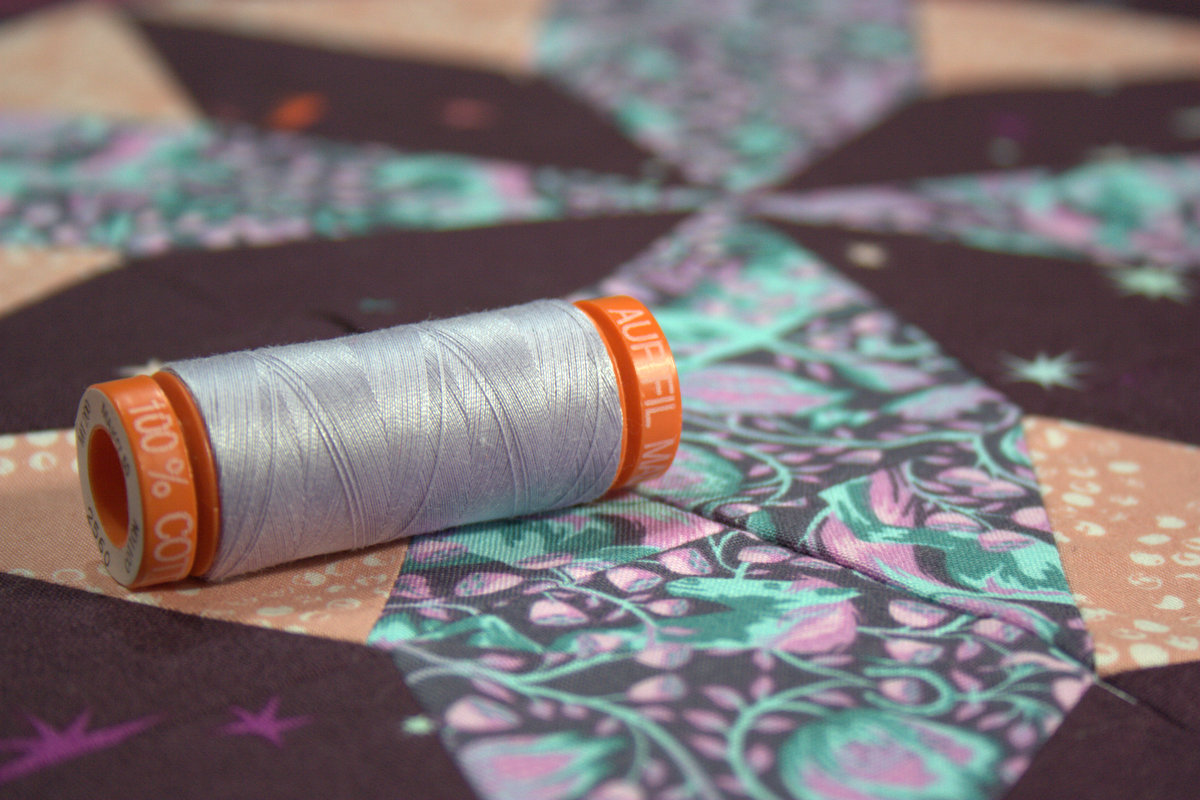
Once your kaleidoscope pillow top is complete, baste it to a 20″x20″ piece of batting (or fuse to fusible fleece), find some coordinating thread and quilt as desired. I used Aurifil 50wt 2560-Iris since it was a nice gentle purple and matched my light colors while providing great contrast with the dark background.
Once your pillow top is quilted, square it up with a rotary cutter, being sure to leave a 1/4″ seam allowance from the outermost points.
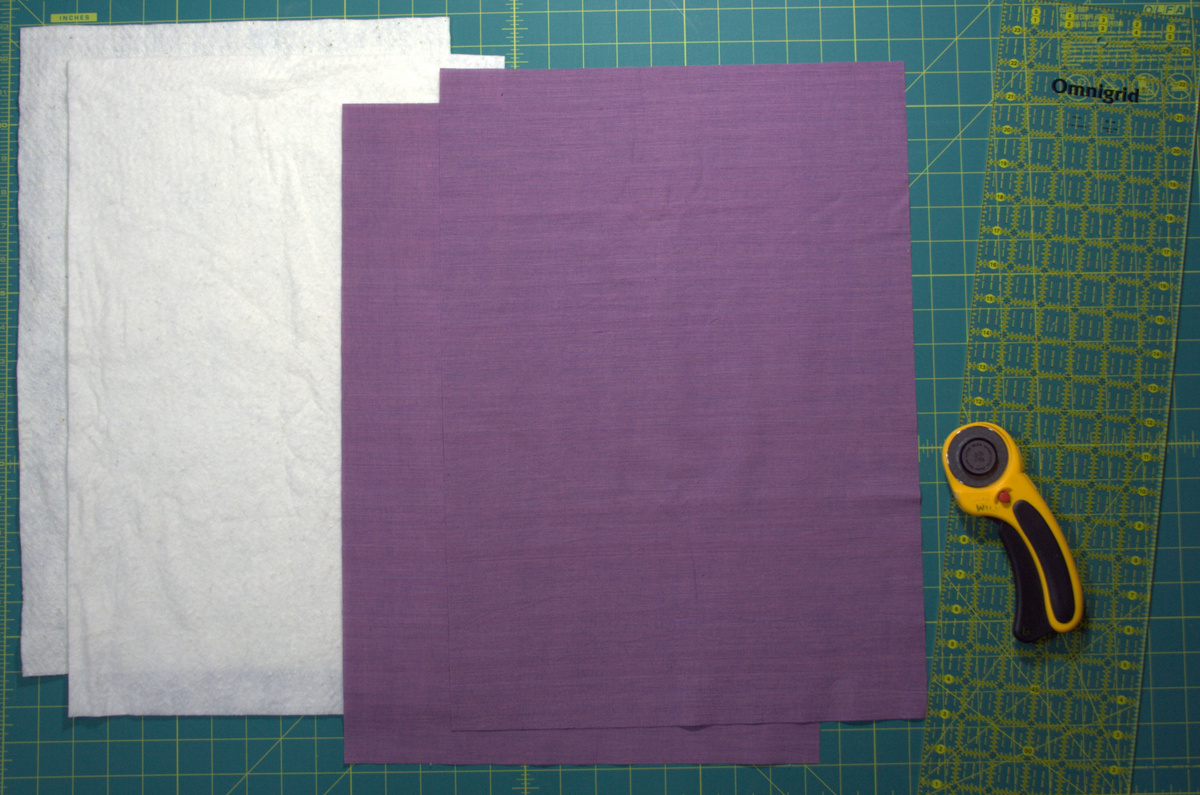
Next, we’ll make the pillow’s back panels. Cut two (2) pieces of 13 1/2″x19″ background fabric (my finished pillow top actually measured closer to 19″ than 18 1/2″ square. Adjust accordingly based on the measurement of your pillow) and two (2) pieces of 12 3/4″x19″ batting.
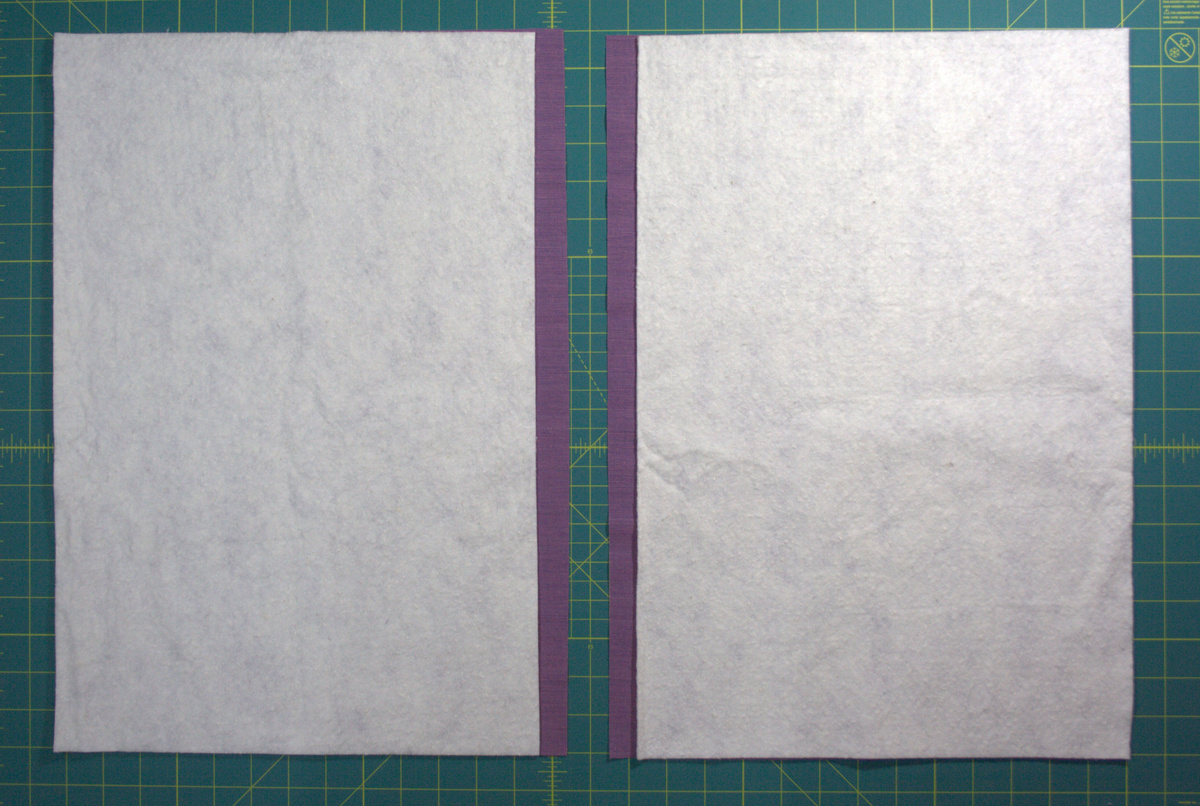
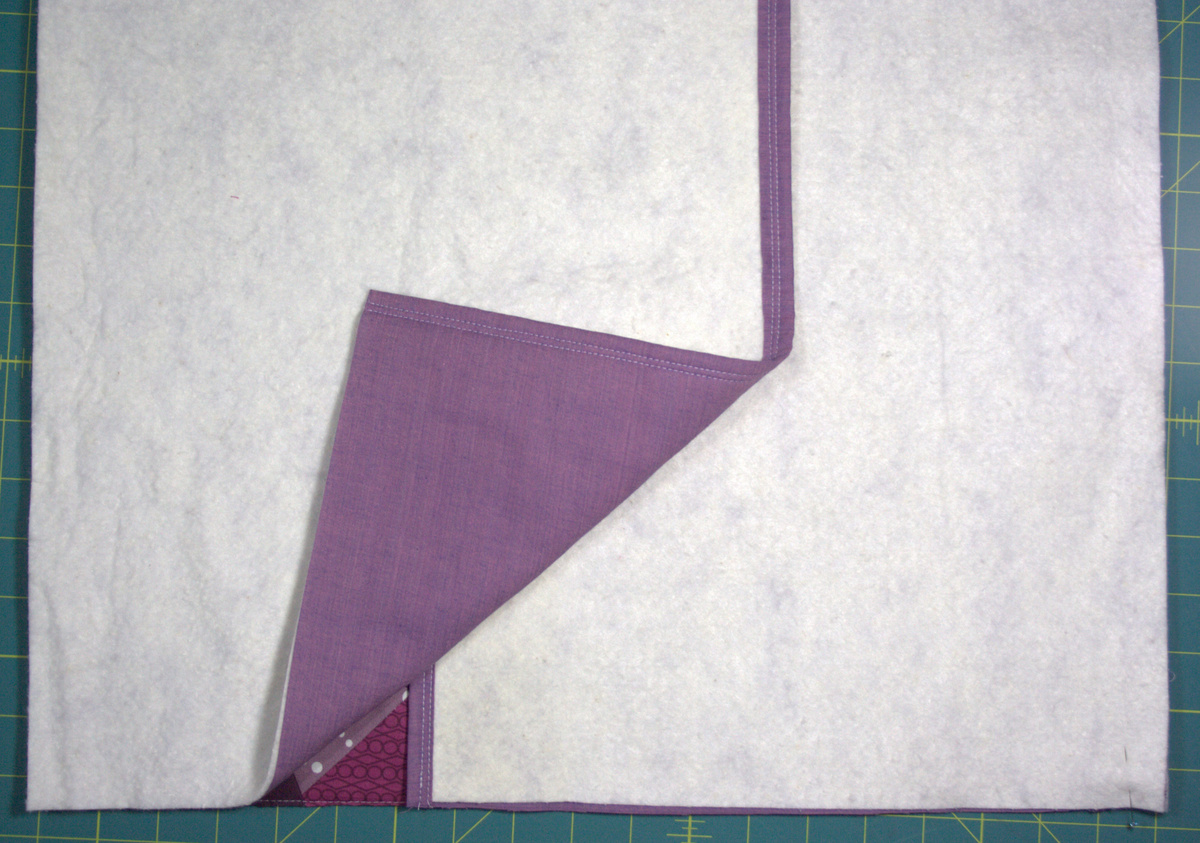
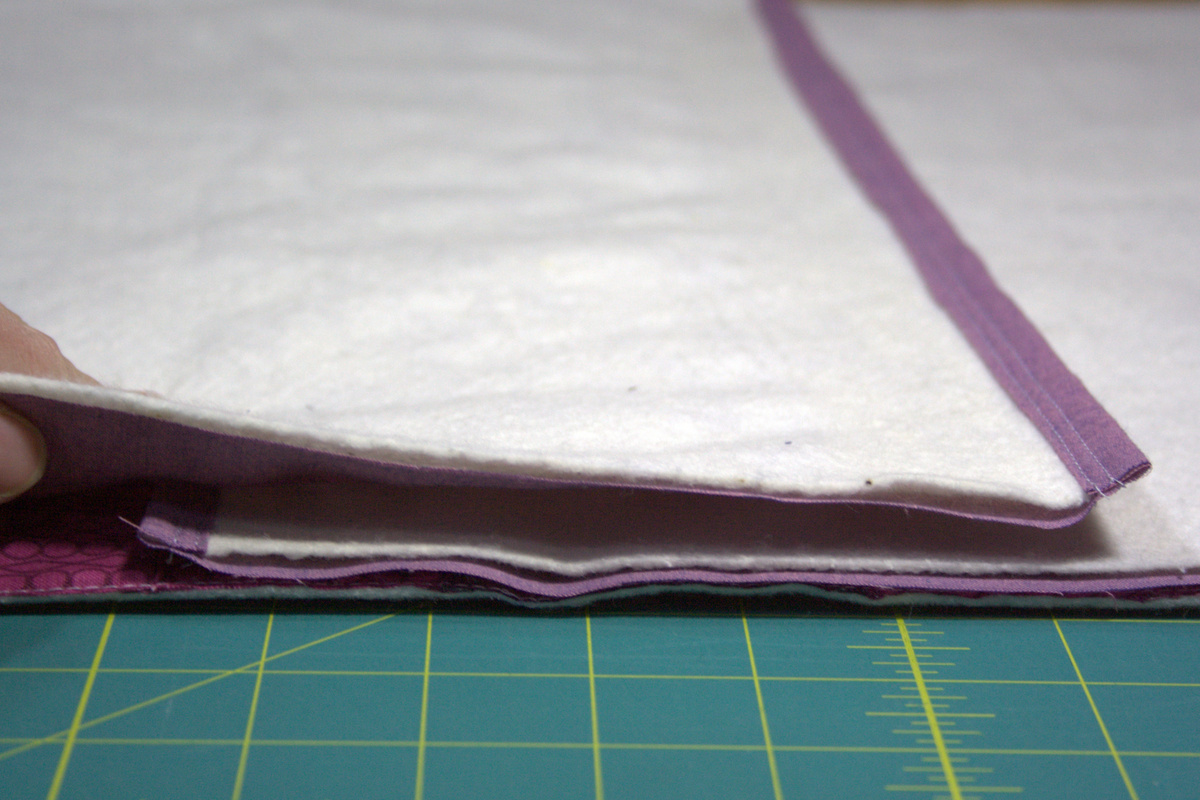
Layer the backing panels wrong sides facing the batting, and lining up three edges. The backing fabric should extend about 3/4″ on one side.
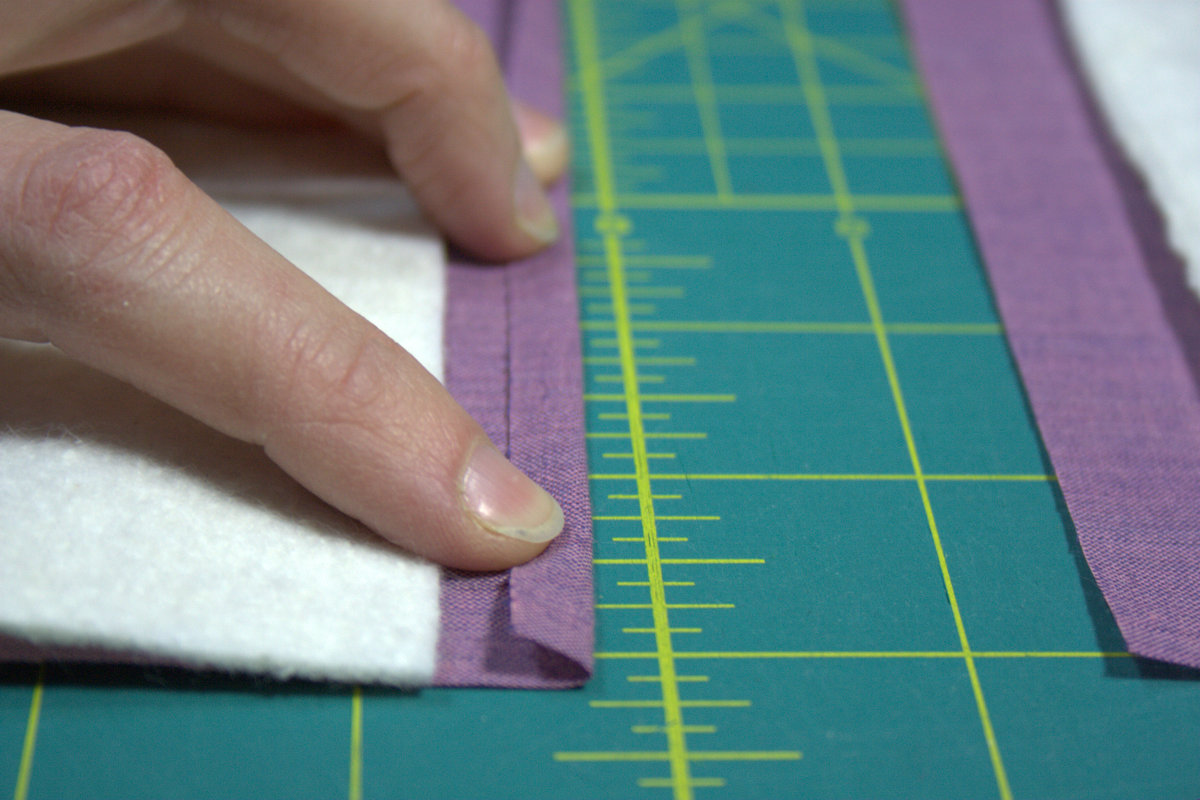
Fold the extended edge in 1/4″. Press with a hot iron.
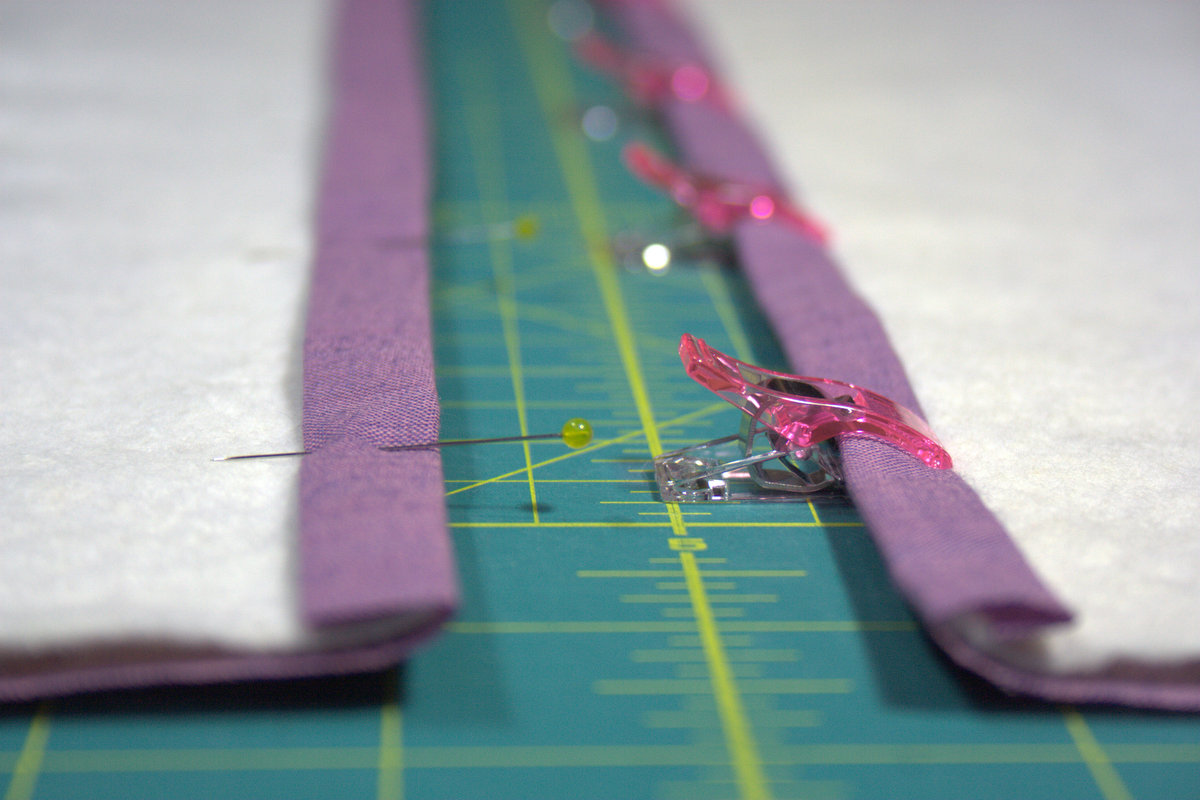
Fold over again, flush with the edge of the batting (approx 1/2″) and press. Pin or clip in place.
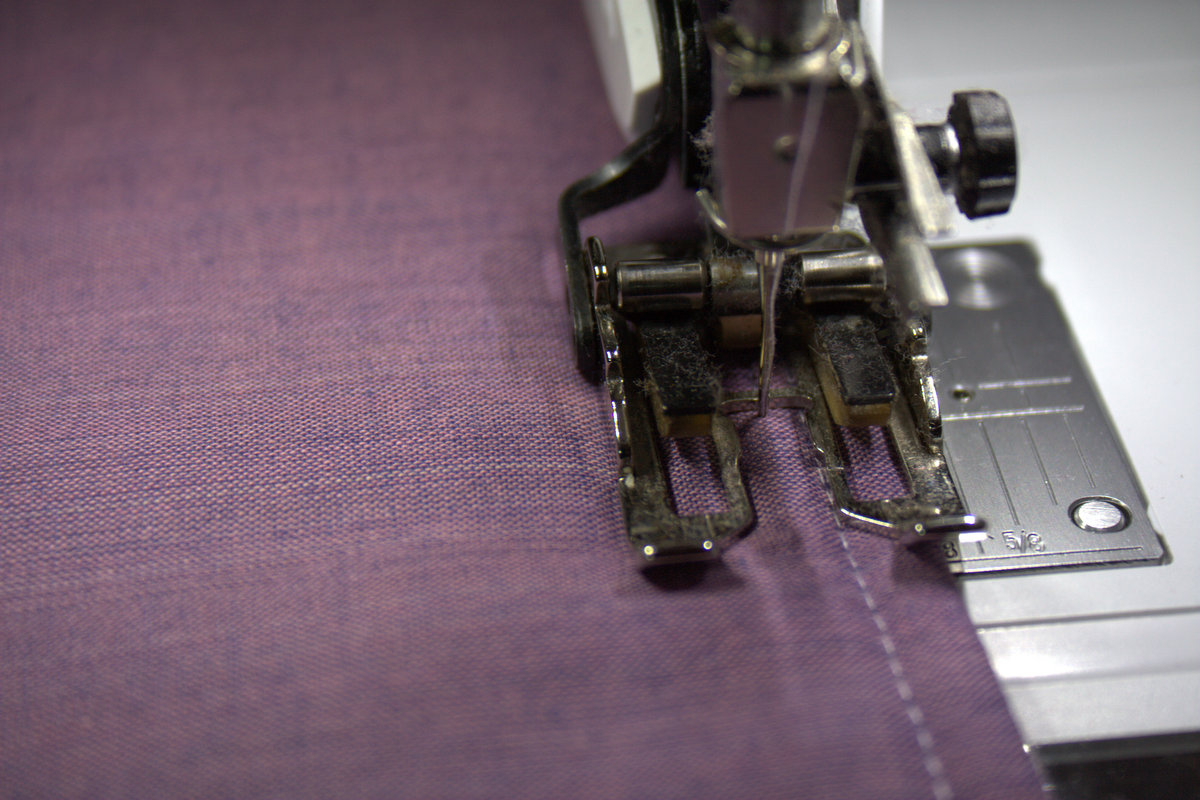
Pin along the edges of the backing fabric and batting to help keep them together if you want to, although I found that they stuck together just fine without any pins. Alternately, you could fuse on fusible fleece instead of batting, although this is a great project for using up batting scraps. With the backing fabric right side facing up, top stitch 1/4″ from the folded edge. Sew again 1/8″ from the first stitches. Repeat for the other panel.
Now it’s time to sew the pillow front to the back panels. Lay the quilted pillow top right side facing up, and place the back panels right sides facing down, with the raw edges aligning with the raw edges of the pillow top and the sewn hem edges toward the center of the pillow.
There should be about 6″ of overlap.
Pin securely and sew around the entire edge of the pillow. Be sure to reinforce where the envelope edges meet, sewing back and forth multiple times, since they will receive the bulk of the wear and tear as the pillow form is put in and taken out.
Clip the corners, and turn right side out through the envelope opening, carefully pushing out corners with a blunt chopstick. Insert an 18″ pillow form, or one of your old couch cushions, and enjoy!
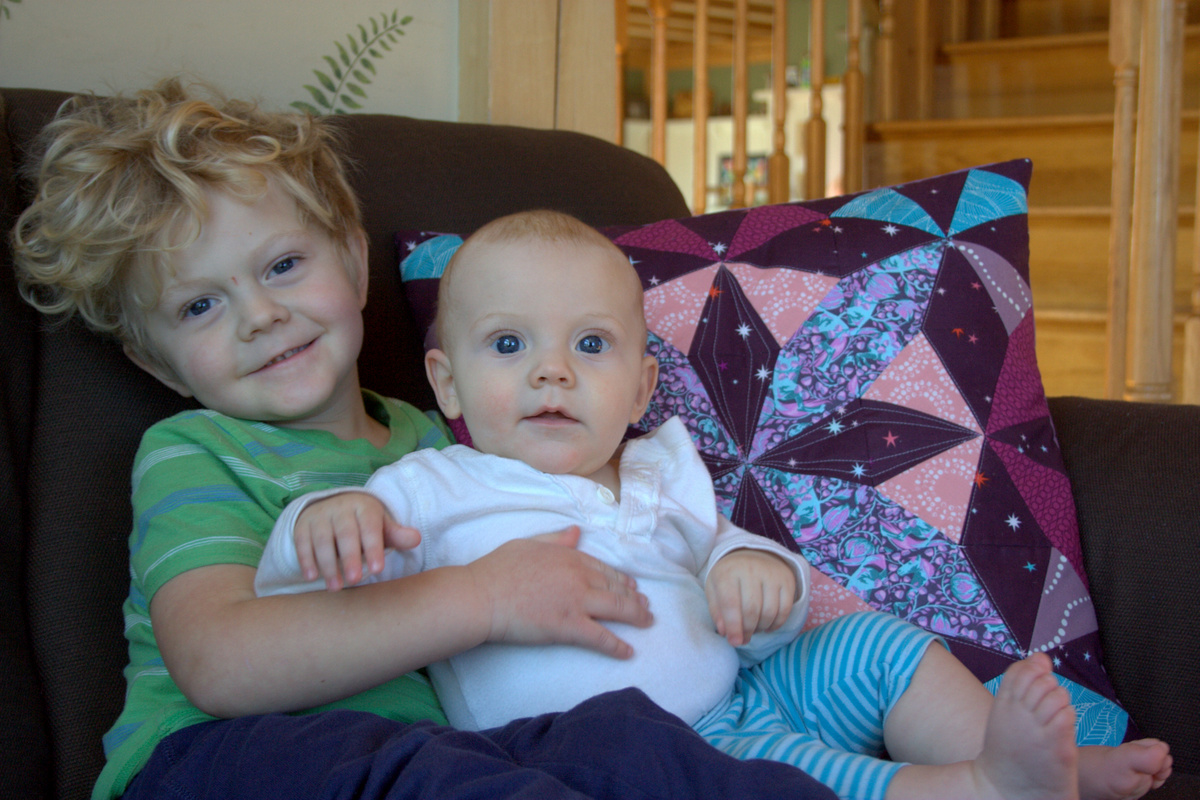
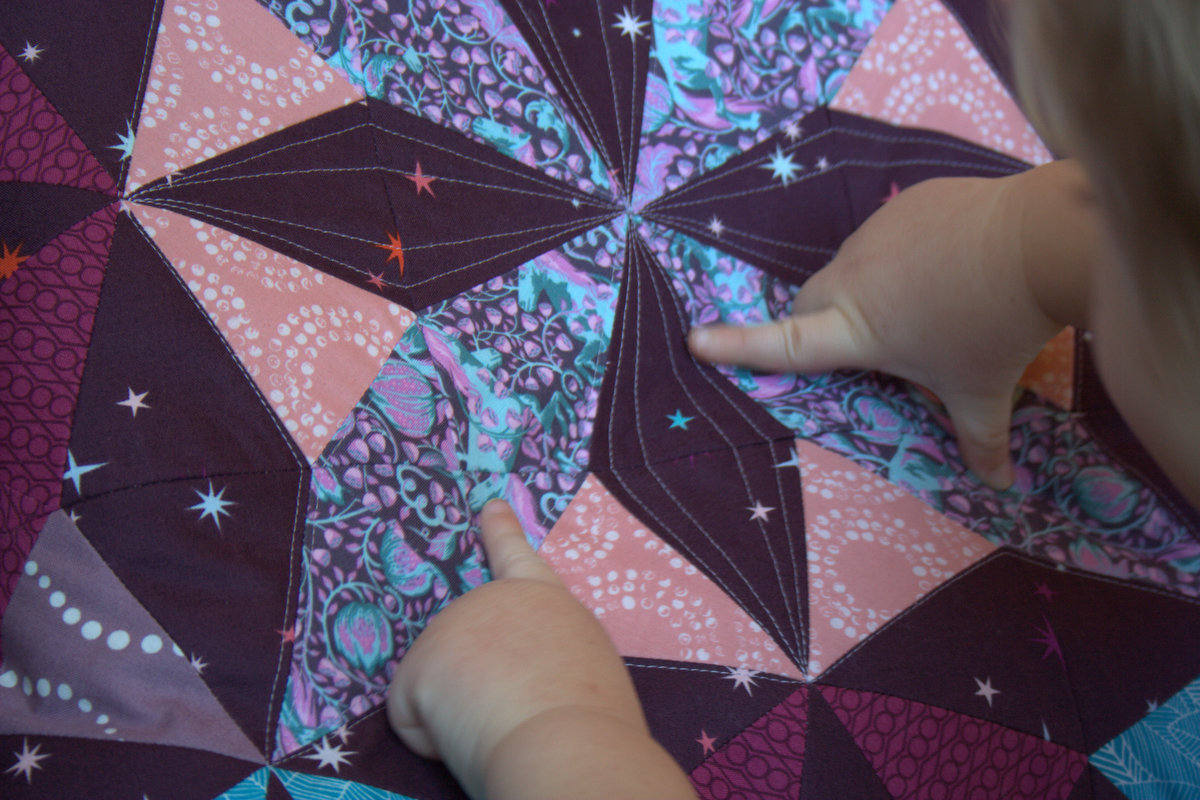
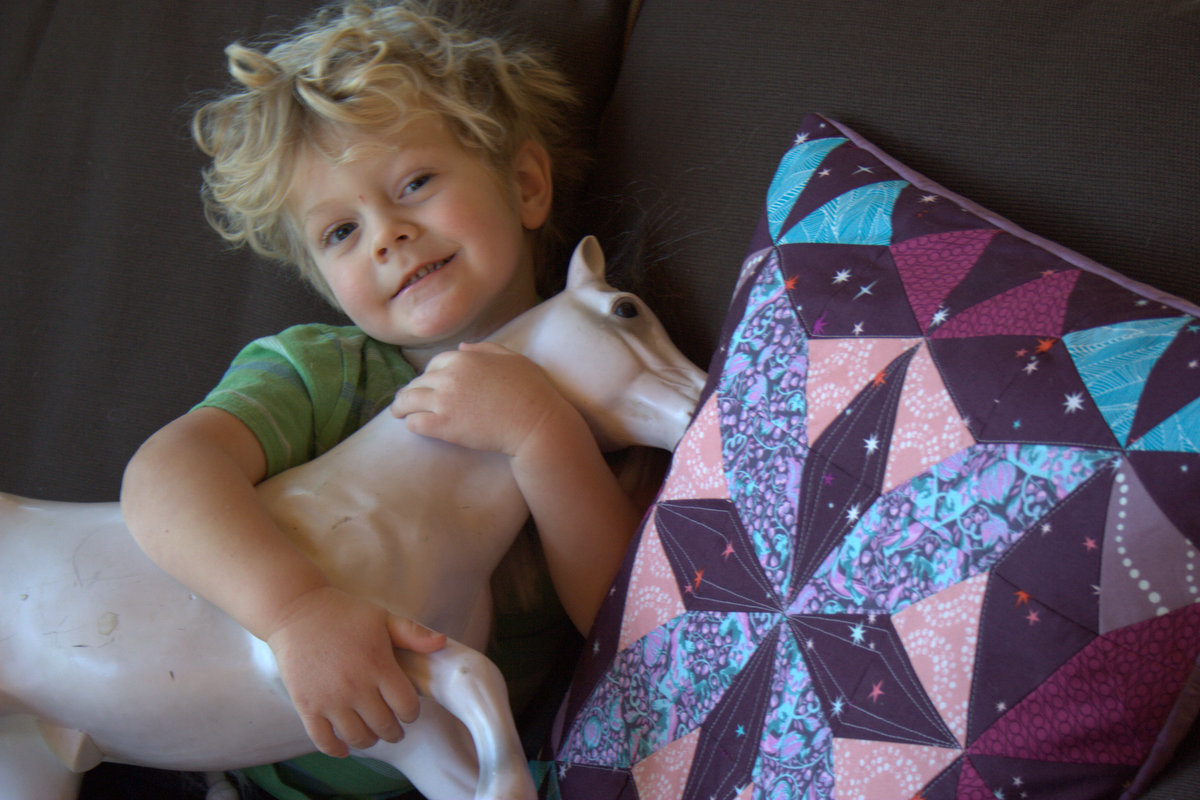
Max quickly discovered that there were ponies on the pillow, so he had to run and get his best friend, aptly named Pony.
This pillow apparently now belongs to Pony, since, well… ponies!
As this crazy month of November winds down (already!?), I’m trying to get a bit organized with my sewing projects. I truly enjoy having a lot of projects going, and I’m excited about all of the different quilting adventures I’ve joined lately (mini mini quilt swaps, Sizzix Design Team, a small private swap, my first commissioned quilt, and the Farmer’s Wife Sew Along as an official blogger, among others I’m surely missing). But life happens, and when it does, it can certainly throw a wrench into best laid plans. Yesterday I decided it was time to reevaluate, make some lists, and wrap my head around a plan for creating with little stress.
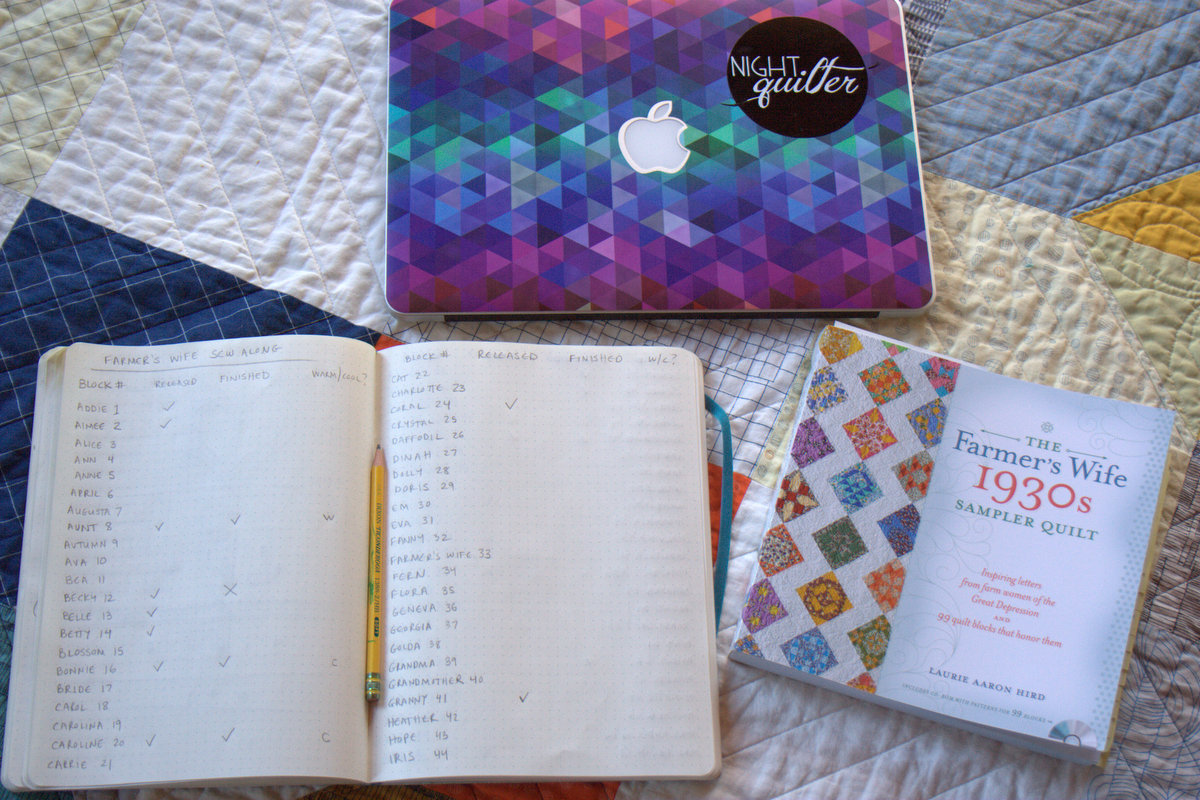
Yesterday I plopped down on a quilt on our living room floor, pulled out my notebook, my Farmer’s Wife book, and my laptop directed to Angie’s block tutorials page, and made a list. Per my calculations, 21 blocks have been released and I’ve made 6. Oops. I guess I’m just a BIT behind. (Update while writing this post–another block was just released! Make that 22 blocks!)
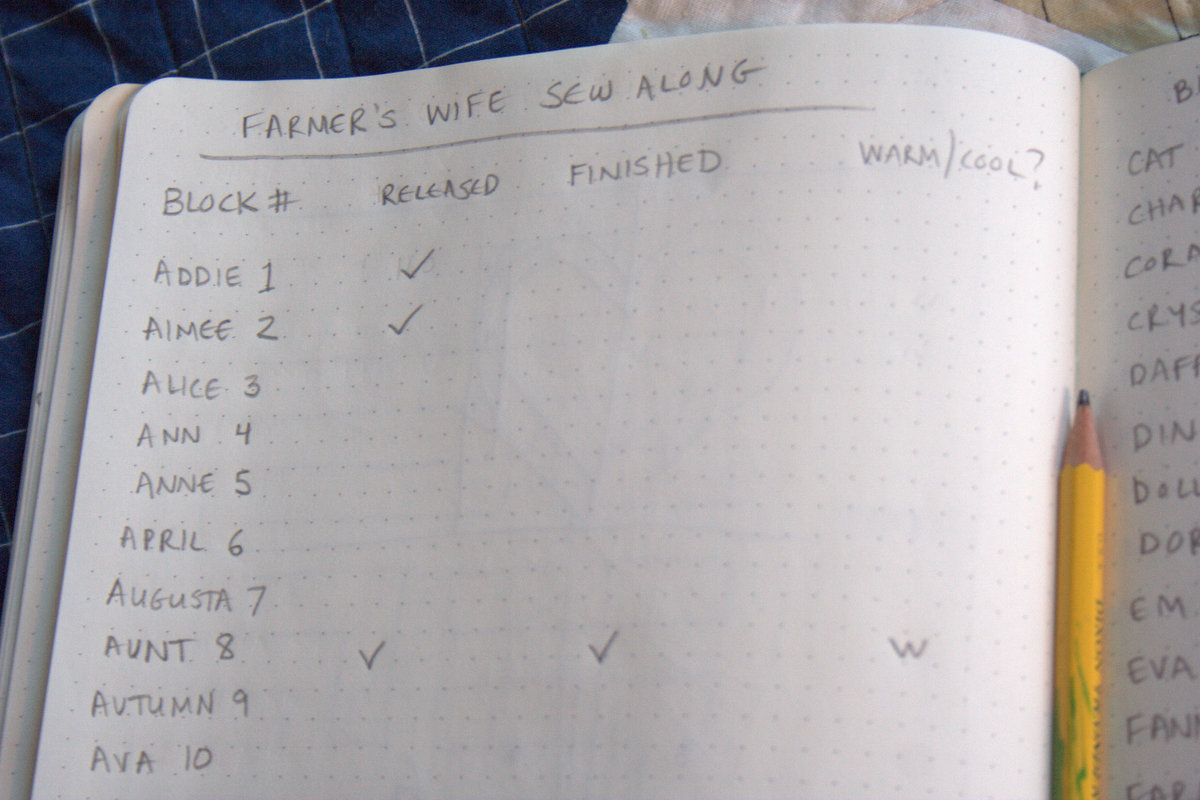
I made myself a comprehensive list complete with a space to check off when a block has been released or made. I LOVE checking things off a list, so I am hoping this is just what I need to catch up a bit. I also put post-its on the pages of blocks that have been released so that when I have a free minute, I can easily flip to one, grab some fabric, and dive in. My mind is much more at rest knowing that everything is written down and ready to check off.
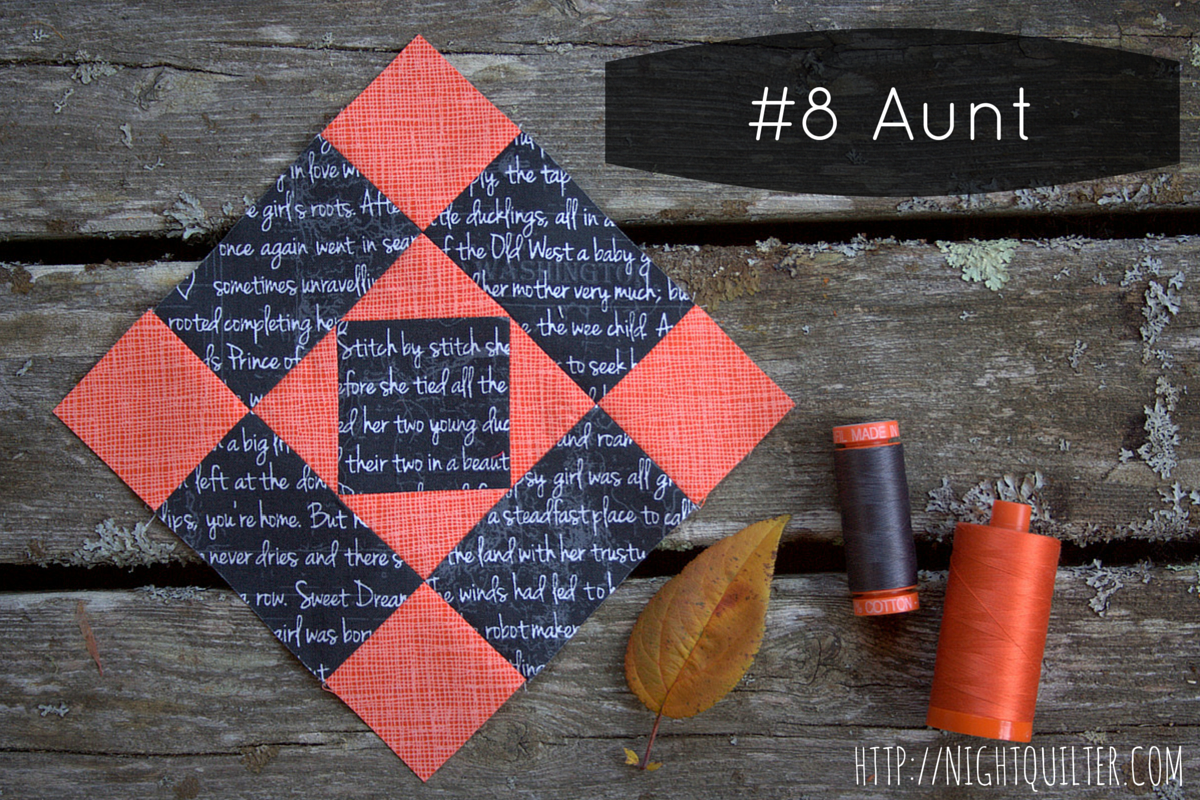
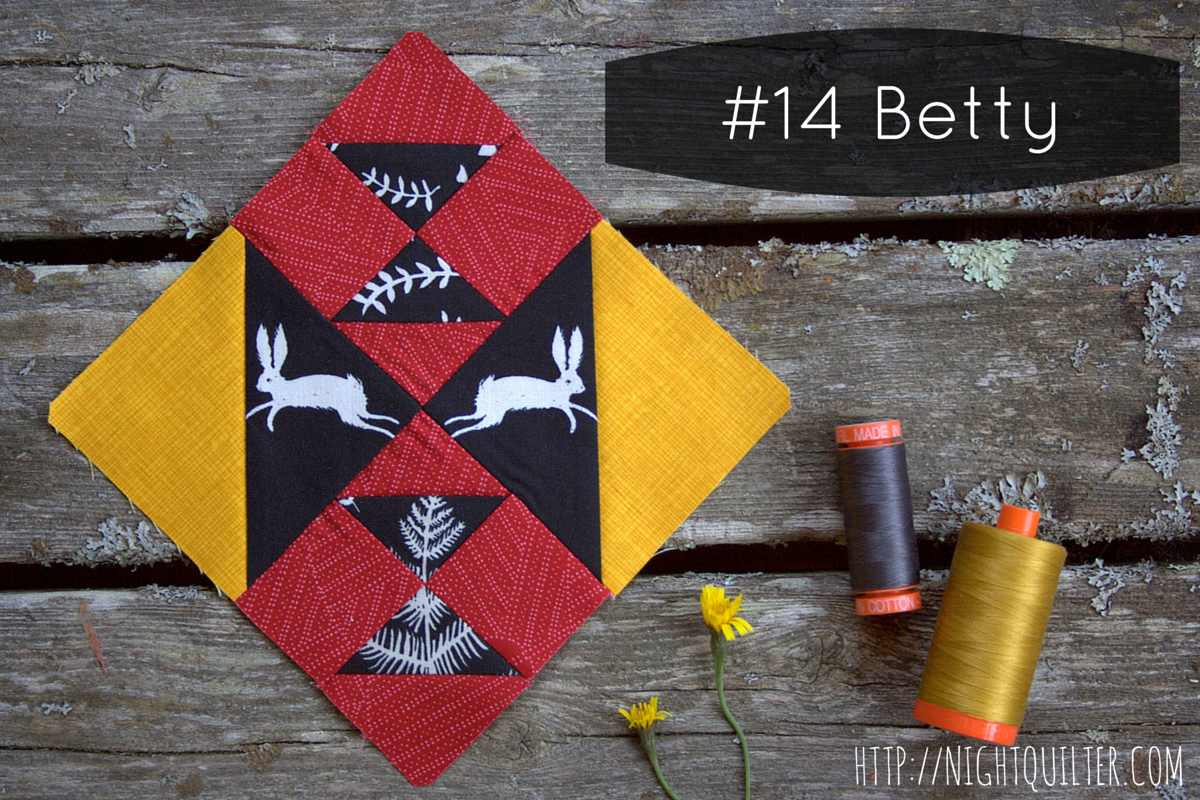
Now, for the fun update! Here are the blocks I’ve created so far.
I’ve decided on a photographing style, organized my notes, made a checklist of released vs finished blocks, bookmarked pages with blocks I need to make, and am reenergized and ready to do some catching up!
Online Sale – This is their big online sale for the holidays!
Take 15% off online starting Thanksgiving Day through Monday, November 30th. Please use the code “Thanks2015” to receive a 15% discount on your entire order (before shipping) anytime over those five days.
In-Store Sale – For those of you in the Belfast, Maine area, Fiddlehead Artisan Supply is also having in-store sales during this long holiday weekend, AND an early bird special sale day on Saturday December 5th. Check them out!
I grab a needle and thread once the kids are in bed

 Since I love to make the most of the tools I have, this project is also exciting since it’s the third unique project I’ve made using the Primitive hearts #3 die from Sizzix. You may remember my Growing Tree Wall hanging and Valentine’s Day Garland tutorials, the first two projects I made using this die. You know it’s a winner when there seems to be an endless stream of projects that can be made out of a certain tool.
 I try to make my tutorials helpful to the entire sewing and quilting world, even if you don’t yet have a Sizzix or other die cutting machine, and this one is no different.
 In this tutorial, I share: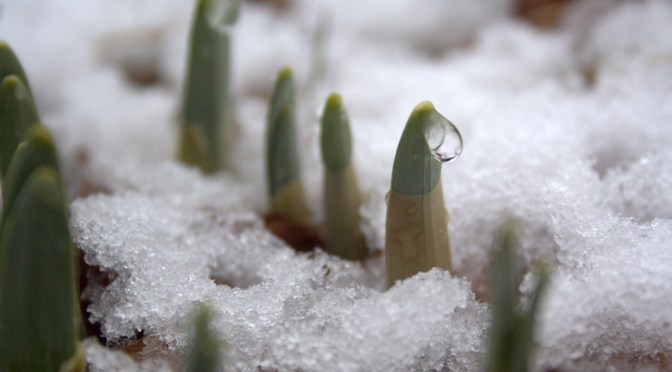


 )
)
 )
)

 and
and  )
)